Author: Answers In Bible

  • Honor the Lord With Your Possessions | Proverbs 3:9

    Honor the Lord With Your Possessions | Proverbs 3:9

    “Honor the LORD with your possessions, And with the firstfruits of all your increase” (Proverbs 3:9, NKJV). Firstfruits is the key word here. Not whatever’s left after everything else is accounted for, but the first and best portion, given before the rest is spent.

    That order says something about priority. Giving from what’s left over treats God as an afterthought. Giving the firstfruits treats Him as first.

    This isn’t only about money, though it certainly includes it. It’s about the pattern of putting God first across the increase in your life, time, resources, and energy alike.

    Where in your life right now are you giving God the leftovers instead of the firstfruits?
  • A Handful With Quietness | Ecclesiastes 4:6

    A Handful With Quietness | Ecclesiastes 4:6

    “Better a handful with quietness Than both hands full, together with toil and grasping for the wind” (Ecclesiastes 4:6, NKJV). This verse makes an unusual trade explicit: less, with peace, is better than more, with restless striving.

    Our culture tends to assume the opposite by default. More is simply better, and any cost to peace or quiet is worth paying for it.

    Ecclesiastes pushes back on that assumption directly. Both hands full sounds like success, until you notice the toil and the futility, grasping for wind, attached to it.

    Is there an area of your life right now where a quieter handful would actually serve you better than two full hands of restless striving?

  • Joy Comes in the Morning | Psalm 30:5

    Joy Comes in the Morning | Psalm 30:5

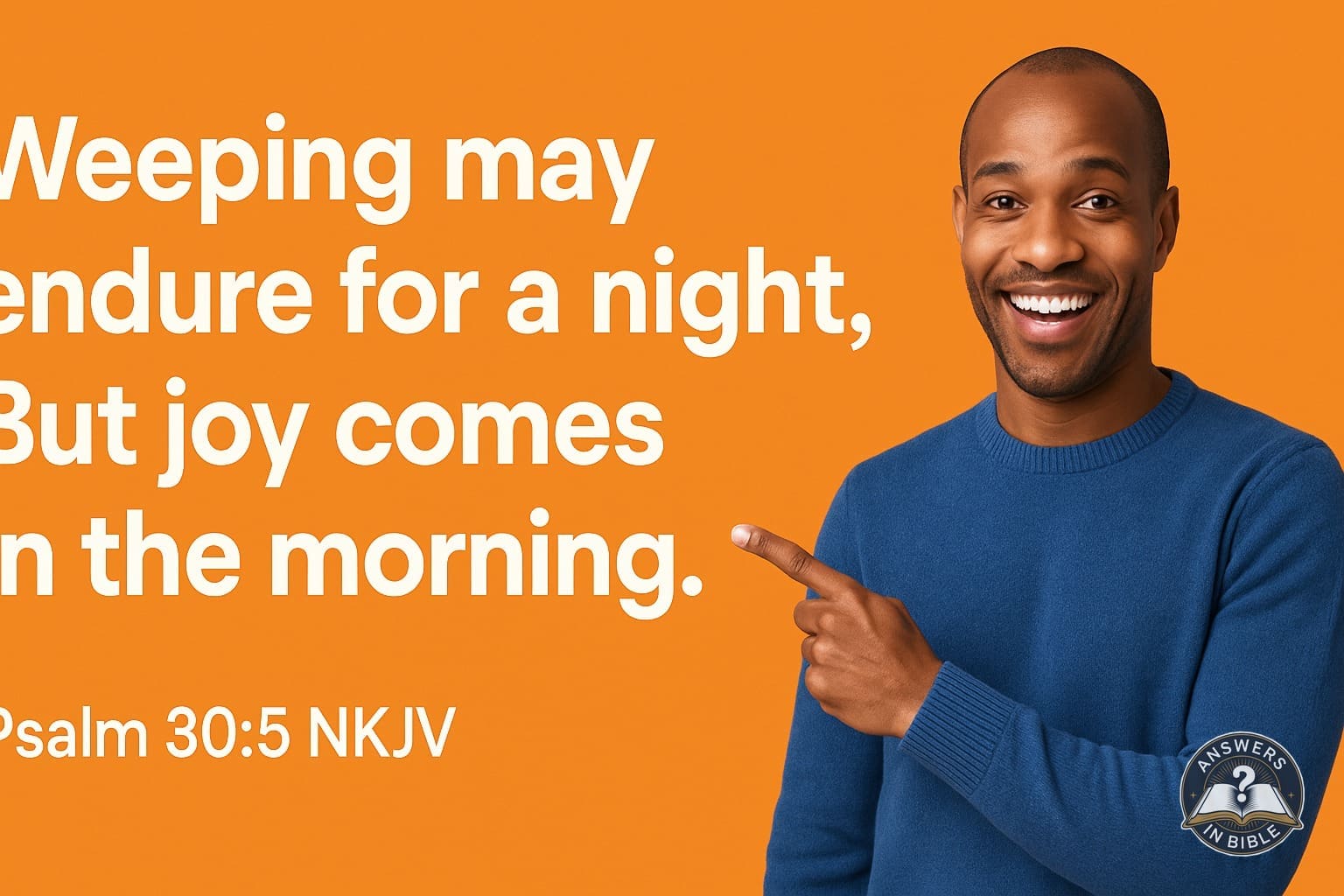
    “Weeping may endure for a night, But joy comes in the morning” (Psalm 30:5, NKJV). This verse doesn’t rush past the weeping to get to the joy. It names the night honestly, as something real that endures, even if only for a season.

    That honesty matters. This isn’t a verse that tells grieving people to hurry up and feel better. It acknowledges the night is real, while promising it isn’t permanent.

    Morning, in this verse, isn’t a metaphor for forgetting the pain ever happened. It’s a promise that joy isn’t gone forever just because it’s currently night.

    If you’re in a night season right now, this verse doesn’t ask you to pretend it’s already morning. It simply promises the morning is still coming.

  • Gains the Whole World | Matthew 16:26

    Gains the Whole World | Matthew 16:26

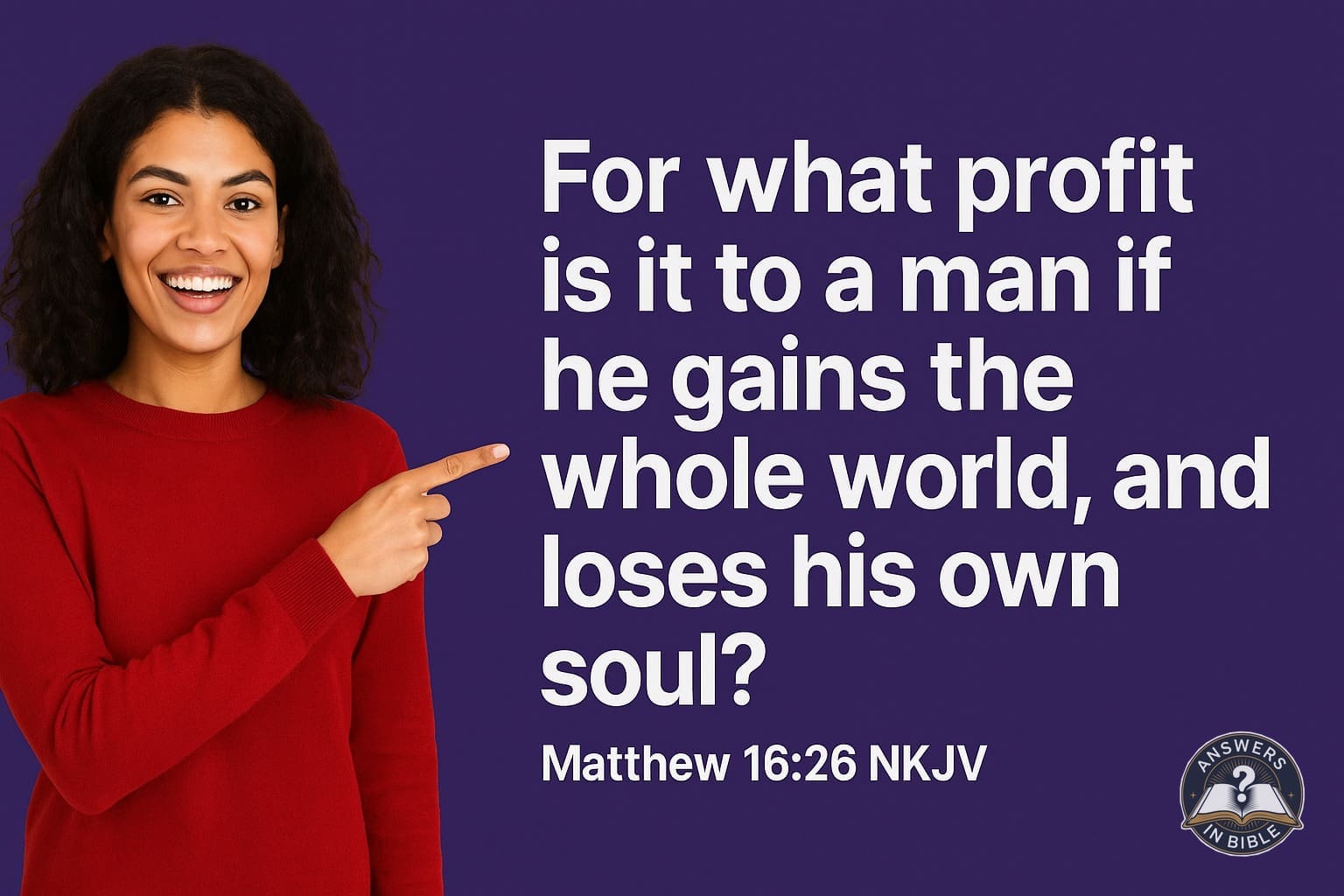
    “For what profit is it to a man if he gains the whole world, and loses his own soul?” (Matthew 16:26, NKJV). This question isn’t really about the extreme case of literally gaining the whole world. It’s about the everyday trades we make without noticing.

    Most of us aren’t tempted by literal world domination. We’re tempted by smaller versions of the same trade, a compromised integrity for a promotion, a neglected relationship for a bigger paycheck.

    Jesus’ question forces a real accounting. Whatever is gained in that trade, is it actually worth what it costs the soul making it?

    Is there a trade you’re currently making, small or large, that this question is worth applying to honestly?

  • The Fear of Man | Proverbs 29:25

    The Fear of Man | Proverbs 29:25

    “The fear of man brings a snare, But whoever trusts in the LORD shall be safe” (Proverbs 29:25, NKJV). A snare is designed to look harmless until it’s already caught you. That’s exactly how the fear of man tends to operate.

    It rarely announces itself directly. It shows up as subtle compromises, decisions quietly shaped by what others will think rather than what’s actually right.

    The alternative offered here isn’t fearlessness through sheer willpower. It’s trust, redirected away from managing others’ opinions and toward God instead.

    Where has the fear of what someone else will think been quietly shaping a decision you’re facing right now?

  • My Help Comes From the Lord | Psalm 121:1-2

    My Help Comes From the Lord | Psalm 121:1-2

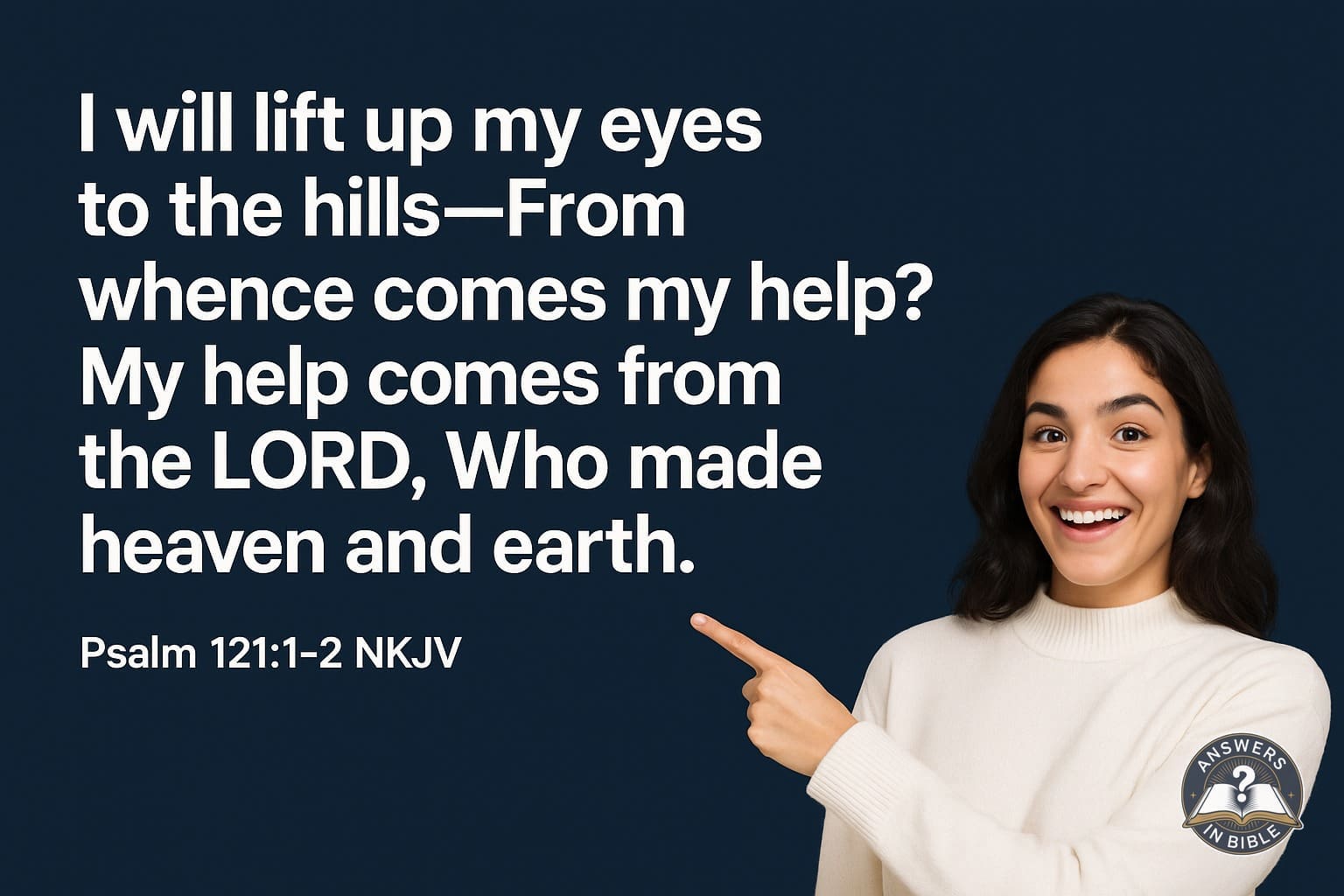
    “I will lift up my eyes to the hills—From whence comes my help? My help comes from the LORD, Who made heaven and earth” (Psalm 121:1-2, NKJV). This verse opens with an honest question before it answers with confidence. Where does help actually come from?

    It would be easy to look to the hills themselves, to circumstances, to our own resourcefulness, to other people, and stop the search there. This psalm looks past all of that, to the Maker behind it.

    That’s a meaningful redirect. Circumstances can shift. People can let us down, even with the best intentions. The One who made heaven and earth doesn’t run out of capacity to help.

    Where have you been looking for help lately, and is it time to lift your eyes a little further, past the hills, to their Maker?

  • Nothing New Under the Sun | Ecclesiastes 1:9

    Nothing New Under the Sun | Ecclesiastes 1:9

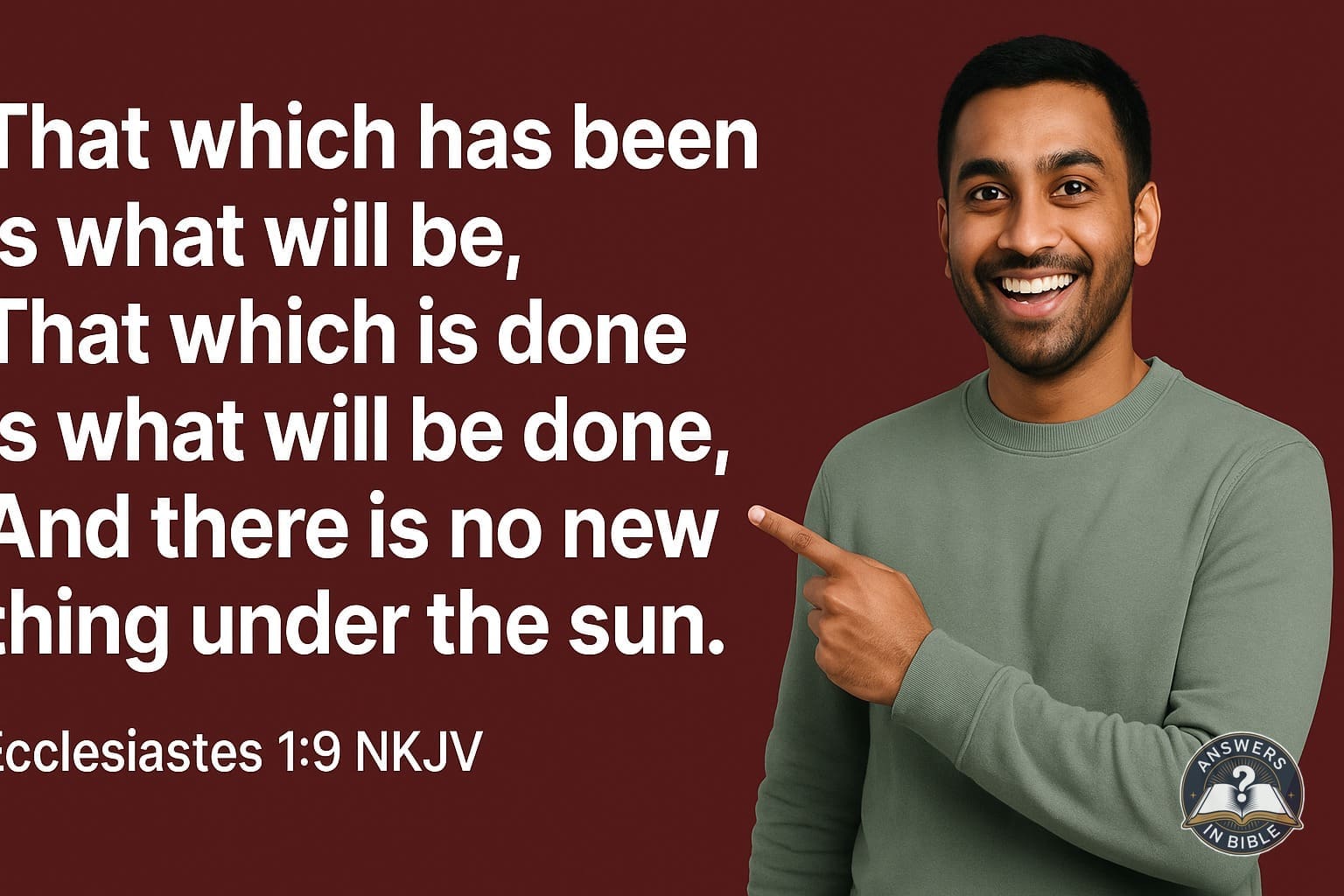
    “That which has been is what will be, That which is done is what will be done, And there is no new thing under the sun” (Ecclesiastes 1:9, NKJV). This can read as bleak on first pass. But there’s an odd freedom hiding in it too.

    If nothing under the sun is truly new, then whatever you’re facing right now, however novel it feels, has been faced by someone before you. You’re not as alone in it as it feels.

    This verse also has a way of deflating over-inflated ambition. The next big achievement, the next crisis, the next trend, all of it fits a pattern as old as humanity itself.

    There’s humility in that, and also comfort. The sun has seen it before, and the God above the sun was present for all of it too.

  • Not by Bread Alone | Matthew 4:4

    Not by Bread Alone | Matthew 4:4

    “Man shall not live by bread alone, but by every word that proceeds from the mouth of God” (Matthew 4:4, NKJV). Jesus says this in the wilderness, hungry, tempted to solve His physical need in a shortcut way. His answer points to a deeper kind of sustenance.

    Bread here stands for every legitimate physical need, food, comfort, security. Jesus doesn’t dismiss those needs. He simply refuses to let them be the whole story of what sustains a person.

    There’s a real temptation to treat physical provision as the only thing that matters, especially in a season of genuine need. This verse widens the frame.

    What would it look like today to feed on something beyond bread, to let Scripture actually nourish you the way food does, rather than treating it as optional?

  • Train Up a Child | Proverbs 22:6

    Train Up a Child | Proverbs 22:6

    “Train up a child in the way he should go, And when he is old he will not depart from it” (Proverbs 22:6, NKJV). This is a verse about the long game. Training isn’t a single conversation or lesson, it’s a sustained direction, given over years.

    It’s worth noting this isn’t a guarantee that removes a child’s own choices later in life. It’s a proverb, a general pattern of wisdom, not an ironclad formula.

    Even so, the principle holds real weight. What’s modeled and taught early tends to leave a lasting shape, even through seasons where it seems forgotten.

    Whether you’re raising children directly or shaping someone younger through mentorship, this verse is a reminder that the direction you’re pointing them matters more than any single moment.

  • Slow to Anger | Psalm 145:8

    Slow to Anger | Psalm 145:8

    “The LORD is gracious and full of compassion, Slow to anger and great in mercy” (Psalm 145:8, NKJV). This verse is a compact description of God’s character, and it’s worth reading slowly rather than rushing past it as familiar language.

    Slow to anger doesn’t mean never angered. It means patient, giving room before reacting, extending far more grace than most of us extend to each other or even to ourselves.

    Great in mercy pairs with that patience. Not grudging mercy, measured out carefully, but abundant mercy, freely given.

    If you’ve been picturing God as quick to frustration with you, this verse offers a needed correction. Slow to anger, great in mercy, is the character actually described here.