Author: Answers In Bible

  • Better to Trust in the Lord | Psalm 118:8

    Better to Trust in the Lord | Psalm 118:8

    “It is better to trust in the LORD Than to put confidence in man” (Psalm 118:8, NKJV). This isn’t a verse against relationships or community. It’s a verse about where ultimate confidence belongs.

    People, even good and well-meaning people, will eventually disappoint, run out of capacity, or simply not be able to carry what we’ve placed on them.

    That’s not cynicism, it’s just an honest limit of being human. This verse points past that limit toward a trust that doesn’t have the same ceiling.

    Is there a person you’ve quietly been asking to carry a weight that really belongs with God? This verse is worth returning that weight to its proper place.
  • Dead Flies in the Ointment | Ecclesiastes 10:1

    Dead Flies in the Ointment | Ecclesiastes 10:1

    “Dead flies putrefy the perfumer’s ointment; So does a little folly to one respected for wisdom” (Ecclesiastes 10:1, NKJV). A small amount of something foul can ruin something valuable disproportionately. That’s the image this verse uses to warn about folly.

    It’s tempting to think small lapses don’t matter much if the overall reputation is strong. This verse pushes back on that assumption directly.

    This isn’t meant to produce paranoia over every mistake. It’s a reminder that consistency matters, and that a reputation built over years can still be affected by careless moments.

    Is there a small area of carelessness in your life that, left unaddressed, could do more damage than its size suggests?

  • The Heavens Declare | Psalm 19:1

    The Heavens Declare | Psalm 19:1

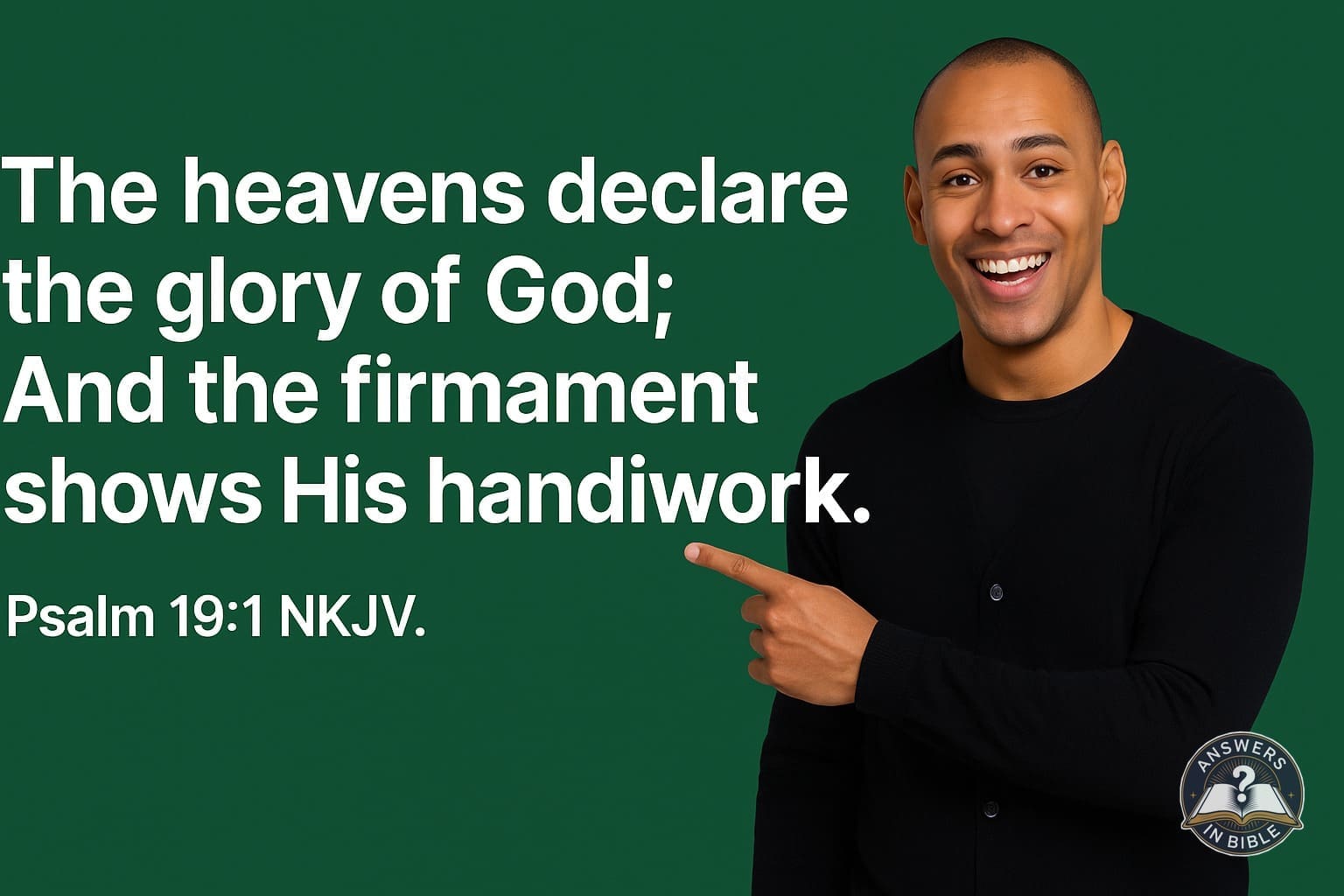
    “The heavens declare the glory of God; And the firmament shows His handiwork” (Psalm 19:1, NKJV). Before a single word of Scripture is opened, this verse says, the sky itself is already testifying to who God is.

    That’s worth remembering on days when it feels like God is distant or silent. Creation hasn’t stopped its declaration. The glory is still on display, whether or not we’ve paused to notice it.

    There’s something humbling about a testimony this constant and this wordless. The heavens don’t need our attention to keep declaring. They simply do, day after day.

    Tonight, or the next time you’re outside, take a real look at the sky. Let it do what this verse says it’s already doing.

  • A City Broken Down | Proverbs 25:28

    A City Broken Down | Proverbs 25:28

    “Whoever has no rule over his own spirit Is like a city broken down, without walls” (Proverbs 25:28, NKJV). A city without walls in the ancient world wasn’t just vulnerable, it was defenseless against anything that wanted in.

    That’s the picture this verse paints of a person without self-control. Not simply undisciplined, but exposed, unable to keep out whatever pressures or temptations come along.

    Self-rule here isn’t about rigid suppression of every feeling. It’s about having walls, boundaries strong enough to protect what’s inside from being overrun.

    Where are your walls thinnest right now, the place where a little more rule over your own spirit would actually protect something important?

  • Seventy Times Seven | Matthew 18:22

    Seventy Times Seven | Matthew 18:22

    “Jesus said to him, ‘I do not say to you up to seven times, but up to seventy times seven’” (Matthew 18:22, NKJV). Peter thought he was being generous, offering to forgive up to seven times. Jesus’ answer isn’t really about a literal count.

    Seventy times seven is Jesus’ way of removing the ceiling altogether. The moment you start counting toward a limit is the moment you’ve misunderstood what forgiveness actually is.

    This is genuinely hard, especially with repeat offenses from the same person. It’s tempting to feel that a limit is not just reasonable but wise.

    Is there someone you’ve been quietly keeping count with, waiting to reach the number where you’re finally justified in stopping? Jesus’ answer here challenges that count directly.

  • My Trust From My Youth | Psalm 71:5

    My Trust From My Youth | Psalm 71:5

    “For You are my hope, O Lord GOD; You are my trust from my youth” (Psalm 71:5, NKJV). This verse comes from someone looking back over a long relationship with God, not a recent or shallow one.

    Trust from my youth suggests something built gradually, tested through years, not manufactured in a single crisis. That kind of trust tends to hold up differently than trust formed overnight.

    If you’ve walked with God for a long time, this verse is worth using as a marker, noticing how your trust has actually grown across the years, not just in the last hard season.

    If you’re newer to this trust, this verse is an invitation rather than a comparison. Trust from your youth starts with trust today, wherever today happens to be.

  • A Time and Judgment | Ecclesiastes 8:6

    A Time and Judgment | Ecclesiastes 8:6

    “Because for every matter there is a time and judgment, Though the misery of man increases greatly” (Ecclesiastes 8:6, NKJV). This verse doesn’t pretend hardship is rare or mild. It names real, increasing misery directly.

    And yet, alongside that honesty, it insists that time and judgment still exist for every matter. Nothing is happening outside of God’s timing, even when the suffering feels relentless.

    That’s a hard tension to hold, real misery and real order at the same time. Ecclesiastes doesn’t resolve it neatly. It simply refuses to let one cancel out the other.

    If you’re in a season of real hardship right now, this verse doesn’t minimize it. It just insists that a time and judgment still belong to God, even here.

  • Go to the Ant | Proverbs 6:6

    Go to the Ant | Proverbs 6:6

    “Go to the ant, you sluggard! Consider her ways and be wise” (Proverbs 6:6, NKJV). This verse is almost comedic in its bluntness. Go learn from an insect, it says, because even the ant is managing its responsibilities better than you currently are.

    There’s real humility built into that instruction. Wisdom, according to this verse, doesn’t only come from impressive sources. Sometimes it comes from observing something small and unimpressive that’s simply doing its work faithfully.

    The ant, notably, has no supervisor pushing it along. Its diligence is internal, not externally enforced, which is exactly the kind of diligence this verse is holding up as worth imitating.

    Where in your life could you use a little of the ant’s quiet, unsupervised diligence today?

  • Daily Loads Us With Benefits | Psalm 68:19

    Daily Loads Us With Benefits | Psalm 68:19

    “Blessed be the Lord, Who daily loads us with benefits, The God of our salvation!” (Psalm 68:19, NKJV). Daily is the key word here. Not benefits given once and remembered fondly, but a daily loading, ongoing and current.

    It’s easy to notice God’s goodness in the big, memorable moments and overlook the daily accumulation that’s easy to take for granted.

    This verse invites a different kind of attentiveness, noticing today’s benefits, not just the ones from years ago that have become part of your testimony.

    What has God loaded onto you today that’s easy to miss because it’s ordinary rather than dramatic?

  • Be of Good Cheer | Matthew 14:27

    Be of Good Cheer | Matthew 14:27

    “But immediately Jesus spoke to them, saying, ‘Be of good cheer! It is I; do not be afraid’” (Matthew 14:27, NKJV). This is Jesus walking on water toward His terrified disciples in the middle of a storm. His first words aren’t an explanation. They’re reassurance.

    Notice the order: cheer, then identity, then the command not to fear. The reassurance isn’t rooted in the storm calming first. It’s rooted in who is walking toward them.

    The disciples’ fear was reasonable, in the middle of the night, in a storm, seeing something they couldn’t explain. Jesus doesn’t dismiss the fear as silly. He simply identifies Himself as the reason it doesn’t have to win.

    Whatever storm you’re currently in, this verse offers the same order: it’s Jesus, so fear doesn’t get the final word, even before the storm itself has calmed.