Author: Answers In Bible

  • Love Suffers Long and Is Kind | 1 Corinthians 13:4

    Love Suffers Long and Is Kind | 1 Corinthians 13:4

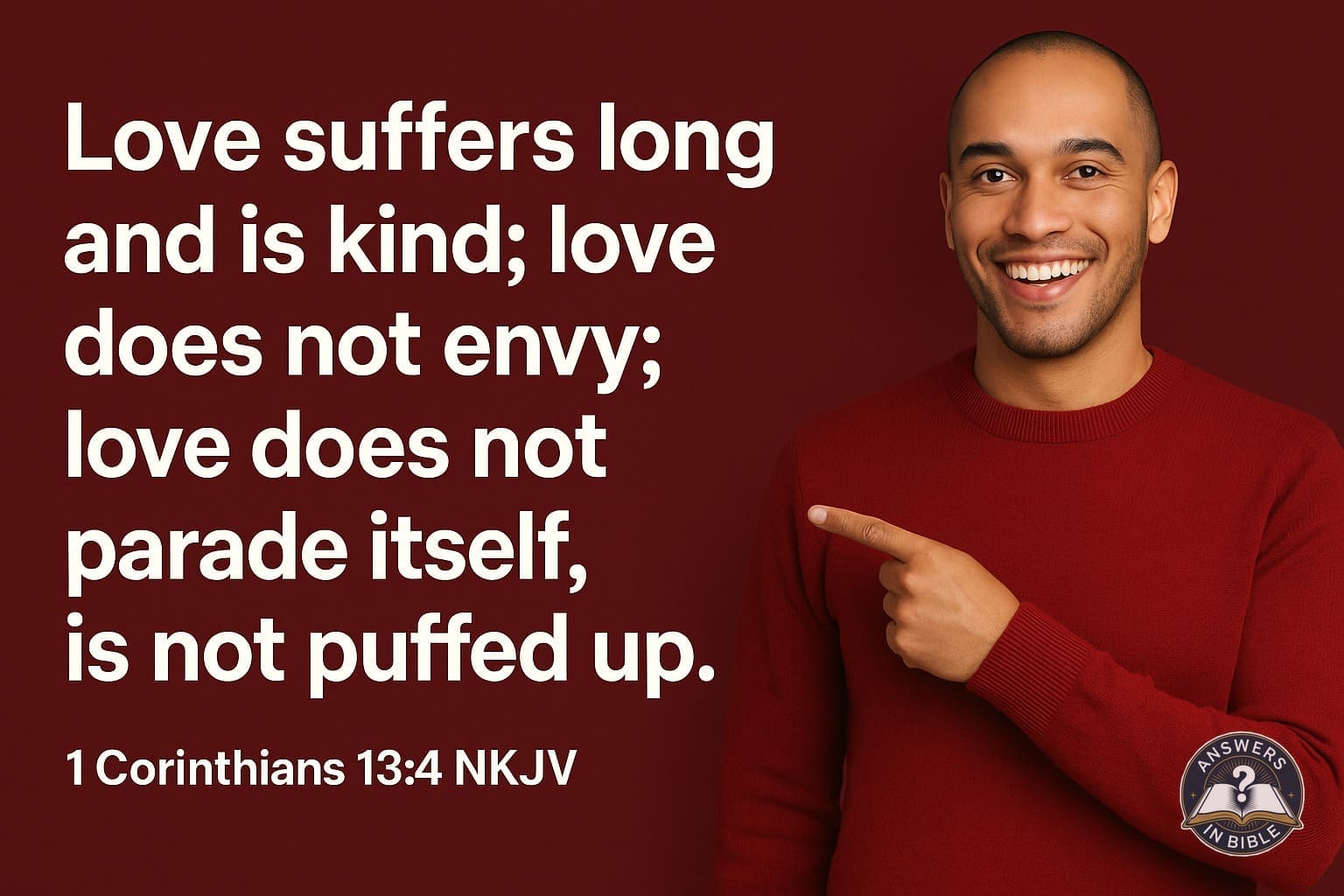
    “Love suffers long and is kind; love does not envy; love does not parade itself, is not puffed up” (1 Corinthians 13:4, NKJV). On a day full of cards and flowers, it’s worth remembering that Scripture’s most famous description of love isn’t about romance at all. It’s about character.

    Suffers long, meaning patient, willing to endure without giving up. Kind, meaning actively good toward the other person, not just tolerant of them. This is a far more demanding definition than the feeling most of us associate with the word.

    Notice what’s absent from love as described here: envy, self-promotion, pride. This is a love turned outward, not a love that uses another person to feel good about itself.

    Whoever you’re celebrating today, this verse is a good measure to hold up against the relationship. Not does it feel romantic, but does it look like this.

  • A Friend Who Sticks Closer | Proverbs 18:24

    A Friend Who Sticks Closer | Proverbs 18:24

    “A man who has friends must himself be friendly, But there is a friend who sticks closer than a brother” (Proverbs 18:24, NKJV). Friendship, this verse suggests, isn’t something that just happens to us. It requires being the kind of person who shows up friendly, first.

    The second half of the verse points to something rarer: a friendship that outlasts even family ties, the kind of loyalty that sticks when it would be easier to walk away.

    Those friendships aren’t common, and they aren’t accidental either. They’re usually built over years of showing up, through both the easy seasons and the hard ones.

    As you think about the relationships in your life, who’s the friend who sticks closer than a brother, and are you being that same kind of friend to someone else?

  • Let Your Light Shine | Matthew 5:16

    Let Your Light Shine | Matthew 5:16

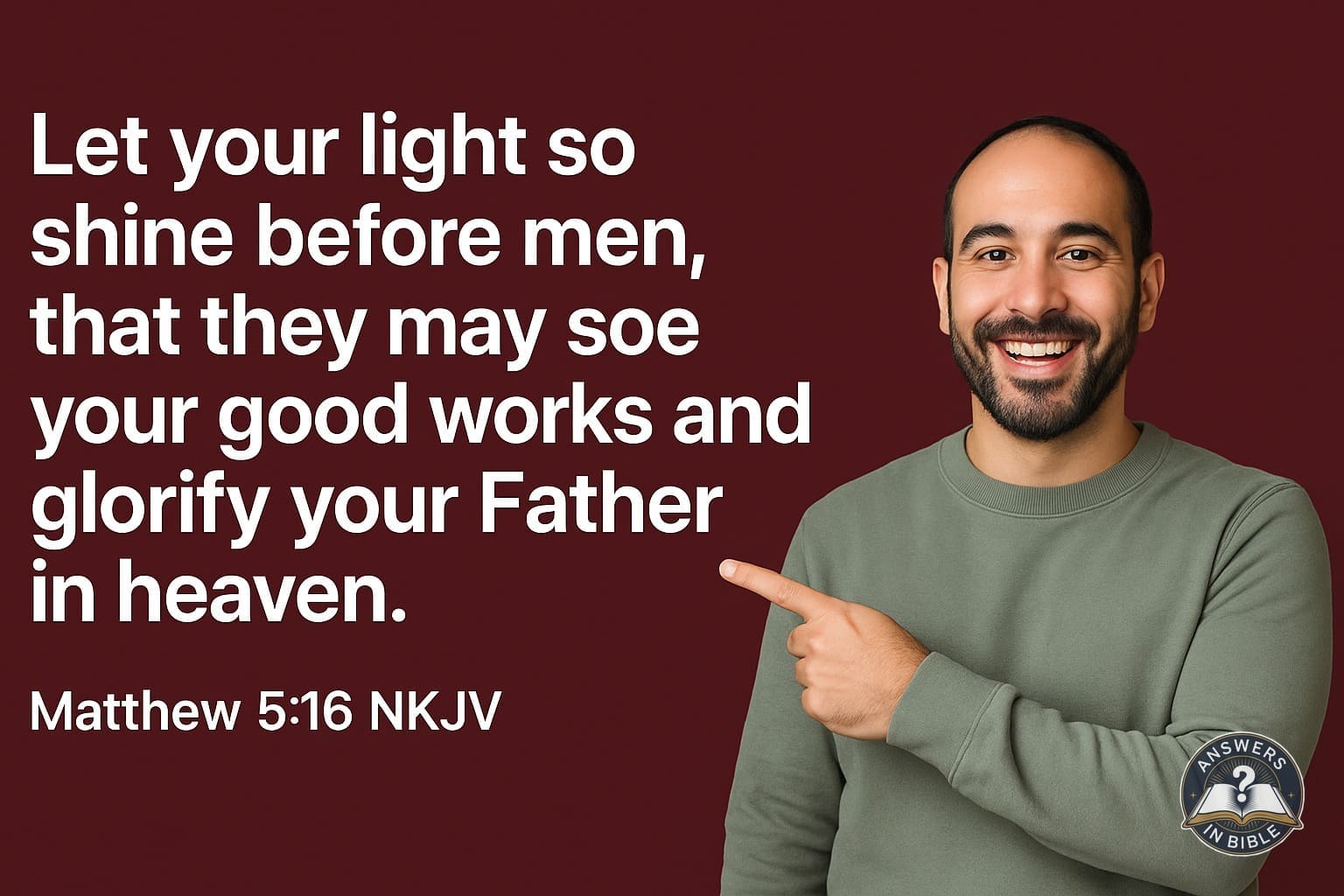
    “Let your light so shine before men, that they may see your good works and glorify your Father in heaven” (Matthew 5:16, NKJV). Jesus isn’t calling for showy performance here. The goal named is specific: not admiration for us, but glory directed to the Father.

    That distinction matters. It’s possible to do visibly good things for the wrong reason, to be noticed, to build a reputation, rather than to point beyond ourselves.

    Letting your light shine, in this verse, means living in a way that naturally draws attention past you, toward the source of whatever good is actually happening in your life.

    Where is your light shining right now, and if someone traced it back, would it lead them to you, or past you to God?

  • Sun and Shield | Psalm 84:11

    Sun and Shield | Psalm 84:11

    “For the LORD God is a sun and shield; The LORD will give grace and glory; No good thing will He withhold from those who walk uprightly” (Psalm 84:11, NKJV). Sun and shield is a striking pair of images, warmth and protection held together in the same picture of who God is.

    A sun without a shield would leave us exposed. A shield without a sun would leave us cold. This verse describes a God who provides both at once, comfort and safety together.

    The promise that follows is bold: no good thing withheld from those who walk uprightly. Not an indulgent promise of everything we want, but a genuine confidence that God isn’t stingy toward those who walk with Him.

    If you’ve been picturing God as only one of these, only warmth or only distant protection, this verse is worth letting reshape that picture into both at once.

  • Do It With Your Might | Ecclesiastes 9:10

    Do It With Your Might | Ecclesiastes 9:10

    “Whatever your hand finds to do, do it with your might” (Ecclesiastes 9:10, NKJV). This verse doesn’t specify what the task is, big or small, exciting or mundane. It just says: whatever it is, give it your full effort.

    That’s a useful corrective for anyone waiting for the meaningful task before they’ll bring their best effort. Ecclesiastes doesn’t wait for meaning to show up first. It brings the effort to whatever’s already in front of you.

    There’s dignity in that approach. Full effort on an ordinary task isn’t wasted, it’s exactly the posture this verse commends.

    What’s actually in front of your hand today, and are you giving it your full effort, or holding back for something that feels more worth it?

  • A Way That Seems Right | Proverbs 14:12

    A Way That Seems Right | Proverbs 14:12

    “There is a way that seems right to a man, But its end is the way of death” (Proverbs 14:12, NKJV). This is an uncomfortable verse because it targets exactly the moments we feel most confident. Not the choices we’re unsure about, the ones that seem obviously right.

    That’s what makes this warning worth taking seriously. A path can feel completely justified in the moment and still lead somewhere destructive. Feeling right isn’t the same as being right.

    This isn’t a call to constant self-doubt. It’s a call to humility, holding even our confident decisions open to correction, especially when they conveniently line up with what we already wanted.

    Is there a decision right now that feels obviously right to you, that might benefit from one more honest gut check before you move forward?

  • Silently Waits for God | Psalm 62:1

    Silently Waits for God | Psalm 62:1

    “Truly my soul silently waits for God; From Him comes my salvation” (Psalm 62:1, NKJV). Silence isn’t our default response to waiting. Most of us fill waiting with noise, worry, planning, and rehearsing worst-case scenarios.

    David describes something different here: a soul that’s actually quiet in the waiting, not because the situation is resolved, but because he trusts where his salvation is coming from.

    That kind of stillness isn’t passive resignation. It’s confidence, settled enough that it doesn’t need to fill the silence with anxious noise.

    What would it take for your own waiting today to feel more like this, less anxious striving, more settled trust in where your help is actually coming from?

  • Blessed Are the Peacemakers | Matthew 5:9

    Blessed Are the Peacemakers | Matthew 5:9

    “Blessed are the peacemakers, For they shall be called sons of God” (Matthew 5:9, NKJV). Notice the word Jesus chose. Not peacekeepers, who avoid conflict at any cost, but peacemakers, who actively work to create it where it doesn’t yet exist.

    That’s a harder calling than simply staying quiet to keep things comfortable. Peacemaking often requires stepping into tension, not around it, in order to actually resolve something.

    This takes courage most of us would rather avoid. It’s easier to let a broken relationship stay broken than to do the work of pursuing reconciliation.

    Is there a relationship in your life right now that needs a peacemaker rather than someone who just keeps the peace by avoiding the subject entirely?

  • A Merry Heart | Proverbs 17:22

    A Merry Heart | Proverbs 17:22

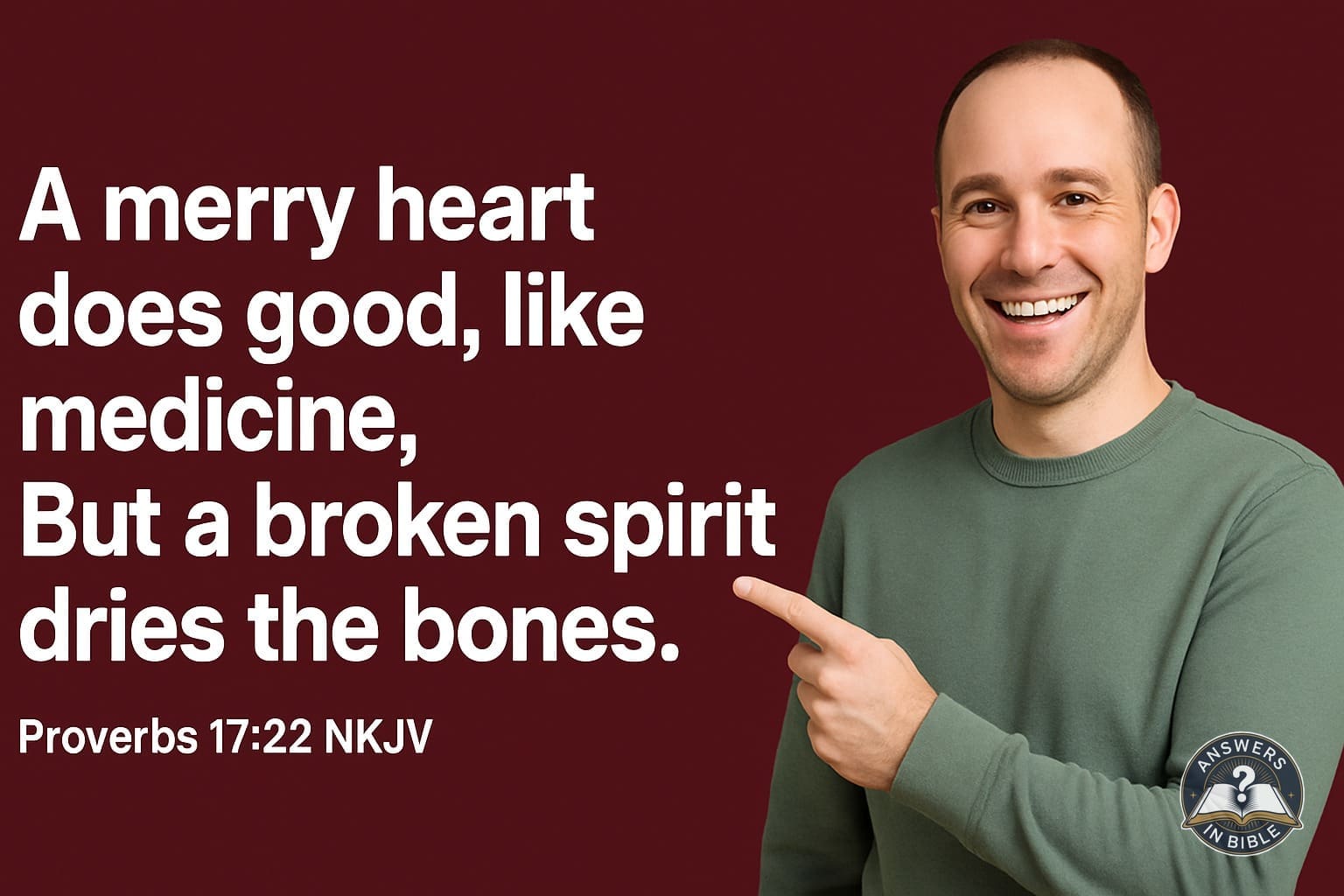
    “A merry heart does good, like medicine, But a broken spirit dries the bones” (Proverbs 17:22, NKJV). Proverbs isn’t shy about connecting the state of the heart to the state of the body. This verse treats joy as something with actual medicinal power.

    That’s worth taking seriously rather than dismissing as a nice sentiment. A broken spirit doesn’t just feel bad, it wears the whole person down, over time, in ways that are hard to reverse.

    This isn’t a call to fake cheerfulness over real pain. It’s a reminder that genuine joy, wherever it can honestly be found, is doing real good in you, not just decorating the surface.

    Where could you actually invite a little more merriment today, not as a distraction from what’s hard, but as real medicine alongside it?

  • Cast Your Burden | Psalm 55:22

    Cast Your Burden | Psalm 55:22

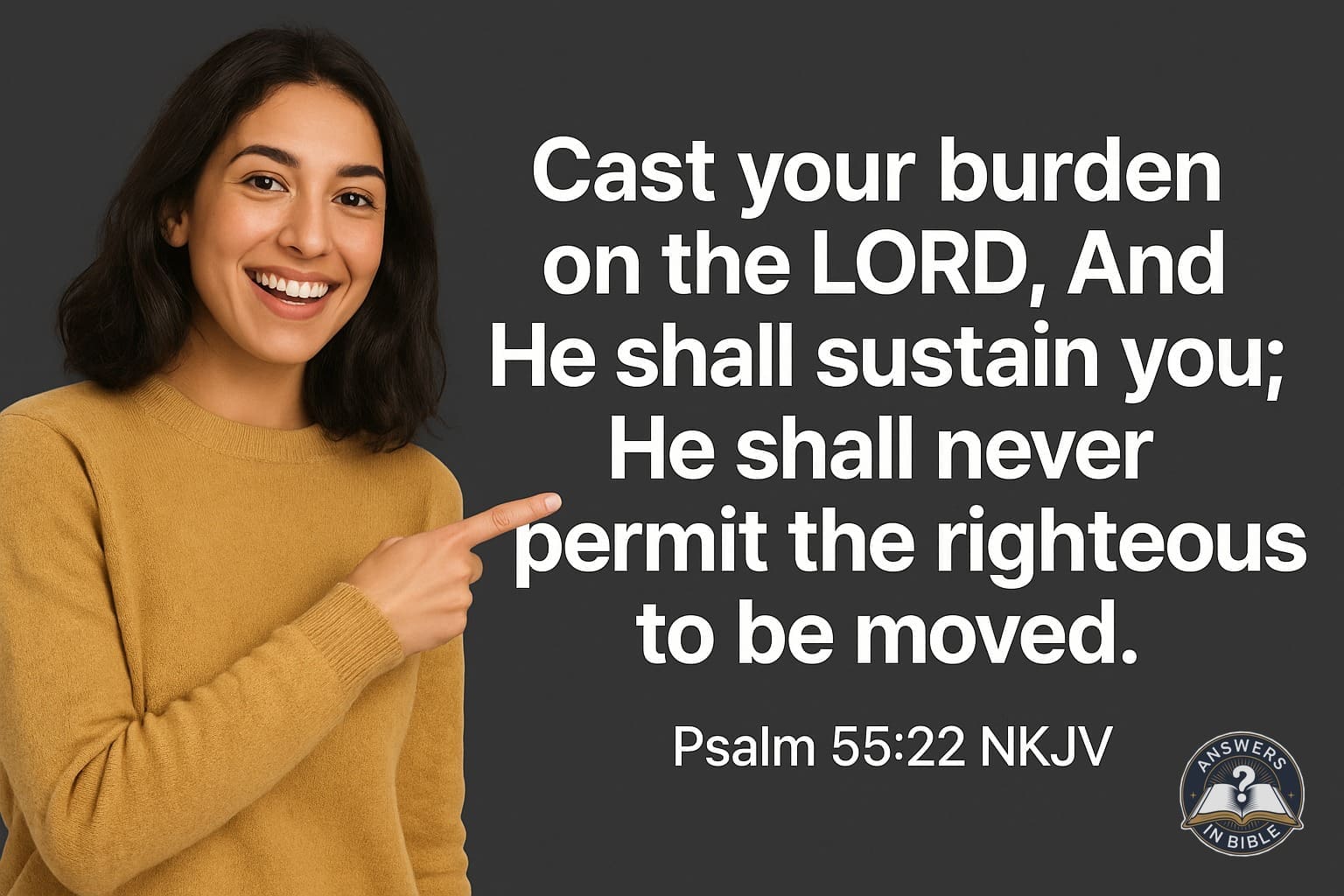
    “Cast your burden on the LORD, And He shall sustain you; He shall never permit the righteous to be moved” (Psalm 55:22, NKJV). Cast, not carefully hand over, not manage while still holding on. Cast, like something thrown fully away from yourself.

    David wrote this in the middle of betrayal by someone close to him. This isn’t a verse written from an easy season, offered as a shallow platitude. It’s a real decision made under real weight.

    Sustain is the promise attached to casting. Not that the burden disappears, but that God holds up the one who’s released it into His hands.

    What are you still holding today that this verse is inviting you to actually throw, not just mentally acknowledge, but release into God’s hands?