
Tag: Matthew 7

  • Ask, Seek, Knock | Matthew 7:7

    Ask, Seek, Knock | Matthew 7:7

    “Ask, and it will be given to you; seek, and you will find; knock, and it will be opened to you” (Matthew 7:7, NKJV). Three active verbs in a row here, ask, seek, knock, each one requiring something more than passive waiting.

    This isn’t a formula guaranteeing whatever we want on demand. It’s an invitation to genuine, persistent pursuit, rather than a quiet hope that things will work out without our engagement.

    Knocking, in particular, implies persistence. A single knock is easy to give up on. This verse pictures continued knocking, not a one-time attempt abandoned quickly.

    What have you been passively hoping for, that this verse is inviting you to actually ask, seek, and knock for instead?

  • The Speck and the Plank | Matthew 7:3

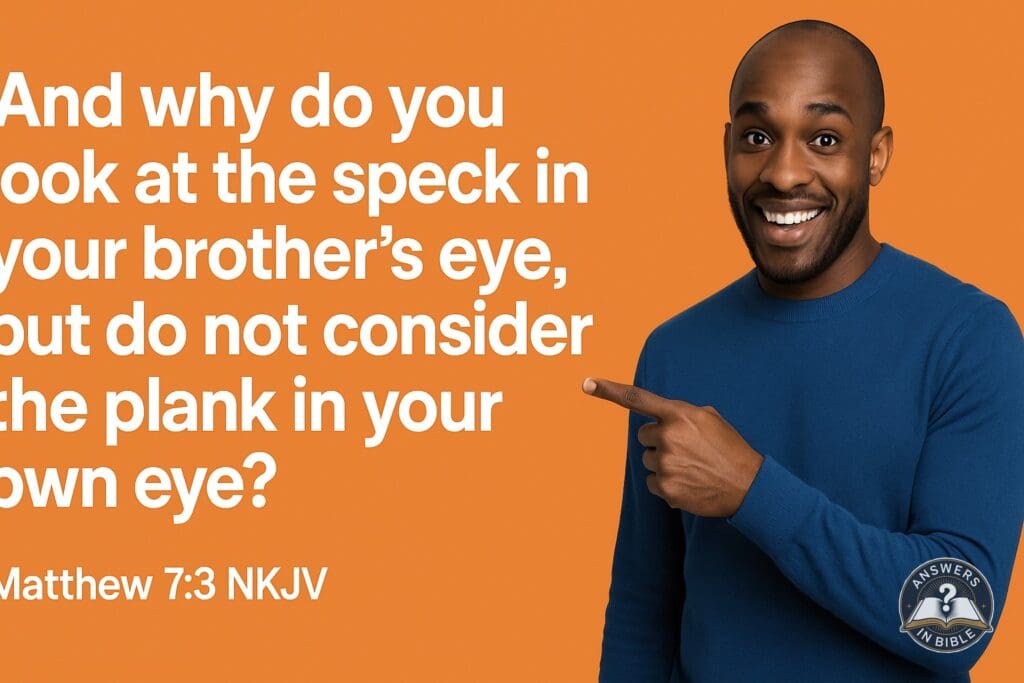
    The Speck and the Plank | Matthew 7:3

    “And why do you look at the speck in your brother’s eye, but do not consider the plank in your own eye?” (Matthew 7:3, NKJV). Jesus uses exaggeration on purpose here, a tiny speck versus an entire plank, to make an uncomfortable point land.

    It’s genuinely easier to spot someone else’s small fault than our own much larger one. Distance makes flaws easier to see; nearness to our own heart makes it easier to excuse.

    This verse isn’t asking us to ignore real problems in others. It’s asking us to deal honestly with our own first, before we position ourselves as the one qualified to point out someone else’s.

    A useful question for today: whose speck have you been focused on lately, and what plank might actually deserve your attention first?

  • Judge Not | Matthew 7:1

    Judge Not | Matthew 7:1

    “Judge not, that you be not judged” (Matthew 7:1, NKJV). It’s one of the shortest, most quoted verses in the Bible, and also one of the most misunderstood. It isn’t a call to have no discernment. It’s a warning about the measuring stick we use on other people.

    This is harder to sit with than it first appears. Most of us don’t think of ourselves as harsh judges. We think of ourselves as simply noticing what’s obviously true about someone else’s choices, motives, or character.

    Jesus isn’t asking us to pretend nothing is ever wrong. He’s asking us to notice how quickly, and how harshly, we size other people up compared to how gently we treat our own failures.

    This isn’t meant to produce guilt over every passing thought. It’s an invitation to notice the pattern, and to extend the same grace to others that we hope to receive ourselves.