
Tag: Psalm 34

  • What Does the Bible Say About Problems?

    What Does the Bible Say About Problems?

    Everyone runs into problems, and the Bible never pretends otherwise. Scripture speaks honestly about hardship, financial strain, illness, conflict, and loss, while also pointing to a God who is present in the middle of it. Here is what the Bible actually says about facing problems, and where to find steady ground when life gets hard.

    Problems Are Expected, Not a Sign You Did Something Wrong

    Jesus was direct about this. In John 16:33, He tells His disciples, “These things I have spoken unto you, that in me ye might have peace. In the world ye shall have tribulation: but be of good cheer; I have overcome the world.” Trouble is treated here as a normal part of life in this world, not evidence that something has gone wrong spiritually. The Bible never promises a problem-free life. It promises a presence in the middle of the problems.

    Psalm 34:19 makes a similar point: “Many are the afflictions of the righteous: but the LORD delivereth him out of them all.” Even people described as righteous face real affliction. The promise isn’t that hardship will be avoided, but that it isn’t the end of the story.

    What the Bible Says Problems Can Produce

    James 1:2-4 goes a step further, framing hardship as something that can actually build character over time: “My brethren, count it all joy when ye fall into divers temptations; Knowing this, that the trying of your faith worketh patience. But let patience have her perfect work, that ye may be entire, wanting nothing.” This isn’t a call to pretend problems feel good. It’s a promise that difficult seasons, endured with faith, can produce patience and maturity that ease never builds.

    Paul makes a related point in Romans 8:28: “And we know that all things work together for good to them that love God, to them who are the called according to his purpose.” This verse is often misread as a promise that every individual problem is good in itself. Read in context, it’s a promise about the bigger picture: God is at work even through hard circumstances, weaving them toward good for those who love Him, even when the good isn’t visible yet.

    How to Bring Problems to God

    Scripture doesn’t just describe problems, it gives a practical response to them. Philippians 4:6-7 says, “Be careful for nothing; but in every thing by prayer and supplication with thanksgiving let your requests be made known unto God. And the peace of God, which passeth all understanding, shall keep your hearts and minds through Christ Jesus.” The instruction is specific: instead of carrying anxiety alone, bring the actual problem to God in prayer, with thanksgiving mixed in even when circumstances are hard. What’s promised in return isn’t always a fixed problem. It’s peace that doesn’t depend on the problem being fixed.

    Psalm 46:1 offers a similar anchor: “God is our refuge and strength, a very present help in trouble.” The word “present” matters here. This isn’t a distant promise of help someday. It describes God as available in the trouble itself, not just after it ends.

    Problems Don’t Have the Final Word

    Paul described his own catalog of hardships in 2 Corinthians 4:8-9: “We are troubled on every side, yet not distressed; we are perplexed, but not in despair; Persecuted, but not forsaken; cast down, but not destroyed.” Each line names a real pressure, then names what didn’t happen because of it. The pattern throughout the Bible isn’t the absence of problems. It’s problems met with a strength and presence that keeps them from being the last word.

    Key Bible Verses

    John 16:33
    “These things I have spoken unto you, that in me ye might have peace. In the world ye shall have tribulation: but be of good cheer; I have overcome the world.”

    Philippians 4:6-7
    “Be careful for nothing; but in every thing by prayer and supplication with thanksgiving let your requests be made known unto God. And the peace of God, which passeth all understanding, shall keep your hearts and minds through Christ Jesus.”

    Psalm 46:1
    “God is our refuge and strength, a very present help in trouble.”

    Frequently Asked Questions

    Does the Bible say problems happen for a reason?

    Scripture doesn’t assign a tidy explanation to every hardship, but it does promise that God is at work even through difficult circumstances (Romans 8:28) and that trials can build patience and maturity over time (James 1:2-4).

    What should I do first when I’m facing a problem?

    Philippians 4:6-7 points to prayer as the first response: bringing the specific problem to God honestly, with thanksgiving, rather than carrying the anxiety alone. The verse pairs that step with a promise of peace that guards the heart and mind.

    Related Bible Topics

    What Does the Bible Say About Anxiety? | What Does the Bible Say About Fear? | What Does the Bible Say About Asking for Help?

    Ask a Deeper Question

    Have a specific problem or question you’re working through? Ask below and get an instant, scripture-based answer.

  • What Does “No More Than You Can Bear” Mean in the Bible?

    What Does “No More Than You Can Bear” Mean in the Bible?

    “God will not give you more than you can handle” is one of the most repeated phrases in Christian encouragement, but the Bible verse behind it says something a little more specific. Here’s what 1 Corinthians 10:13 actually promises, and what it doesn’t.

    What Does 1 Corinthians 10:13 Say?

    The verse behind the popular phrase is 1 Corinthians 10:13: “No temptation has overtaken you except such as is common to man; but God is faithful, who will not allow you to be tempted beyond what you are able, but with the temptation will also make the way of escape, that you may be able to bear it.” Paul wrote this to a church wrestling with real pressure to compromise their faith, and the promise is specifically about temptation, not suffering, grief, or hardship in general. That distinction matters a lot for how the verse gets applied.

    Temptation, Not Every Trial

    It’s common to hear this verse quoted to someone facing a devastating loss, a serious illness, or overwhelming grief, as if the Bible is promising that no trial will ever exceed a person’s strength. But the Greek word Paul uses, peirasmos, carries the sense of “temptation” or “testing” toward sin, not affliction in general. Scripture is honest that life can bring suffering that genuinely overwhelms a person’s own strength. Paul himself describes exactly that in 2 Corinthians 1:8, saying he and his companions were “burdened beyond measure, above strength,” so much that they “despaired even of life.” The promise in 1 Corinthians 10:13 isn’t that hardship will always stay within your capacity. It’s that when temptation to sin comes, God provides a way through it.

    “The Way of Escape”

    The second half of the verse is the real promise: God provides “the way of escape.” That doesn’t always mean the temptation disappears. Sometimes it means the strength to say no, a friend who calls at the right moment, a passage of scripture that comes to mind, or simply the ability to endure without giving in. The verse also reminds readers that temptation is universal (“common to man”) rather than a sign that something has gone uniquely wrong with them. Believers aren’t promised an easy path around temptation, but they are promised they’re never facing it alone or without a way through.

    What About Real Suffering That Feels Like Too Much?

    For the kind of suffering that does feel like more than a person can bear, scripture points somewhere different: not to a promise that it won’t happen, but to the presence of God within it. Psalm 34:18 says God “is near to those who have a broken heart,” and 2 Corinthians 12:9 records God telling Paul, “My grace is sufficient for you, for My strength is made perfect in weakness.” The comfort scripture offers in genuine hardship isn’t a guarantee of a manageable load. It’s a promise of presence and sustaining grace.

    Key Bible Verses

    1 Corinthians 10:13
    “No temptation has overtaken you except such as is common to man; but God is faithful, who will not allow you to be tempted beyond what you are able, but with the temptation will also make the way of escape, that you may be able to bear it.”

    2 Corinthians 12:9
    “And He said to me, ‘My grace is sufficient for you, for My strength is made perfect in weakness.’ Therefore most gladly I will rather boast in my infirmities, that the power of Christ may rest upon me.”

    Psalm 34:18
    “The Lord is near to those who have a broken heart, and saves such as have a contrite spirit.”

    Frequently Asked Questions

    Does “no more than you can bear” apply to grief and loss?

    Not directly. 1 Corinthians 10:13 is specifically about temptation, not grief or loss. Scripture doesn’t promise that hardship will always stay within a person’s strength; it promises God’s presence and grace within hardship, as in Psalm 34:18 and 2 Corinthians 12:9.

    What is “the way of escape” in 1 Corinthians 10:13?

    It’s God’s provision for getting through a temptation without giving in, whether that’s inner strength, a change in circumstance, or simply the ability to endure. The verse doesn’t specify one form it always takes.

    Related Bible Topics

    What Does the Bible Say About Fear? | What Does Philippians 4:13 Mean? | Encouraging Bible Verses

    Ask a Deeper Question

    Have a specific question about temptation, suffering, or a related passage? Ask below and get an instant, scripture-based answer.

  • Seek Peace and Pursue It | Psalm 34:14

    Seek Peace and Pursue It | Psalm 34:14

    “Depart from evil and do good; Seek peace and pursue it” (Psalm 34:14, NKJV). Pursue is a strong word. Peace, in this verse, isn’t something that simply falls into place if you avoid enough conflict. It’s actively chased down.

    This pairs departing from evil with doing good, not two separate tasks, but a single movement, away from one thing and toward another.

    Pursuing peace this actively is harder than simply avoiding conflict passively. It requires initiative, not just restraint.

    Where is there peace worth actually pursuing today, rather than just hoping it arrives on its own?

  • At All Times | Psalm 34:1

    At All Times | Psalm 34:1

    “I will bless the LORD at all times; His praise shall continually be in my mouth” (Psalm 34:1, NKJV). At all times is a bold commitment. Not when things are going well, not when praise feels natural, but at all times, regardless of circumstance.

    David wrote this psalm after pretending to be insane to escape a dangerous situation, hardly his finest hour. And yet this is where he commits to continual praise.

    That timing matters. This isn’t a commitment made from a place of comfort and safety. It’s made in the middle of an embarrassing, difficult season.

    What would it look like to bless the Lord specifically in the circumstance you’re in right now, rather than waiting for an easier one to feel entitled to praise?

  • Taste and See | Psalm 34:8

    Taste and See | Psalm 34:8

    “Oh, taste and see that the LORD is good; Blessed is the man who trusts in Him!” (Psalm 34:8, NKJV). Taste is an unusual word to use about God’s goodness. It’s not asking for intellectual agreement, it’s inviting direct, personal experience.

    You can hear about a meal secondhand, but tasting it is a different kind of knowing entirely. This verse invites that same direct encounter with God’s goodness.

    That invitation assumes something worth noting: God’s goodness isn’t only meant to be believed about from a distance. It’s meant to be experienced up close.

    Where in your life today could you actually taste God’s goodness firsthand, rather than just holding a secondhand belief about it?

  • Near to the Brokenhearted | Psalm 34:18

    Near to the Brokenhearted | Psalm 34:18

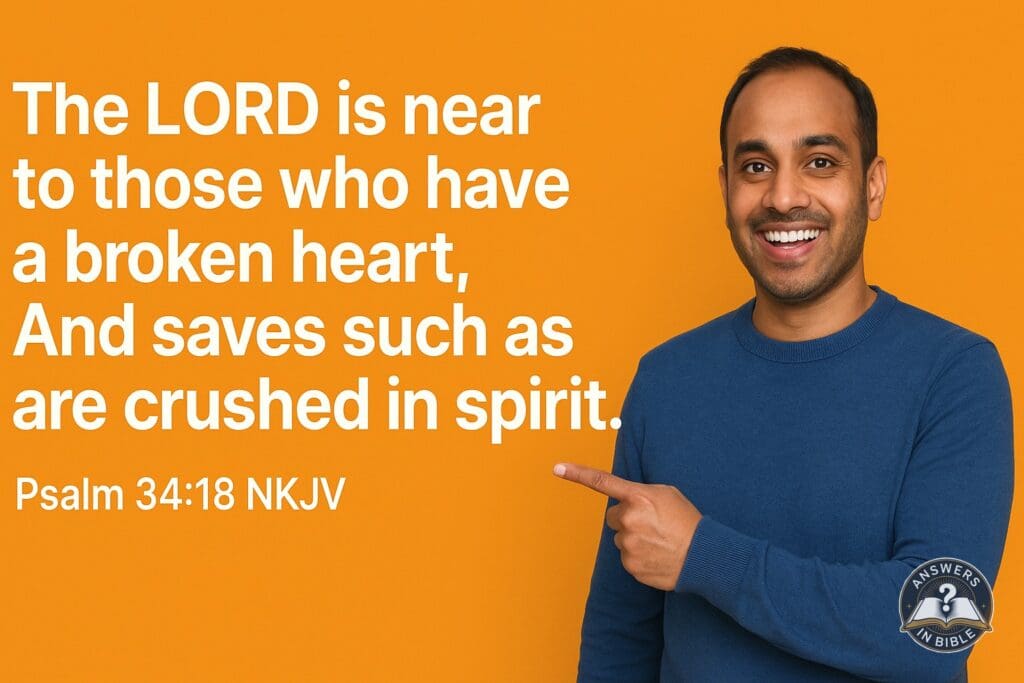
    “The LORD is near to those who have a broken heart, And saves such as are crushed in spirit” (Psalm 34:18, NKJV). Not distant during hard seasons. Near. This verse doesn’t promise God will explain the pain or remove it quickly. It promises His nearness in the middle of it.

    There’s something significant in the order of this verse. It doesn’t say God is near to those who have it all figured out, or who’ve processed their grief neatly. It’s specifically the brokenhearted and crushed in spirit who are named here.

    If you’re carrying something heavy into this new year, grief, disappointment, a loss that didn’t resolve when the calendar changed, this verse isn’t asking you to perform strength you don’t have.

    It’s an invitation to believe that nearness, not distance, is God’s posture toward you right now, exactly as you are.