In the Bible, a fool is not someone who lacks intelligence. A fool is someone who rejects God and refuses wisdom. Scripture uses the word “fool” dozens of times, mostly in Psalms and Proverbs, and it almost never describes a person’s IQ. It describes a moral and spiritual posture: a heart that has decided, one way or another, to live as though God and His instruction don’t matter. Here’s what the Bible actually says a fool is, and how it tells that fool apart from the wise.
What Does the Bible Mean by “Fool”?
The clearest definition comes from Psalm 14:1: “The fool hath said in his heart, There is no God. They are corrupt, they have done abominable works, there is none that doeth good” (Psalm 14:1 KJV). Notice where the denial happens: “in his heart,” not in a classroom or a debate. This isn’t a person who has carefully reasoned their way to atheism. It’s a person who has decided, at the level of desire and will, to live as though they answer to no one. The behavior described right after (corruption, abominable works) flows out of that decision rather than causing it.
Proverbs 1:7 makes the contrast explicit: “The fear of the LORD is the beginning of knowledge: but fools despise wisdom and instruction” (Proverbs 1:7 KJV). In the Bible’s own vocabulary, wisdom starts with reverence for God. A fool, by definition, is someone who has skipped that starting point and despises being taught otherwise. That’s why the book of Proverbs can describe a fool as someone who does plenty of “thinking” while still being a fool. The problem was never a lack of ability. It’s an unwillingness to submit that ability to God.
What Are the Marks of a Fool in Proverbs?
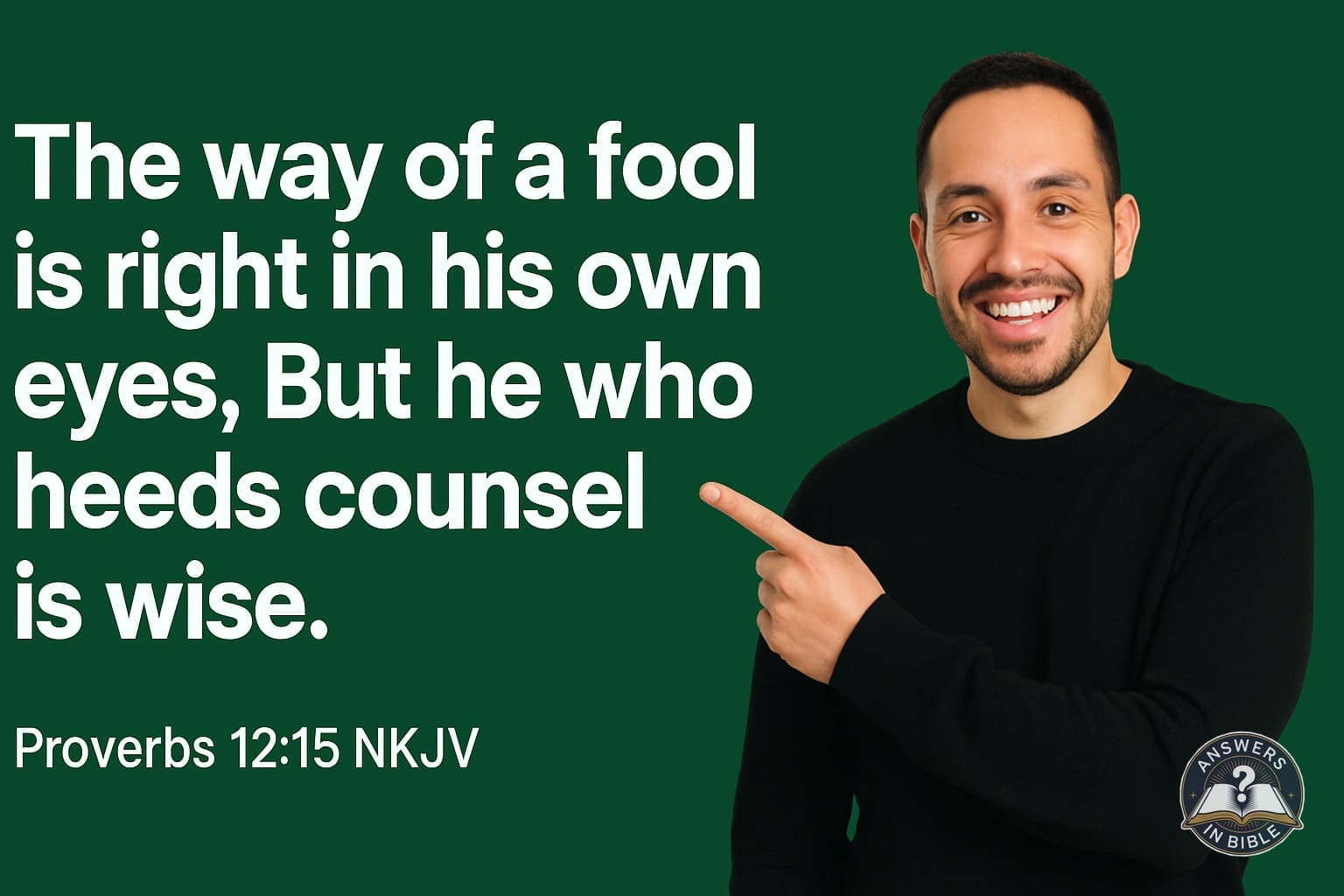
Proverbs spends far more time describing what a fool does than defining the word abstractly, and the pattern is consistent. A fool is overconfident in his own judgment: “The way of a fool is right in his own eyes: but he that hearkeneth unto counsel is wise” (Proverbs 12:15 KJV). A fool can’t hold anything back: “A fool uttereth all his mind: but a wise man keepeth it in till afterwards” (Proverbs 29:11 KJV). And a fool repeats the same mistakes without learning from them: “As a dog returneth to his vomit, so a fool returneth to his folly” (Proverbs 26:11 KJV) — an unflattering image on purpose, meant to show how pointless and self-defeating that repetition really is.
Put together, these verses describe someone who won’t take advice, can’t control his own words, and keeps returning to the same failures. None of that requires low intelligence. If anything, Proverbs assumes a fool has plenty of native ability; the tragedy is watching that ability spent on rejecting counsel instead of receiving it.
The Fool and the Wise: A Deliberate Contrast
Proverbs almost never mentions a fool without setting a wise person right next to him. That’s not an accident of style. The book is written as an ongoing invitation, not a permanent verdict — it keeps calling the “simple” and even the foolish toward wisdom rather than writing them off. “Forsake the foolish, and live; and go in the way of understanding” (Proverbs 9:6 KJV) is addressed to someone still capable of choosing differently. The Bible treats folly as a path a person is walking, not a fixed identity stamped on them forever. The same fear of the Lord that a fool despises in Proverbs 1:7 is offered to that same person as the doorway back to wisdom.
Key Bible Verses
Psalm 14:1
“The fool hath said in his heart, There is no God. They are corrupt, they have done abominable works, there is none that doeth good.” (KJV)
Proverbs 1:7
“The fear of the LORD is the beginning of knowledge: but fools despise wisdom and instruction.” (KJV)
Proverbs 26:11
“As a dog returneth to his vomit, so a fool returneth to his folly.” (KJV)
Frequently Asked Questions
Is it a sin to call someone a fool?
Jesus warned specifically against this in Matthew 5:22: “whosoever shall say to his brother, Raca, shall be in danger of the council: but whosoever shall say, Thou fool, shall be in danger of hell fire” (Matthew 5:22 KJV). The Bible’s own descriptions of folly are about a moral condition, not an insult to throw at someone in anger. Naming folly as a pattern of rejecting God is different from using “fool” as a contemptuous label for a person.
Can a fool become wise, according to the Bible?
Yes. Proverbs repeatedly invites the foolish and the “simple” to change course: “Forsake the foolish, and live; and go in the way of understanding” (Proverbs 9:6 KJV). Scripture treats folly as a path someone is on, not a permanent label, and the same fear of the Lord that opens the door to wisdom (Proverbs 1:7) is available to anyone willing to turn toward it.
Related Bible Topics
Who Was the Wisest Person in the Bible? | Good Discussion Questions to Ask About the Bible | Answers to Difficult Questions in the Bible
Ask a Deeper Question
Have a specific question about wisdom, folly, or a related passage? Ask below and get an instant, scripture-based answer.