
Tag: Matthew 5

  • When Does the New Testament Begin?

    When Does the New Testament Begin?

    The New Testament begins with the birth and ministry of Jesus Christ, but “when the New Testament begins” can mean a few different things depending on what you’re really asking. Are you asking where the New Testament sits in the order of the Bible, when the events it describes actually happened, or when the “new covenant” it describes came into effect? Each question has a clear, scripture-based answer.

    Where the New Testament Begins in the Bible

    In the order of the printed Bible, the New Testament begins immediately after the Old Testament ends, with the Gospel of Matthew. Matthew opens with the genealogy of Jesus: “The book of the genealogy of Jesus Christ, the Son of David, the Son of Abraham” (Matthew 1:1). The Old Testament closes with the book of Malachi, which points forward to a coming messenger: “Behold, I will send you Elijah the prophet before the coming of the great and dreadful day of the LORD” (Malachi 4:5). Between Malachi and Matthew, roughly 400 years pass with no new scripture written, a period often called the “silent years.” The New Testament then opens with the arrival of the one that Old Testament prophecy had been pointing toward all along.

    When the Events of the New Testament Actually Happened

    Historically, the New Testament’s story begins with the births of John the Baptist and Jesus, generally dated to around 6-4 BC, during the reign of Caesar Augustus. Paul describes the timing this way: “But when the fullness of the time had come, God sent forth His Son, born of a woman, born under the law” (Galatians 4:4). The New Testament writings themselves, the four Gospels, the book of Acts, the letters, and Revelation, were written over the following several decades, mostly within the first century AD, by eyewitnesses and close associates of Jesus and His apostles.

    When the New Covenant Itself Began

    There’s a third, more theological way to ask this question: when did the “new covenant” that gives the New Testament its name actually take effect? Scripture points to the night before Jesus’ crucifixion, at the Last Supper, when He told His disciples, “This cup is the new covenant in My blood, which is shed for you” (Luke 22:20). The book of Hebrews explains why His death was the turning point: “And for this reason He is the Mediator of the new covenant, by means of death, for the redemption of the transgressions under the first covenant, that those who are called may receive the promise of the eternal inheritance” (Hebrews 9:15). In that sense, the New Testament “begins” at the cross, where the new covenant it describes was established once for all.

    Key Bible Verses

    Matthew 1:1 – “The book of the genealogy of Jesus Christ, the Son of David, the Son of Abraham.”

    Luke 22:20 – “Likewise He also took the cup after supper, saying, ‘This cup is the new covenant in My blood, which is shed for you.’”

    Galatians 4:4 – “But when the fullness of the time had come, God sent forth His Son, born of a woman, born under the law.”

    Frequently Asked Questions

    Why is there a gap between the Old and New Testaments?

    The roughly 400 years between Malachi and Matthew is often called the “intertestamental period” or “silent years” because no new scripture was written during that time. It was a real historical period, though, marked by significant events in Jewish history, and it ends with the New Testament picking up exactly where Old Testament prophecy left off.

    Does the New Testament replace the Old Testament?

    The New Testament fulfills and completes the story the Old Testament begins rather than erasing it. Jesus Himself said, “Do not think that I came to destroy the Law or the Prophets. I did not come to destroy but to fulfill” (Matthew 5:17). Both Testaments together tell one continuous story.

    Related Bible Topics

    Ask a Deeper Question

    Have a question about scripture we didn’t cover here? Ask the Bible directly and get an instant, judgment-free answer.

  • A City on a Hill | Matthew 5:14

    A City on a Hill | Matthew 5:14

    “You are the light of the world. A city that is set on a hill cannot be hidden” (Matthew 5:14, NKJV). A city on a hill isn’t trying to be visible, it simply is, by virtue of its position.

    That’s the picture Jesus paints of a genuine follower’s life. Not a forced, performative visibility, but a natural one that follows from actually being where you’ve been placed.

    This is worth noticing if you’ve been trying hard to hide a faith that this verse says shouldn’t need hiding in the first place.

    Where have you been dimming a light that, according to this verse, was never meant to be hidden to begin with?

  • Adultery of the Heart | Matthew 5:28

    Adultery of the Heart | Matthew 5:28

    “Whoever looks at a woman to lust for her has already committed adultery with her in his heart” (Matthew 5:28, NKJV). Jesus isn’t loosening the definition of adultery here, He’s widening our understanding of where sin actually begins. Not just in what we do, but in what we allow ourselves to dwell on.

    That’s harder than it sounds. It would be simpler if holiness were only about outward behavior, the things other people can see and judge. Jesus removes that hiding place. A person can technically keep every visible rule and still have a heart that’s far from Him.

    This isn’t meant to produce shame or a mental checklist of every wandering thought. It’s an honest invitation to notice patterns, what we dwell on, return to, or feed, and to bring those patterns to God rather than pretending they aren’t there.

    The point of this kind of conviction isn’t condemnation, it’s growth. Jesus is describing the depth of the problem so that we’ll seek the depth of the solution, a renewed heart, not just better behavior on the surface.

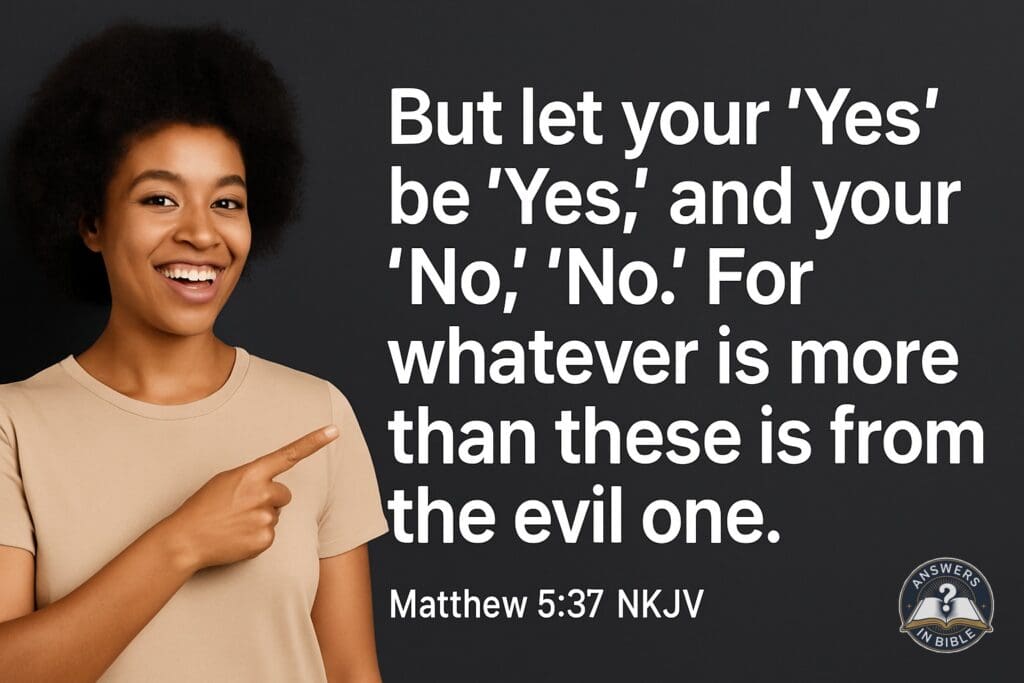
  • Let Your Yes Be Yes | Matthew 5:37

    Let Your Yes Be Yes | Matthew 5:37

    “But let your ‘Yes’ be ‘Yes,’ and your ‘No,’ ‘No.’ For whatever is more than these is from the evil one” (Matthew 5:37, NKJV). Jesus is addressing a culture of elaborate oaths here, but the principle lands squarely on ordinary honesty.

    A simple yes or no should be trustworthy on its own, without needing an oath, a qualifier, or extra assurance to back it up.

    It’s worth noticing how often we add unnecessary layers to our word, promising extra, swearing sincerity, precisely because our plain word alone doesn’t feel trustworthy enough.

    Where has your own yes or no needed extra reinforcement lately, and what would it take to let your plain word simply be trustworthy on its own?

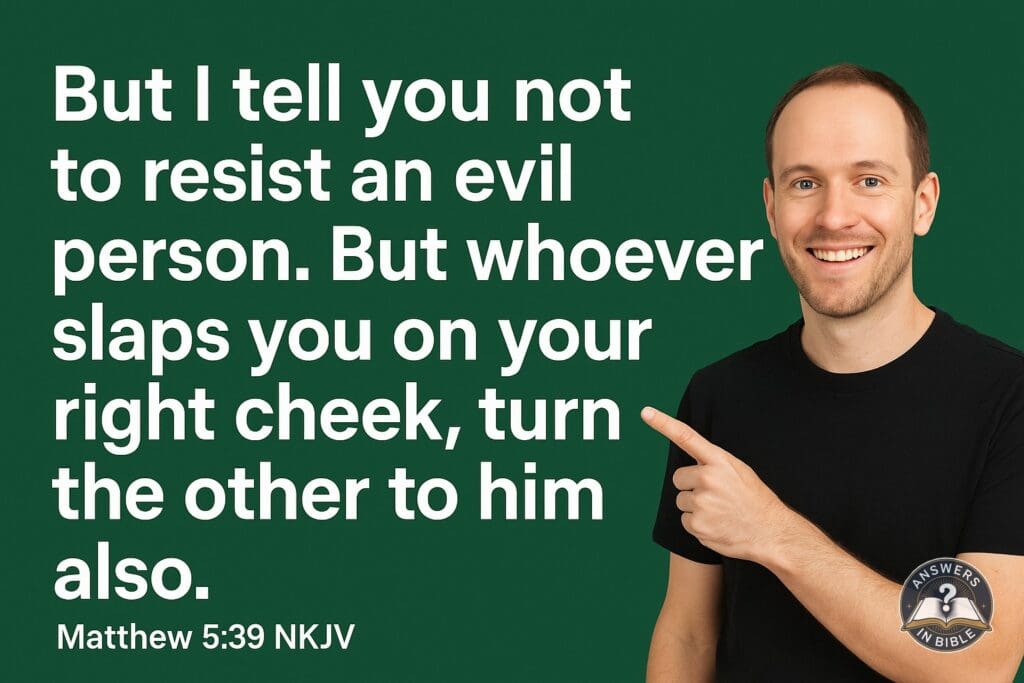
  • Turn the Other Cheek | Matthew 5:39

    Turn the Other Cheek | Matthew 5:39

    “But I tell you not to resist an evil person. But whoever slaps you on your right cheek, turn the other to him also” (Matthew 5:39, NKJV). Few of Jesus’ teachings run more directly against instinct than this one. Retaliation feels justified, even necessary. Jesus asks for the opposite.

    This isn’t a call to accept ongoing abuse or stay in unsafe situations. It’s a challenge to the reflex of returning harm for harm, refusing to let an offender’s actions dictate our own.

    Turning the other cheek is an active choice, not passive weakness. It takes real strength to refuse retaliation when every instinct says to strike back.

    Where has an instinct for retaliation been quietly shaping your response to someone who’s wronged you, when this verse invites a different, harder path instead?

  • Blessed Are the Merciful | Matthew 5:7

    Blessed Are the Merciful | Matthew 5:7

    “Blessed are the merciful, For they shall obtain mercy” (Matthew 5:7, NKJV). This beatitude draws a direct line between showing mercy and receiving it. It’s not automatic or unconditional in the way we might prefer.

    Mercy here means withholding a deserved consequence, choosing compassion over what strict fairness would demand.

    That’s harder to extend than it sounds, especially toward someone who genuinely doesn’t deserve it. This verse doesn’t ask for mercy only toward the easy cases.

    Who in your life right now would benefit from mercy you’ve been withholding because, strictly speaking, they don’t deserve it?

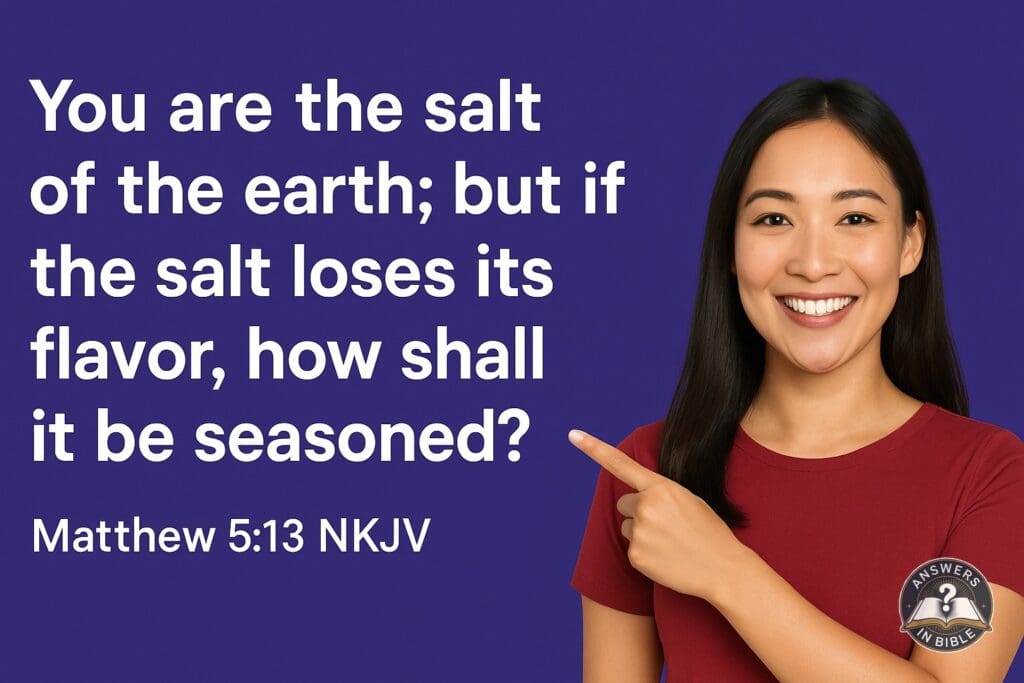
  • The Salt of the Earth | Matthew 5:13

    The Salt of the Earth | Matthew 5:13

    “You are the salt of the earth; but if the salt loses its flavor, how shall it be seasoned?” (Matthew 5:13, NKJV). Salt’s whole purpose is to be distinct from what it’s seasoning. Salt that tastes like everything around it has stopped doing its job.

    Jesus applies that image directly to His followers. The point isn’t blending in comfortably with the surrounding culture, it’s retaining a distinct flavor that actually changes what it touches.

    This is a pointed question for anyone whose life has quietly started tasting just like everything around it. What happened to the flavor?

    Where has your own distinctiveness been quietly diluting lately, blending in rather than actually seasoning what’s around you?

  • Hunger and Thirst for Righteousness | Matthew 5:6

    Hunger and Thirst for Righteousness | Matthew 5:6

    “Blessed are those who hunger and thirst for righteousness, For they shall be filled” (Matthew 5:6, NKJV). Hunger and thirst are urgent, physical images, not casual preferences. This verse describes a genuine longing, not a passing interest.

    That kind of hunger doesn’t come naturally to everyone. Plenty of appetites compete for our attention, and righteousness isn’t always the loudest one.

    The promise attached is direct: they shall be filled. Not partially satisfied, but genuinely filled, for those whose hunger is actually for righteousness.

    What are you actually hungry for today, and how much of that hunger is genuinely for righteousness rather than something else wearing its name?

  • Blessed Are Those Who Mourn | Matthew 5:4

    Blessed Are Those Who Mourn | Matthew 5:4

    “Blessed are those who mourn, For they shall be comforted” (Matthew 5:4, NKJV). This is a strange kind of blessing on the surface. Mourning isn’t typically what we associate with blessedness.

    But Jesus isn’t romanticizing grief. He’s naming a promise attached to it: comfort that meets those who are actually mourning, not those pretending they aren’t.

    This verse gives real dignity to grief, rather than treating it as something to rush past on the way to feeling better.

    If you’re mourning something right now, this verse doesn’t ask you to skip ahead to comfort before you’re ready. It simply promises the comfort is coming to meet you where you are.

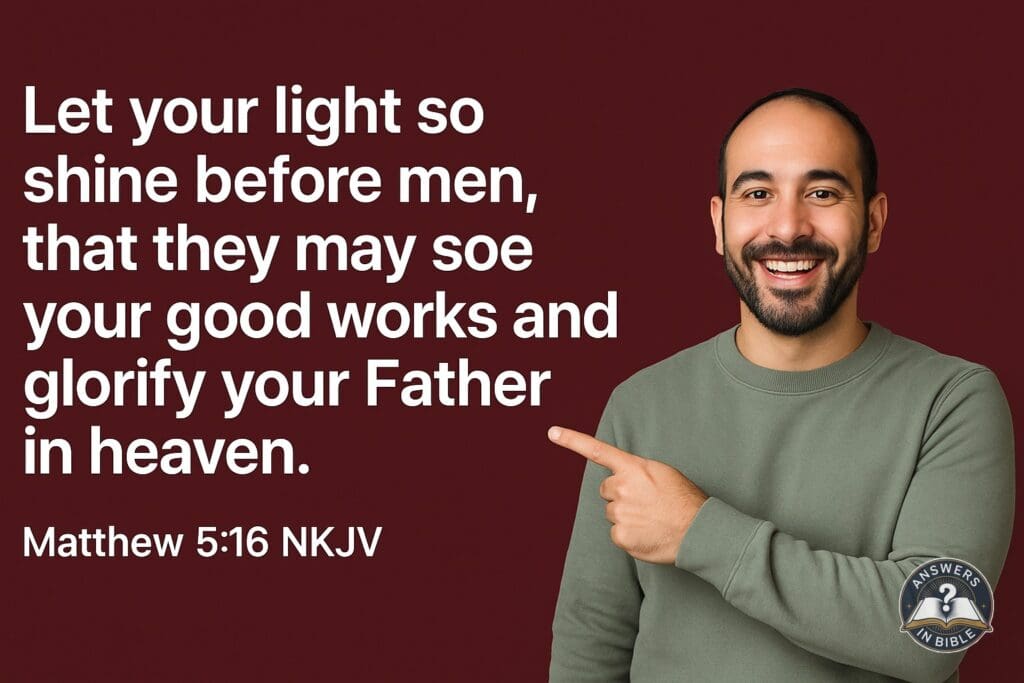
  • Let Your Light Shine | Matthew 5:16

    Let Your Light Shine | Matthew 5:16

    “Let your light so shine before men, that they may see your good works and glorify your Father in heaven” (Matthew 5:16, NKJV). Jesus isn’t calling for showy performance here. The goal named is specific: not admiration for us, but glory directed to the Father.

    That distinction matters. It’s possible to do visibly good things for the wrong reason, to be noticed, to build a reputation, rather than to point beyond ourselves.

    Letting your light shine, in this verse, means living in a way that naturally draws attention past you, toward the source of whatever good is actually happening in your life.

    Where is your light shining right now, and if someone traced it back, would it lead them to you, or past you to God?