Category: Bible Verse of the Day

  • Set a Guard Over My Mouth | Psalm 141:3

    Set a Guard Over My Mouth | Psalm 141:3

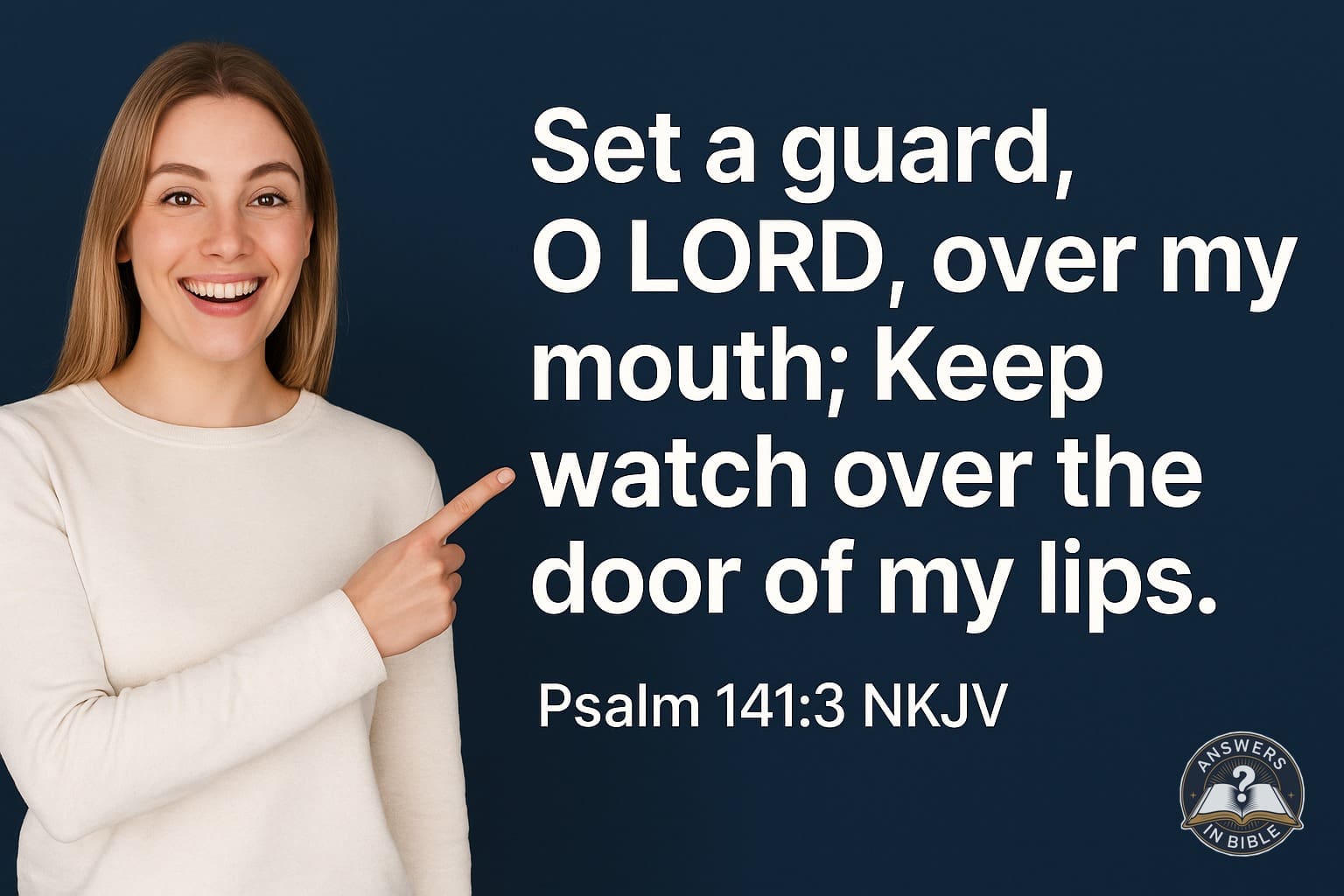
    “Set a guard, O LORD, over my mouth; Keep watch over the door of my lips” (Psalm 141:3, NKJV). This is a request for help, not a confident declaration of self-control. David asks God to do the guarding, rather than relying purely on his own discipline.

    That humility is worth noticing. Guarding our speech isn’t purely a matter of willpower. It’s something worth actually asking God’s help with.

    The door of my lips is a vivid image, a door that can be opened carelessly or guarded intentionally, depending on what’s asked of God beforehand.

    What would it look like to actually pray this specific prayer before your next difficult conversation, rather than simply hoping your own willpower holds?
  • He Will Wipe Away Every Tear | Revelation 21:4

    He Will Wipe Away Every Tear | Revelation 21:4

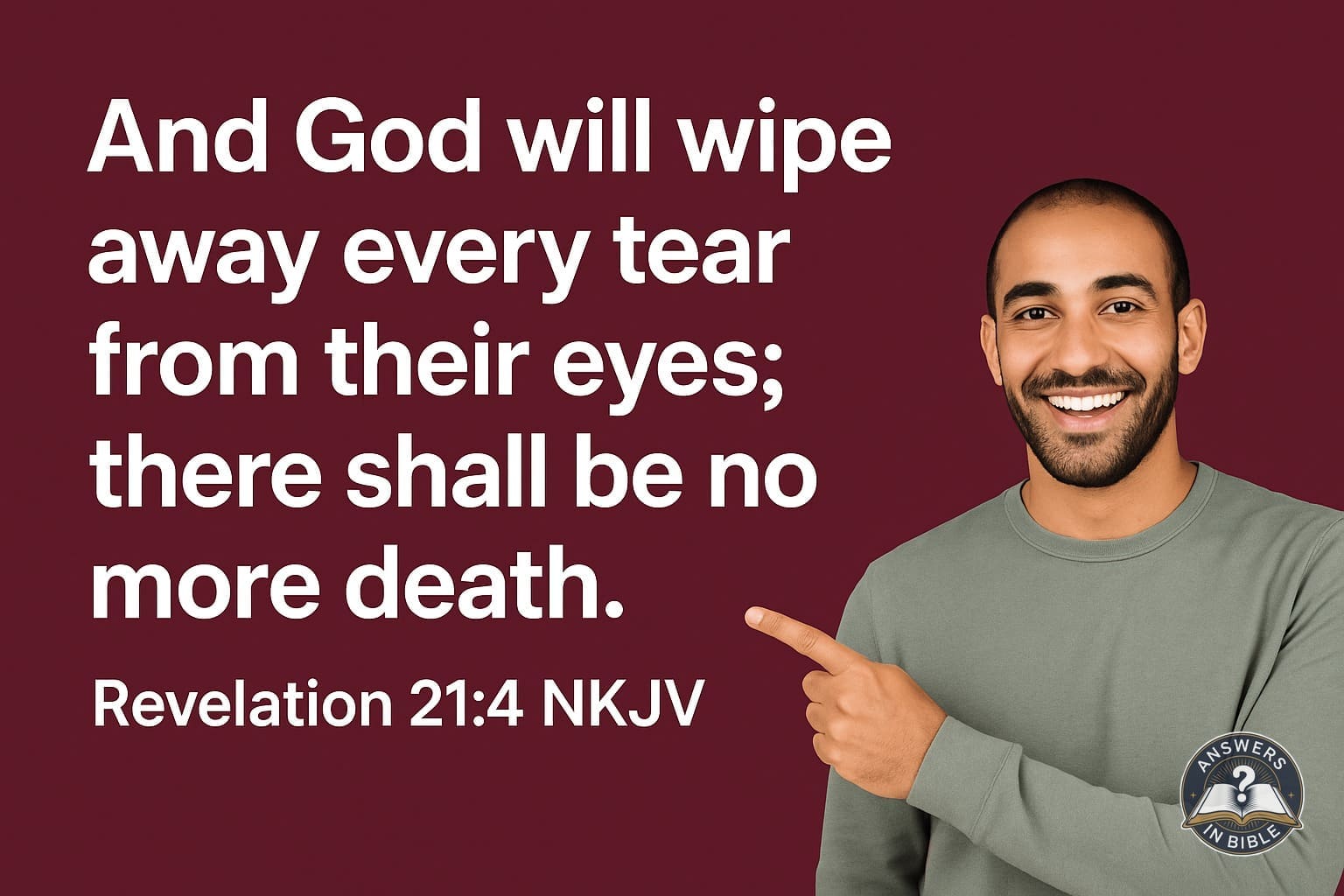
    “And God will wipe away every tear from their eyes; there shall be no more death” (Revelation 21:4, NKJV). This is a picture of the ultimate future, not vague optimism, but a specific, tender promise: God Himself wiping away every tear.

    Every tear rules out selective comfort. Not some grief addressed and some left unresolved, but every source of sorrow genuinely and finally dealt with.

    This is worth holding onto in a season of real grief. The tears matter enough to God that this verse pictures Him personally wiping them away.

    What grief are you currently carrying that this verse’s promise, every tear wiped away, is meant to give real hope for, even before that day fully arrives?

  • Perfect Love Casts Out Fear | 1 John 4:18

    Perfect Love Casts Out Fear | 1 John 4:18

    “There is no fear in love; but perfect love casts out fear” (1 John 4:18, NKJV). Casts out is an active image, love doesn’t just coexist alongside fear, it actively drives it out.

    This is worth applying to our relationship with God specifically. Fear of punishment or rejection tends to shrink as genuine love and security grow.

    That doesn’t mean healthy reverence disappears. It means the anxious, punishment-driven fear that keeps people at a distance from God isn’t what perfect love produces.

    Where has fear been quietly present in your relationship with God, in a way this verse suggests perfect love is meant to cast out rather than coexist with?

  • The Evidence of Things Not Seen | Hebrews 11:1

    The Evidence of Things Not Seen | Hebrews 11:1

    “Now faith is the substance of things hoped for, the evidence of things not seen” (Hebrews 11:1, NKJV). This verse doesn’t describe faith as wishful thinking or blind guessing. It calls it substance and evidence, real, tangible categories.

    That’s a different picture of faith than mere positive thinking. Substance suggests something with actual weight, evidence suggests something that can actually be trusted.

    This is worth remembering when faith feels flimsy or uncertain. It’s not meant to feel like guessing. It’s meant to feel like genuine confidence in what hasn’t yet been seen.

    What are you currently hoping for that this verse invites you to hold with genuine substance and evidence, rather than treating it as wishful thinking?

  • He Will Complete It | Philippians 1:6

    He Will Complete It | Philippians 1:6

    “Being confident of this very thing, that He who has begun a good work in you will complete it until the day of Jesus Christ” (Philippians 1:6, NKJV). This verse offers confidence not in our own follow-through, but in God’s.

    That distinction matters for anyone discouraged by their own inconsistency. The good work described isn’t dependent on our ability to finish what we start.

    Complete it is a strong promise. Not merely continue it or improve it, but bring it all the way to completion, on God’s timeline, not ours.

    What unfinished work in your own spiritual life feels discouraging right now, that this verse reminds you God has actually committed to completing?

  • Yet I Will Rejoice | Habakkuk 3:17-18

    Yet I Will Rejoice | Habakkuk 3:17-18

    “Though the fig tree may not blossom… Yet I will rejoice in the LORD, I will joy in the God of my salvation” (Habakkuk 3:17-18, NKJV). This verse names real, total failure, crops, flocks, everything, before declaring joy anyway.

    That order matters. The joy isn’t rooted in the circumstances actually improving. It’s rooted entirely in God Himself, held onto even when every visible sign points to nothing worth celebrating.

    This is a rare kind of joy, not dependent on outcomes at all, but on the God of salvation remaining exactly who He is regardless of the harvest.

    What circumstance in your own life currently offers nothing to celebrate, that this verse invites you to rejoice in God through anyway, not because of it?

  • In All Labor There Is Profit | Proverbs 14:23

    In All Labor There Is Profit | Proverbs 14:23

    “In all labor there is profit, But idle chatter leads only to poverty” (Proverbs 14:23, NKJV). On this Labor Day, this verse is a fitting one to sit with, honoring the dignity and fruit of honest work.

    In all labor is worth noticing. Not just impressive or visible work, but all of it, the ordinary and overlooked labor included, carries genuine profit.

    The contrast with idle chatter is sharp. Talk without follow-through produces nothing lasting, no matter how much time is spent on it.

    Today, as we honor labor, what honest work in your own life deserves more appreciation than it usually gets, whether or not anyone else notices it?

  • Blessed Be the Name of the Lord | Job 1:21

    Blessed Be the Name of the Lord | Job 1:21

    “The LORD gave, and the LORD has taken away; Blessed be the name of the LORD” (Job 1:21, NKJV). Job says this after losing his children, his wealth, and his health in a single devastating stretch of time.

    This isn’t shallow positivity or denial of the loss. It’s genuine worship offered from the middle of real devastation, naming both the giving and the taking honestly.

    That kind of worship is rare and hard-won. It doesn’t pretend the loss doesn’t hurt. It simply refuses to let the loss have the final word over who God is.

    In your own hardest losses, have you been able to bless the name of the Lord honestly, the way Job did, without pretending the pain isn’t real?

  • The Lord Looks at the Heart | 1 Samuel 16:7

    The Lord Looks at the Heart | 1 Samuel 16:7

    “For the LORD does not see as man sees; for man looks at the outward appearance, but the LORD looks at the heart” (1 Samuel 16:7, NKJV). This verse comes as Samuel is choosing Israel’s next king, initially drawn to the most impressive-looking candidate.

    God’s correction is direct. Outward appearance, the thing we naturally default to judging by, isn’t what God is actually evaluating.

    This is worth remembering both in how we judge others and how we judge ourselves. Impressive appearances can mask an unprepared heart, and unremarkable appearances can hide real depth.

    Where have you been evaluating someone, including yourself, primarily by outward appearance, when this verse redirects attention to the heart instead?

  • Your God, My God | Ruth 1:16

    Your God, My God | Ruth 1:16

    “Your people shall be my people, And your God, my God” (Ruth 1:16, NKJV). Ruth says this to Naomi, her mother-in-law, after both women have lost their husbands and Naomi urges Ruth to return to her own people instead.

    This isn’t an easy or convenient commitment. Ruth is choosing a foreign land, an uncertain future, and a God she wasn’t raised to worship, purely out of loyalty and love.

    That kind of costly loyalty is rare, and it’s worth noticing what made it possible: genuine love for Naomi that ran deeper than comfort or convenience.

    Is there a costly loyalty in your own life that this verse challenges you to actually follow through on, rather than choosing the easier, more comfortable path?