
Author: Answers In Bible

  • The Steps of a Good Man | Psalm 37:23

    The Steps of a Good Man | Psalm 37:23

    “The steps of a good man are ordered by the LORD, And He delights in his way” (Psalm 37:23, NKJV). Ordered suggests intention, not random wandering, but a path being actively directed by God.

    Delights is the striking word here. Not merely tolerates or permits, but delights, genuine pleasure taken in the direction of a life surrendered to Him.

    This is a good corrective for anyone who pictures God as a distant overseer, indifferent to the details of an ordinary life. This verse describes active delight, not distant tolerance.

    What would change today if you actually believed God delights in your way, rather than merely permitting it?
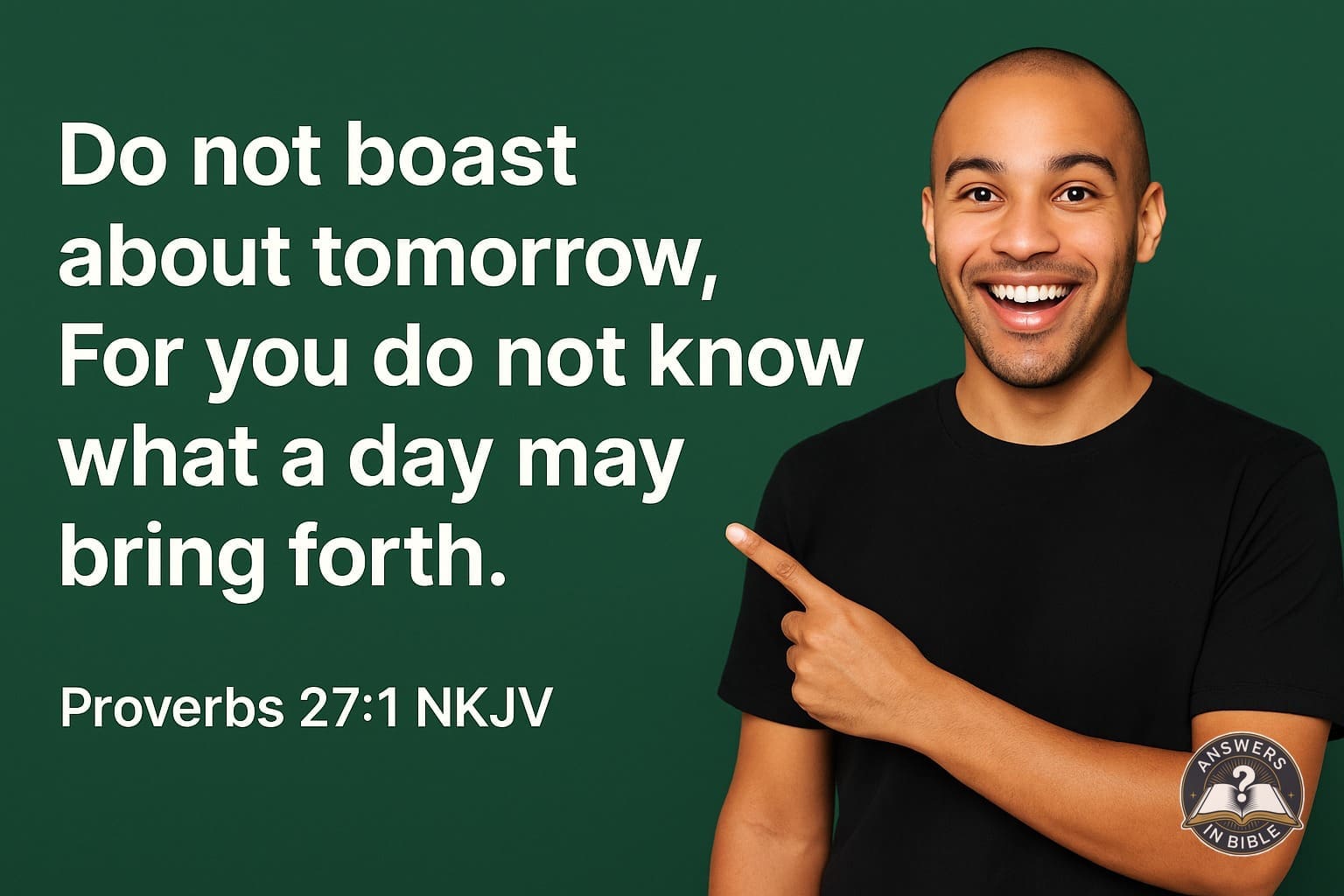

  • Do Not Boast About Tomorrow | Proverbs 27:1

    Do Not Boast About Tomorrow | Proverbs 27:1

    “Do not boast about tomorrow, For you do not know what a day may bring forth” (Proverbs 27:1, NKJV). This isn’t a call to stop planning. It’s a warning against the kind of confident boasting that assumes tomorrow is guaranteed.

    There’s real humility in holding plans loosely, acknowledging that a single day can bring something entirely unexpected, good or hard, that no amount of planning fully anticipated.

    This verse isn’t meant to produce anxiety about the future. It’s meant to produce humility, a recognition that certainty about tomorrow was never actually ours to claim.

    Where have you been boasting, even quietly to yourself, about a tomorrow that isn’t actually guaranteed?

  • Pray in the Secret Place | Matthew 6:6

    Pray in the Secret Place | Matthew 6:6

    “But you, when you pray, go into your room, and when you have shut your door, pray to your Father who is in the secret place” (Matthew 6:6, NKJV). This instruction comes right after Jesus criticizes prayer performed for an audience. His alternative is deliberately private.

    Shutting the door isn’t about secrecy for its own sake. It’s about removing the temptation to perform, praying purely for an audience of One rather than whoever might be watching.

    This is worth checking honestly. How much of your own prayer life happens unseen, versus how much is shaped, even subtly, by who might notice?

    Today, try actually shutting the door, literally or figuratively, and praying somewhere no one else will see or hear.

  • How Lovely Is Your Tabernacle | Psalm 84:1

    How Lovely Is Your Tabernacle | Psalm 84:1

    “How lovely is Your tabernacle, O LORD of hosts!” (Psalm 84:1, NKJV). This is a simple exclamation of delight, not a theological argument, just genuine appreciation for being near to where God dwells.

    Lovely is a word we don’t often use in worship language, but it fits here. There’s real pleasure described in this verse, not just duty or obligation.

    It’s worth asking whether your own experience of God’s presence carries any of this delight, or whether it’s become more routine than lovely.

    What would it take to recover some genuine delight in God’s presence today, the kind this verse describes rather than mere habit?

  • Time and Chance | Ecclesiastes 9:11

    Time and Chance | Ecclesiastes 9:11

    “The race is not to the swift, Nor the battle to the strong… but time and chance happen to them all” (Ecclesiastes 9:11, NKJV). This verse pushes back against a tidy assumption: that the fastest and strongest always come out ahead.

    Life doesn’t actually distribute outcomes that neatly. Circumstances outside anyone’s control, timing, chance, factors nobody accounted for, shape results as much as skill and strength do.

    This isn’t an argument against effort or preparation. It’s a humbling reminder that outcomes aren’t entirely within our control, no matter how swift or strong we are.

    Where have you been assuming a guaranteed outcome based purely on your own effort or ability, without accounting for the time and chance this verse names honestly?

  • Her Children Rise Up and Call Her Blessed | Proverbs 31:28

    Her Children Rise Up and Call Her Blessed | Proverbs 31:28

    “Her children rise up and call her blessed; her husband also, and he praises her” (Proverbs 31:28, NKJV). On Mother’s Day, this verse offers a fitting picture, honor that comes not from public recognition, but from the people who know a mother’s daily faithfulness best.

    Rise up suggests something active and deliberate, not a passing thought, but a genuine, spoken blessing offered in return for years of care.

    So much of motherhood happens unseen by the wider world, the early mornings, the patient repetition, the quiet sacrifices nobody else witnesses. This verse insists that faithfulness doesn’t go unnoticed forever.

    Whether you’re a mother, have a mother, or are grateful for a mother figure in your life, take a moment today to actually speak the blessing this verse describes, out loud, to someone who’s earned it.

  • Strength and Honor Are Her Clothing | Proverbs 31:25

    Strength and Honor Are Her Clothing | Proverbs 31:25

    “Strength and honor are her clothing; She shall rejoice in time to come” (Proverbs 31:25, NKJV). Clothing here isn’t literal fabric, it’s character worn so consistently it becomes part of how a person is recognized.

    Strength and honor together suggest both capability and integrity, not one without the other. This isn’t strength used carelessly, or honor without the substance to back it up.

    The result described is forward-looking confidence, rejoicing in time to come, not anxious dread about what’s ahead.

    As we head toward a day honoring mothers, this verse is worth reflecting on: what strength and honor have you seen worn like clothing in the women who’ve shaped your life?

  • My Soul Thirsts for You | Psalm 63:1

    My Soul Thirsts for You | Psalm 63:1

    “O God, You are my God; Early will I seek You; My soul thirsts for You” (Psalm 63:1, NKJV). Early here suggests priority, seeking God before the day’s demands take over, not squeezed in as an afterthought.

    Thirst is a striking word to describe this pursuit. Not a mild interest, but a genuine, physical-feeling need, the kind that won’t be ignored for long.

    David wrote this while in the wilderness, in genuine hardship, and yet the thirst described isn’t for relief from his circumstances. It’s specifically for God Himself.

    Does your own pursuit of God feel like this kind of thirst, or more like an optional, occasional check-in fit around everything else?

  • Blessed Are the Merciful | Matthew 5:7

    Blessed Are the Merciful | Matthew 5:7

    “Blessed are the merciful, For they shall obtain mercy” (Matthew 5:7, NKJV). This beatitude draws a direct line between showing mercy and receiving it. It’s not automatic or unconditional in the way we might prefer.

    Mercy here means withholding a deserved consequence, choosing compassion over what strict fairness would demand.

    That’s harder to extend than it sounds, especially toward someone who genuinely doesn’t deserve it. This verse doesn’t ask for mercy only toward the easy cases.

    Who in your life right now would benefit from mercy you’ve been withholding because, strictly speaking, they don’t deserve it?

  • Those Who Deal Truthfully | Proverbs 12:22

    Those Who Deal Truthfully | Proverbs 12:22

    “Lying lips are an abomination to the LORD, But those who deal truthfully are His delight” (Proverbs 12:22, NKJV). This verse doesn’t soften its language. Lying isn’t described as merely unwise here, it’s called an abomination.

    Truthfulness, by contrast, is called a delight, not just acceptable, but something that genuinely pleases God.

    It’s worth noticing how easily small dishonesties get rationalized as harmless, white lies, convenient omissions, exaggerations that smooth things over. This verse doesn’t leave room for that kind of minimizing.

    Is there a small dishonesty you’ve been rationalizing lately that this verse is worth applying honestly to?