Author: Answers In Bible

  • Treasure My Commands Within You | Proverbs 2:1-2

    Treasure My Commands Within You | Proverbs 2:1-2

    “My son, if you receive my words, And treasure my commands within you, So that you incline your ear to wisdom” (Proverbs 2:1-2, NKJV). Receive and treasure are active verbs here, not passive hearing, but genuine reception and safekeeping.

    There’s a difference between information that passes through and wisdom that’s actually treasured, kept close enough to shape future decisions.

    Inclining the ear suggests posture, leaning in deliberately rather than half-listening while distracted by something else.

    How much of the wisdom you’ve heard recently has actually been treasured, versus simply passing through without taking root?


  • With God All Things Are Possible | Matthew 19:26

    With God All Things Are Possible | Matthew 19:26

    “With men this is impossible, but with God all things are possible” (Matthew 19:26, NKJV). Jesus says this after His disciples react with genuine shock to something that seemed impossible by ordinary human standards.

    Notice Jesus doesn’t dispute that it’s impossible by human means. He simply adds a factor His disciples had left out: with God.

    This is worth applying honestly to whatever currently feels impossible in your own life. The verse doesn’t deny the difficulty, it just refuses to let human limitation be the final word.

    What impossible situation have you been evaluating purely by human capacity, without factoring God back into the equation this verse insists on?

  • The Counsel of the Lord Stands Forever | Psalm 33:11

    The Counsel of the Lord Stands Forever | Psalm 33:11

    “The counsel of the LORD stands forever, The plans of His heart to all generations” (Psalm 33:11, NKJV). Human plans shift constantly, revised, abandoned, replaced by better ideas. This verse describes something different, counsel that stands forever, unchanged across every generation.

    That’s a stabilizing thought for anyone anxious about how quickly everything else seems to change. Whatever else shifts, God’s counsel isn’t one more thing subject to revision.

    To all generations widens the scope beyond just your own lifetime. This isn’t only steady for you personally, it’s steady across the whole sweep of history.

    What in your life feels unstable right now that could be anchored differently by remembering this counsel, unlike everything else, actually stands forever?

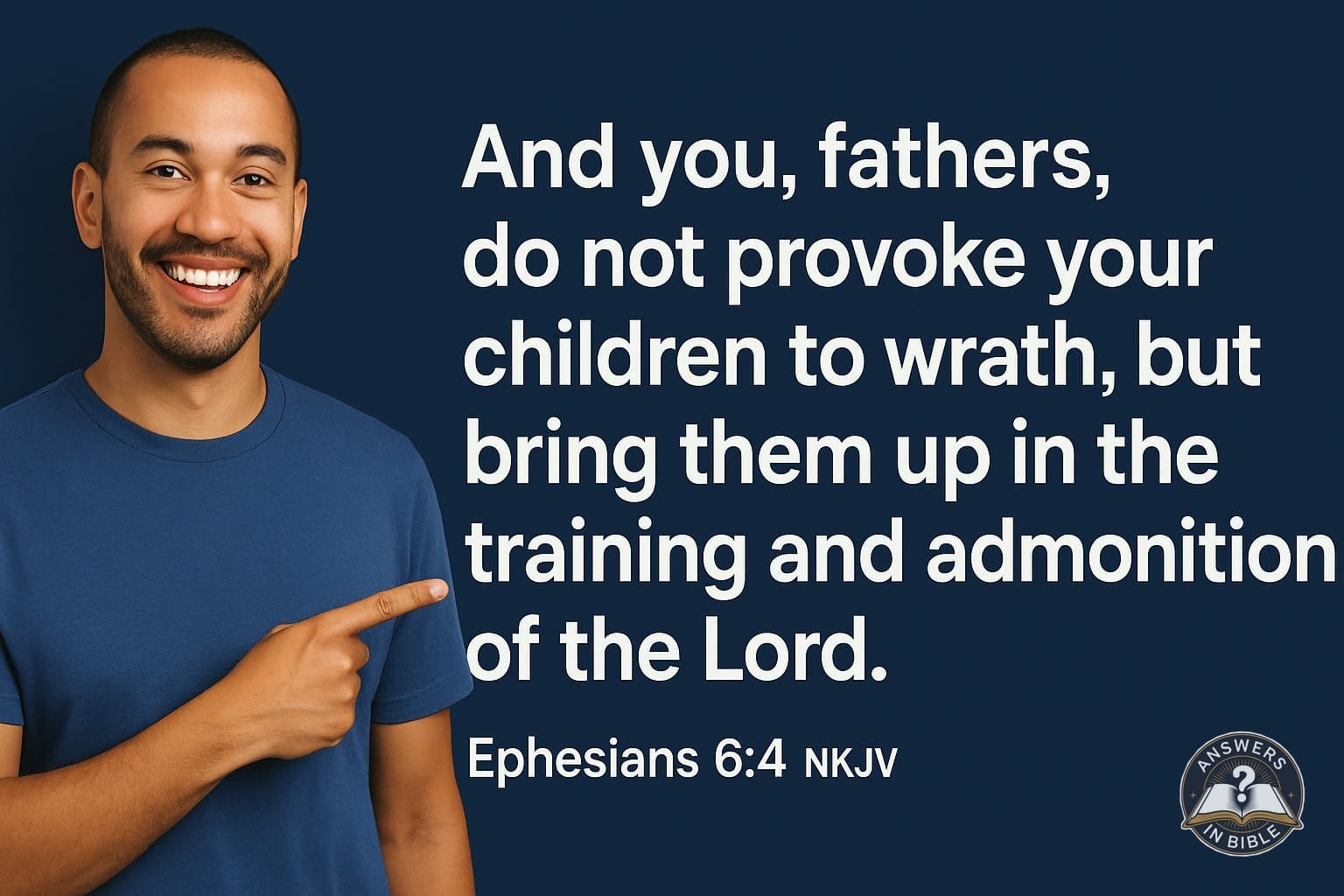
  • Bring Them Up in the Lord | Ephesians 6:4

    Bring Them Up in the Lord | Ephesians 6:4

    “And you, fathers, do not provoke your children to wrath, but bring them up in the training and admonition of the Lord” (Ephesians 6:4, NKJV). On Father’s Day, this verse offers a fitting charge, not perfection, but patient, intentional leadership.

    The warning against provoking to wrath is worth noticing first. This isn’t only a call to positive instruction, it’s also a caution against the harsh, careless patterns that can quietly wound rather than build up.

    Training and admonition of the Lord points beyond mere discipline toward genuine spiritual formation, fathers pointing their children toward God, not just toward good behavior.

    Whether you’re a father, had a father, or are grateful for a father figure in your life, take a moment today to honor the patient, intentional leadership this verse describes, wherever you’ve seen it lived out well.

  • Pleasant Words Are Like a Honeycomb | Proverbs 16:24

    Pleasant Words Are Like a Honeycomb | Proverbs 16:24

    “Pleasant words are like a honeycomb, Sweetness to the soul and health to the bones” (Proverbs 16:24, NKJV). This verse credits kind words with an almost physical effect, sweetness to the soul, health to the bones, not just a nice sentiment but genuine benefit.

    It’s worth remembering how rarely we treat our own words this seriously. A pleasant word costs little to give but this verse suggests it does real, tangible good.

    This works both directions, as the giver and the receiver of pleasant words. Both seem to benefit from the exchange, according to this verse.

    Who could use a genuinely pleasant word from you today, not empty flattery, but real, honest kindness that could function like honeycomb for them?

  • Stand Fast in Liberty | Galatians 5:1

    Stand Fast in Liberty | Galatians 5:1

    “Stand fast therefore in the liberty by which Christ has made us free, and do not be entangled again with a yoke of bondage” (Galatians 5:1, NKJV). Freedom, in this verse, isn’t just a status, it’s something to actively stand in, guarded against drifting back into old bondage.

    That drift back toward bondage rarely announces itself directly. It usually looks like slowly re-adopting old patterns, old fears, old ways of earning approval that Christ already freed us from.

    Standing fast requires active attention. Freedom secured isn’t automatically freedom maintained without ongoing intention.

    What old yoke of bondage have you been quietly drifting back toward, that this verse calls you to stand fast against instead?

  • Wait on the Lord | Psalm 27:14

    Wait on the Lord | Psalm 27:14

    “Wait on the LORD; Be of good courage, And He shall strengthen your heart; Wait, I say, on the LORD!” (Psalm 27:14, NKJV). The repetition here isn’t accidental. Wait on the Lord is said twice, as if the psalmist knows how easily this instruction gets abandoned partway through.

    This waiting isn’t passive. It’s paired directly with courage and strength, an active, engaged kind of waiting rather than simply enduring time passing.

    It’s worth noticing how tempting it is to give up on waiting right before the strengthening this verse promises actually arrives.

    Where have you been tempted to stop waiting prematurely, right when this verse’s repeated instruction is to keep waiting a little longer?

  • Every Word of God Is Pure | Proverbs 30:5

    Every Word of God Is Pure | Proverbs 30:5

    “Every word of God is pure; He is a shield to those who put their trust in Him” (Proverbs 30:5, NKJV). Every word, not most, not the convenient parts, but the whole of what God has spoken is described as pure, entirely trustworthy.

    Shield is the image attached to trusting this pure word. Not decoration or inspiration alone, but genuine protection for those who actually place their trust in it.

    This is worth remembering when parts of Scripture feel difficult or unwelcome. Purity here isn’t about being comfortable, it’s about being entirely trustworthy.

    Is there a word from God you’ve been treating as optional or negotiable, rather than trusting as part of the pure whole this verse describes?

  • Faith as a Mustard Seed | Matthew 17:20

    Faith as a Mustard Seed | Matthew 17:20

    “If you have faith as a mustard seed, you will say to this mountain, ‘Move from here to there,’ and it will move; and nothing will be impossible for you” (Matthew 17:20, NKJV). A mustard seed is famously tiny. Jesus isn’t asking for a massive amount of faith here, just genuine faith, however small.

    This reframes the question many of us ask. It’s not how much faith do I have, as though quantity were the deciding factor. It’s whether the faith, however small, is placed in someone big enough to move mountains.

    Nothing will be impossible isn’t a blank check for any request. It’s a statement about the scale of what genuine faith, even small, connects us to.

    What mountain are you currently facing that you’ve assumed requires more faith than you have, when this verse suggests even a small amount, rightly placed, is enough?

  • Do Not Hasten to Be Angry | Ecclesiastes 7:9

    Do Not Hasten to Be Angry | Ecclesiastes 7:9

    “Do not hasten in your spirit to be angry, For anger rests in the bosom of fools” (Ecclesiastes 7:9, NKJV). Hasten is the key word. This isn’t a blanket condemnation of anger itself, it’s a warning against rushing to it too quickly.

    Anger that rests, that settles in and stays rather than passing through appropriately, is named here as foolishness, regardless of how justified it might feel in the moment.

    This is a useful check for a quick temper. The question isn’t only whether anger is ever appropriate, but whether it’s being hastened toward too readily, and allowed to rest too long once it arrives.

    Where has anger been resting a little too comfortably in your own spirit lately, rather than passing through and being released?