Tag: Proverbs 27

  • Good Discussion Questions for Your Bible Study Fellowship

    Good Discussion Questions for Your Bible Study Fellowship

    A Bible study fellowship is only as good as the questions that get asked in it. Put a group of people around an open Bible with no questions to guide them, and the conversation either stalls into silence or drifts away from the text entirely. Good discussion questions do the opposite: they draw people into the passage itself, invite honest wrestling with what it says, and turn a room of individuals into a real fellowship. Here’s how to build questions that actually work, whether you’re leading a small group, a Sunday class, or a handful of friends meeting around a kitchen table.

    Why Discussion Questions Matter in a Bible Study Fellowship

    Scripture describes the early church gathering specifically for this kind of shared study: believers “continued steadfastly in the apostles’ doctrine and fellowship, and in breaking of bread, and in prayers” (Acts 2:42). Fellowship and learning were never meant to happen separately. Hebrews 10:24-25 goes further, calling believers to “consider one another to provoke unto love and to good works,” and specifically warns against “forsaking the assembling of ourselves together.” A well-chosen question is simply the tool that makes that kind of mutual consideration possible — it gives everyone in the room a way in, instead of leaving the passage to whoever talks the most.

    Questions to Open the Discussion

    Start with something low-pressure that anyone can answer, even someone who’s never opened this passage before. Good opening questions include: What stood out to you on a first read? What questions did this passage raise for you? If you had to summarize this passage in one sentence, what would it be? The goal at this stage isn’t a “correct” answer — it’s getting every voice into the room early, before the conversation narrows.

    Questions to Dig Deeper Into the Text

    Once the group is warmed up, move to questions that slow everyone down and look closer at the actual words. Try: Who is speaking, and who are they speaking to? What does this passage tell us about God’s character? Is there a word or phrase here that’s repeated, or that seems especially important? How does this passage fit into the bigger story of the book it’s from? These questions keep the group anchored to what the text actually says, rather than drifting into speculation.

    Questions That Apply Scripture to Life

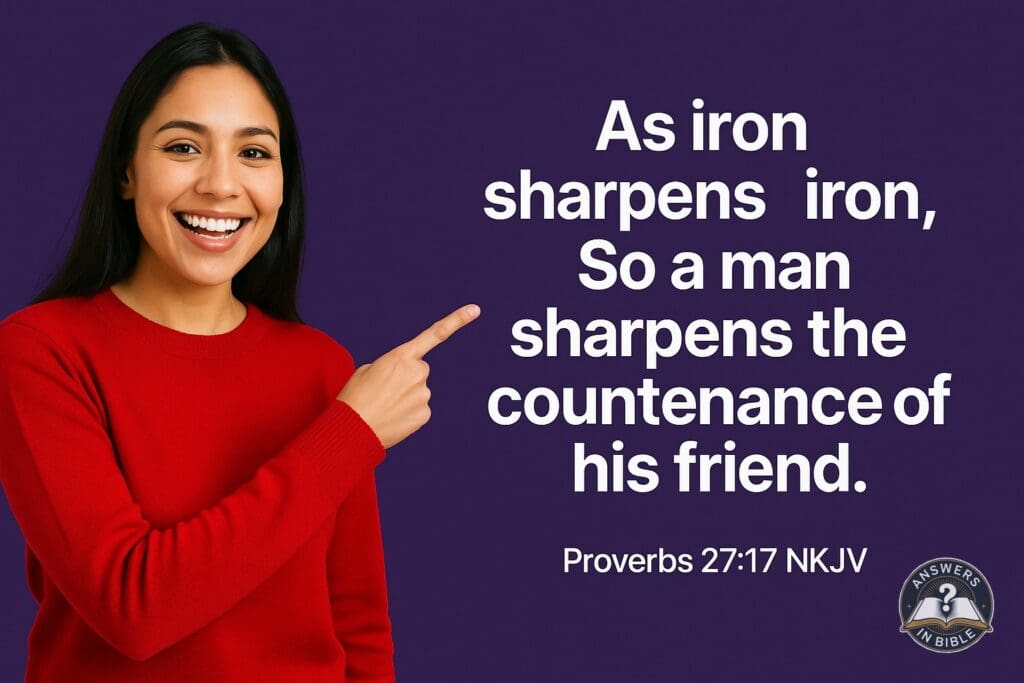
    The last step is application — turning insight into something lived out. Proverbs 27:17 puts it simply: “Iron sharpeneth iron; so a man sharpeneth the countenance of his friend.” That’s the purpose of this stage of discussion. Good application questions include: What would it look like to live this out this week? Is there something here that challenges or convicts you personally? How can this group support you in responding to what we’ve studied? Application questions work best when they’re specific and honest, not generic — and when the leader is willing to answer them too, not just ask them.

    Key Bible Verses

    Hebrews 10:24-25
    “And let us consider one another to provoke unto love and to good works: Not forsaking the assembling of ourselves together, as the manner of some is; but exhorting one another: and so much the more, as ye see the day approaching.”

    Acts 2:42
    “And they continued stedfastly in the apostles’ doctrine and fellowship, and in breaking of bread, and in prayers.”

    Proverbs 27:17
    “Iron sharpeneth iron; so a man sharpeneth the countenance of his friend.”

    Frequently Asked Questions

    How many discussion questions should a leader prepare?

    More than you think you’ll need. A short passage can still generate rich conversation, and a group that’s quiet on one question may open up on the next. Plan several open, dig-deeper, and application questions, then let the actual conversation decide which ones you use.

    What if no one answers a question?

    Silence isn’t failure — it’s often just thinking time. Resist the urge to fill it immediately. If it stretches on, try rephrasing the question more specifically, or share a short answer yourself first to model what an honest response looks like.

    Related Bible Topics

    Good Discussion Questions to Ask About the Bible | Questions to Ask When Reading and Studying the Bible | Answers to Difficult Questions in the Bible

    Ask a Deeper Question

    Have a specific question about a passage your group is studying? Ask below and get an instant, scripture-based answer.

  • The Sweetness of a Friend’s Counsel | Proverbs 27:9

    The Sweetness of a Friend’s Counsel | Proverbs 27:9

    “Ointment and perfume delight the heart, And the sweetness of a man’s friend gives delight by hearty counsel” (Proverbs 27:9, NKJV). This verse pairs something sensory and pleasant, ointment and perfume, with something relational, a friend’s hearty counsel.

    Hearty counsel suggests substance, not empty flattery, but genuine, wholehearted input from someone who actually cares.

    That kind of friendship is worth treasuring as much as any pleasant sensory experience this verse compares it to.

    Who has recently given you hearty counsel that delighted your heart the way this verse describes, and have you thanked them for it?

  • Do Not Boast About Tomorrow | Proverbs 27:1

    Do Not Boast About Tomorrow | Proverbs 27:1

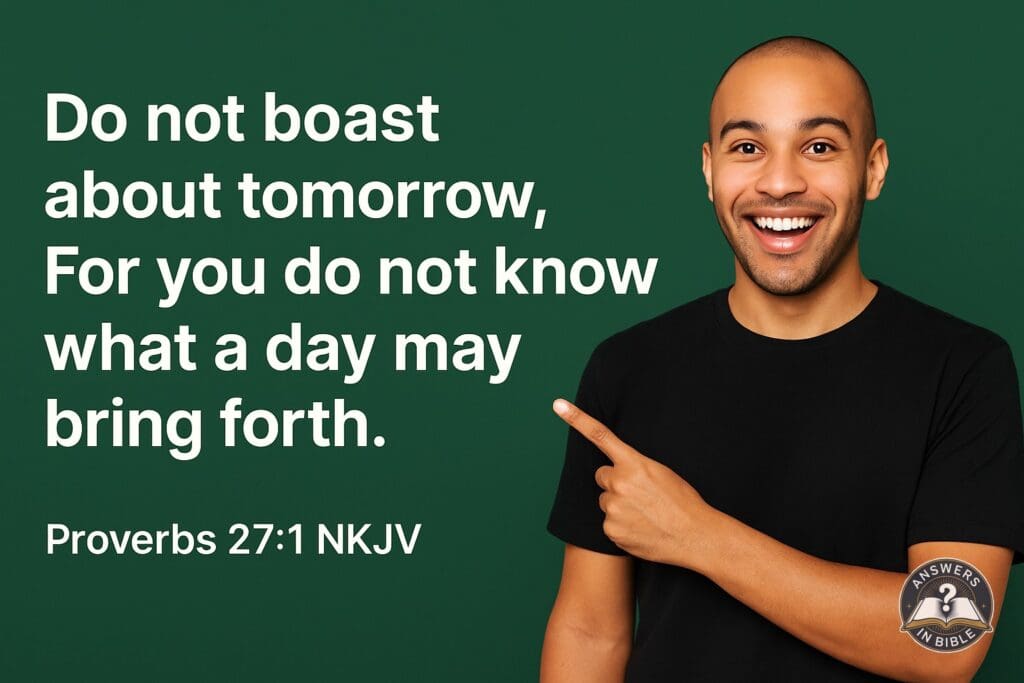
    “Do not boast about tomorrow, For you do not know what a day may bring forth” (Proverbs 27:1, NKJV). This isn’t a call to stop planning. It’s a warning against the kind of confident boasting that assumes tomorrow is guaranteed.

    There’s real humility in holding plans loosely, acknowledging that a single day can bring something entirely unexpected, good or hard, that no amount of planning fully anticipated.

    This verse isn’t meant to produce anxiety about the future. It’s meant to produce humility, a recognition that certainty about tomorrow was never actually ours to claim.

    Where have you been boasting, even quietly to yourself, about a tomorrow that isn’t actually guaranteed?

  • Heart Reveals the Man | Proverbs 27:19

    Heart Reveals the Man | Proverbs 27:19

    “As in water face reflects face, So a man’s heart reveals the man” (Proverbs 27:19, NKJV). A reflection in water isn’t a disguise, it’s an honest image of what’s actually there. This verse says the heart works the same way.

    Whatever is genuinely in the heart tends to surface eventually, in words, choices, and reactions, whether or not we intend to reveal it.

    That’s worth remembering on days we’re tempted to manage our outward image while neglecting what’s actually happening underneath. The reflection follows the heart, not the other way around.

    What would today’s reflection reveal about the actual state of your heart, apart from the image you’re hoping to project?

  • Iron Sharpens Iron | Proverbs 27:17

    Iron Sharpens Iron | Proverbs 27:17

    “As iron sharpens iron, So a man sharpens the countenance of his friend” (Proverbs 27:17, NKJV). Sharpening isn’t a gentle process. It involves friction, pressure, and heat. This verse uses that image on purpose to describe what real friendship does for us.

    It’s tempting to want friendships that only affirm and never challenge. But iron doesn’t sharpen iron by being soft. The friends who’ve shaped you most were probably the ones honest enough to push back sometimes.

    This works both directions. Are you the kind of friend who only offers comfortable agreement, or one willing to sharpen someone else, even when it’s uncomfortable for both of you?

    As you think about your relationships this year, this verse is worth using as a filter. Who’s sharpening you, and who are you sharpening in return?