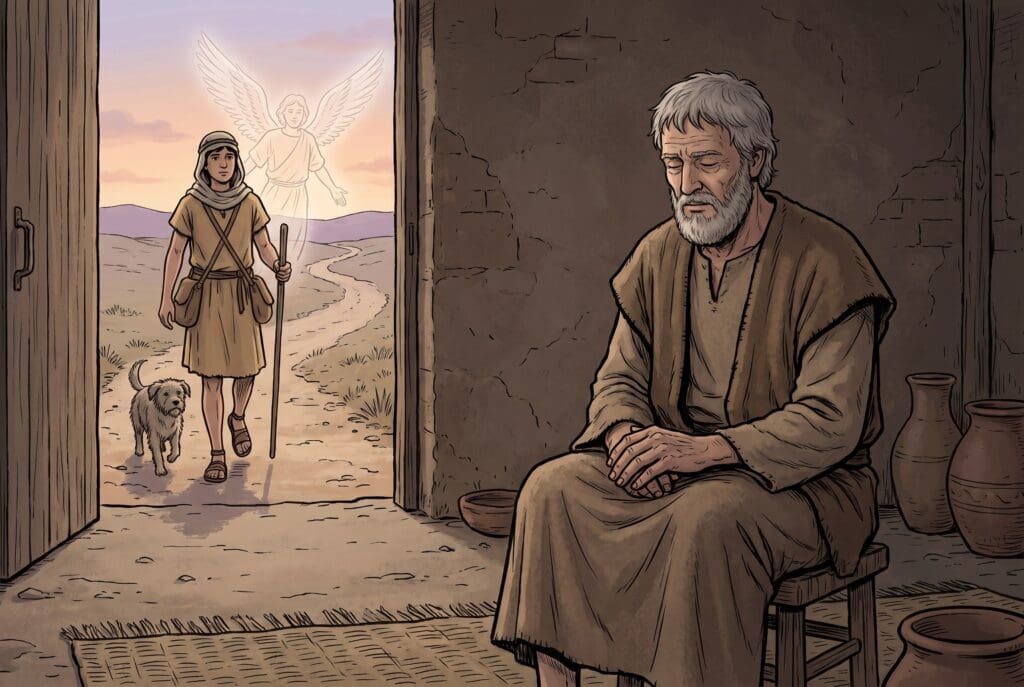
Tobit
Themes
Faithfulness to God's law and to family obligations while living as a minority in a foreign land; God's care working quietly through ordinary circumstances and an angelic guide rather than dramatic miracles; the value of almsgiving, prayer, and burying the dead as concrete expressions of righteousness; and the restoration of sight, marriage, and family fortune as a picture of God's providence rewarding patient faithfulness.
Original Language
Aramaic or Hebrew (surviving primarily in Greek)
Introduction
Tobit tells the story of a devout Israelite living in exile in Nineveh who, despite personal tragedy including blindness, continues practicing acts of righteousness such as burying the dead and giving alms, even at personal risk. His son Tobias, guided by the angel Raphael (traveling in disguise as a human companion), journeys to recover a family debt, and along the way marries a woman named Sarah who has been afflicted by a demon that killed each of her previous husbands on their wedding night.
Through Raphael's guidance, Tobias defeats the demon, brings healing and blessing to Sarah's household, and returns home to heal his father's blindness, revealing along the way that their entire journey had been quietly guided by God's providence through an angel walking among them unrecognized. The book is treasured for its warm depiction of ordinary family faithfulness, its teaching on generosity and prayer, and Raphael's memorable closing counsel on the value of prayer, fasting, and almsgiving together.
For Teachers & Pastors: A Closer Look
Tobit (likely composed in the 3rd-2nd century BC, originally in Aramaic or Hebrew, though it survives most completely in Greek and is accepted as canonical Scripture by the Catholic Church, Eastern Orthodox Church, and other traditions) is set narratively during the 8th-century BC Assyrian exile but reflects the concerns and literary style of the later Second Temple period, blending folk-tale narrative structure (the companion-guide motif, the defeated demon, recognition scenes) with serious wisdom instruction, most notably Tobit's extended ethical instructions to his son in chapter 4.
The book is notable for its developed angelology (Raphael as one of seven archangels who present the prayers of the saints, 12:15) and its explicit theology of almsgiving as efficacious before God ('almsgiving delivers from death,' 12:9), themes that had significant influence on later Jewish and Christian devotional practice. Along with Judith, it is one of the few deuterocanonical books structured as an extended narrative rather than wisdom literature or historical annals, and both books share a concern with faithful Jewish identity and practice while living under the shadow of a dominant foreign power.
