Ruth
Themes
Loyalty and steadfast love (Hebrew: hesed), belonging and inclusion of outsiders, God's care shown through ordinary events, redemption, and family lineage.
Original Language
Hebrew
Introduction
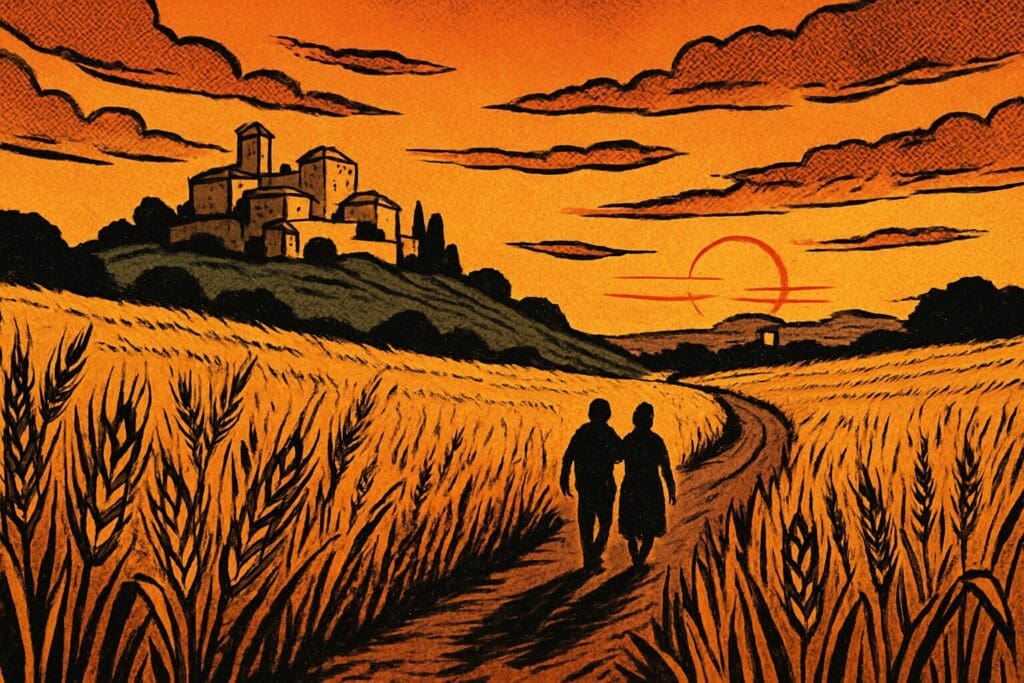
Ruth is a short story about a Moabite woman named Ruth who stays loyal to her mother-in-law Naomi after both women lose their husbands. Ruth leaves her own homeland and people to go with Naomi to Bethlehem, where she meets a man named Boaz, a relative of Naomi's late husband. Through Boaz's kindness and Ruth's faithfulness, the story shows how God cares for people during hard times, even when his name is rarely mentioned directly. Ruth becomes part of the family line that eventually leads to King David.
For Teachers & Pastors: A Closer Look
Ruth is traditionally read during the Jewish festival of Shavuot (Pentecost). Its authorship and date are debated, with proposals ranging from the early monarchy to the post-exilic period, partly based on linguistic features and its interest in genealogy and inclusion of a foreign woman within Israel's lineage. The book is a carefully constructed short narrative, often studied for its use of chiasm and repeated key words such as hesed (loyal love/kindness) and go'el (kinsman-redeemer). The go'el custom, in which a near relative redeems land or family lines through marriage, is central to the plot and is often discussed alongside Levirate marriage law in Deuteronomy 25. The closing genealogy (Ruth 4:18-22) links Ruth directly to King David, and by extension to later messianic genealogies in Matthew 1 and Luke 3.