Revelation
Themes
The ultimate victory of Jesus Christ over evil, the final judgment of the world, the persecution and perseverance of the church, vivid apocalyptic and symbolic imagery, the letters to the seven churches, and the promise of a new heaven and new earth where God dwells with His people forever.
Original Language
Koine Greek
Introduction
The book of Revelation is the last book of the Bible, written by the apostle John while he was exiled on the island of Patmos for his faith. It records a series of visions John received directly from Jesus, meant to encourage persecuted believers and reveal how history will ultimately end.
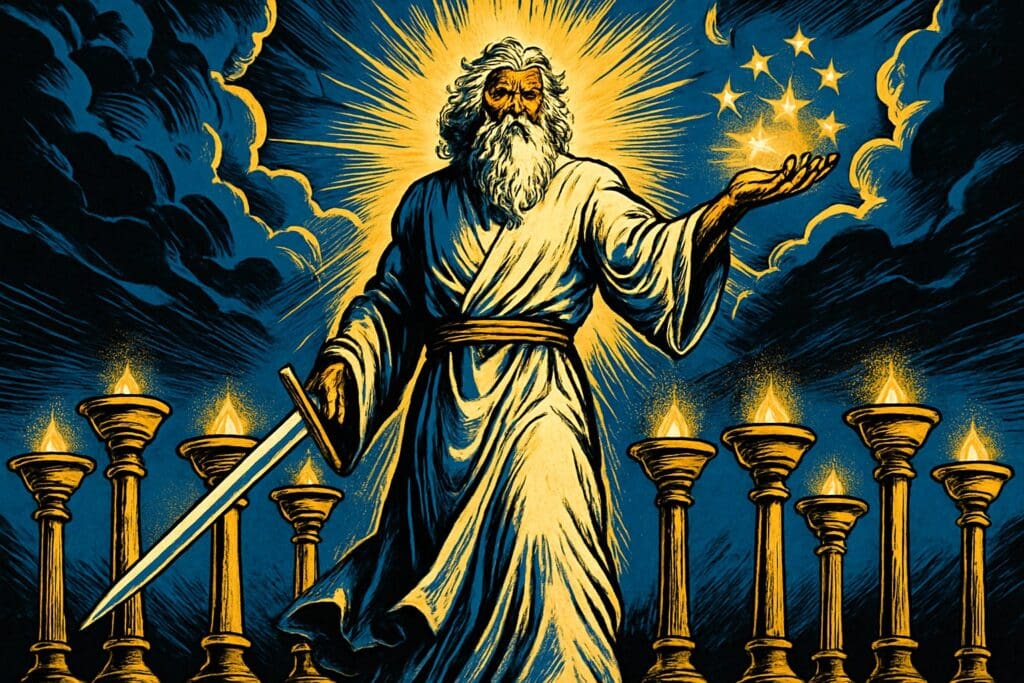
Revelation opens with Jesus appearing to John in glorious, powerful form and dictating letters to seven real churches in Asia Minor, each receiving specific praise, correction, or encouragement. From there, the book shifts into a series of dramatic, symbol-rich visions: a scroll sealed with seven seals, trumpets sounding warnings, strange and powerful creatures, a great dragon representing Satan, and beasts representing worldly powers opposed to God.
Even though the imagery can feel strange or overwhelming at first, the central message running through the whole book is remarkably clear and hopeful: no matter how dark or difficult things get, God is fully in control, evil will ultimately be defeated, and Jesus will return in triumph. The book closes with one of the most beautiful pictures in all of Scripture, a new heaven and a new earth where God will live directly among His people, and there will be no more death, sorrow, or pain.
Revelation was written to give real hope to real Christians facing real persecution, and that same hope continues to encourage believers today.
For Teachers & Pastors: A Closer Look
Revelation belongs to the genre of apocalyptic literature, which uses vivid symbolic imagery, numbers, and visions to communicate theological truth, drawing heavily on Old Testament imagery from Daniel, Ezekiel, Isaiah, and Zechariah. Recognizing this genre is essential to interpreting the book responsibly, since its imagery is meant to be read symbolically rather than as a literal, journalistic account.
Scholars generally hold to several major interpretive frameworks for the book: preterist (events largely fulfilled in the first century, especially around Rome and the fall of Jerusalem), historicist (Revelation as a symbolic outline of church history), futurist (most of the book, especially chapters 4-22, describing events still to come), and idealist (the book depicting timeless spiritual truths and the ongoing struggle between good and evil rather than a specific timeline). Faithful, careful interpreters hold each of these views, and it is worth approaching the text with humility about the details while holding firmly to its central, clear message of Christ's ultimate victory.
The number seven appears repeatedly throughout the book (seven churches, seven seals, seven trumpets, seven bowls), symbolizing completeness. The book was likely written either shortly before or shortly after AD 70, most commonly dated to the reign of Emperor Domitian in the mid-90s AD, during a period of increasing pressure on Christians to participate in emperor worship.
