Psalms
Themes
The full range of human emotion brought honestly before God, praise and worship, lament and crying out in suffering, trust in God's faithfulness and sovereignty, confession and repentance, thanksgiving, kingship and the coming Messiah, wisdom for righteous living, and the beauty of creation as a witness to God's glory.
Original Language
Hebrew
Introduction
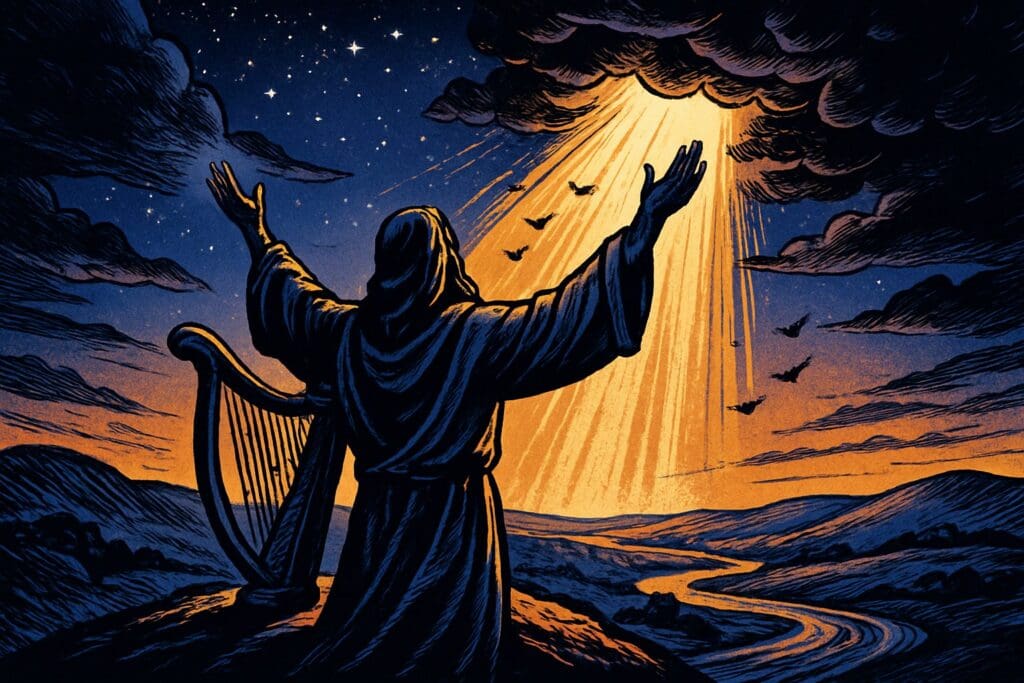
The Psalms are 150 songs and prayers, written by many different authors including David, Asaph, the sons of Korah, Solomon, and Moses, across many centuries. They give voice to every human emotion before God: joy, grief, fear, anger, gratitude, doubt, and hope. Because the Psalms are so honest, they have become the prayer book of God's people, teaching believers how to bring their whole selves, not just their polished moments, into God's presence.
For Teachers & Pastors: A Closer Look
The Psalter is traditionally divided into five books (1-41, 42-72, 73-89, 90-106, 107-150), each ending with a doxology, likely mirroring the five books of the Torah. Its genres include hymns of praise, laments (individual and communal), thanksgiving psalms, royal psalms, wisdom psalms, and imprecatory psalms. Many psalms carry musical or liturgical notations (Selah, musical instructions, authorship attributions) reflecting their original use in Israel's temple worship. The Psalms are the most frequently quoted Old Testament book in the New Testament, especially in reference to Christ's suffering, kingship, and resurrection.