Proverbs
Themes
The fear of the LORD as the beginning of knowledge, wisdom personified as a guide for daily life, the contrast between the wise and the foolish, practical instruction on speech, work, money, relationships, and self-control, and the crowning portrait of the excellent (virtuous) wife in chapter 31.
Original Language
Hebrew
Introduction
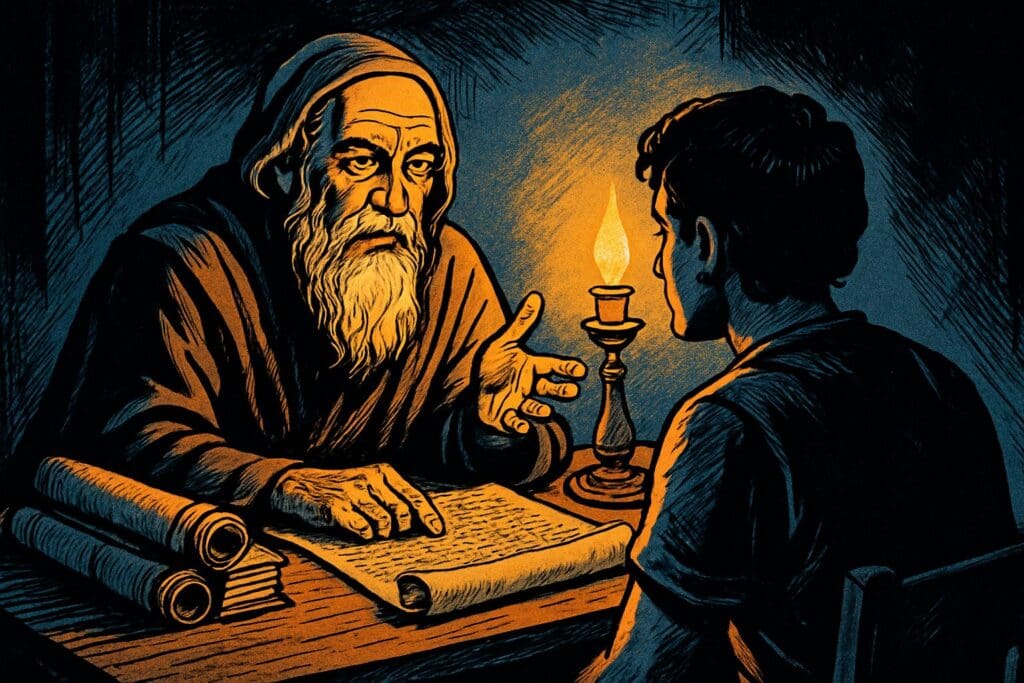
Proverbs is a book of short, memorable sayings meant to teach practical wisdom for everyday life. Most of it is credited to King Solomon, with a few chapters from other wise teachers (Agur and King Lemuel). Instead of telling one continuous story, Proverbs collects thousands of individual lessons on topics like honesty, hard work, friendship, money, anger, and raising children.
The book keeps coming back to one idea: real wisdom starts with respecting God ("the fear of the LORD is the beginning of knowledge," Proverbs 1:7). It often personifies Wisdom as a woman calling out in the streets, inviting people to choose her path instead of foolishness. The final chapter closes with a well-known poem describing a hardworking, capable, and God-fearing woman — a picture of wisdom lived out.
For Teachers & Pastors: A Closer Look
Proverbs belongs to the Wisdom Literature of the Hebrew Bible, alongside Job and Ecclesiastes, and reflects a broader Ancient Near Eastern tradition of instructional wisdom sayings (compare, for instance, the Egyptian Instruction of Amenemope, which shares some structural and thematic parallels with Proverbs 22:17-24:22). The book is not a single unified composition but a collection of collections: chapters 1-9 form an extended set of parental exhortations and the Wisdom/Folly personification poems; chapters 10-22:16 and 25-29 are collections of short, mostly two-line proverbs attributed to Solomon (with 25:1 noting that Hezekiah's men copied out a further Solomonic collection); chapters 22:17-24:34 contain the "sayings of the wise"; and chapters 30-31 preserve the words of Agur and King Lemuel, non-Israelite or otherwise distinct wisdom voices.
Proverbs' wisdom is covenantal rather than purely pragmatic: "the fear of the LORD" (yir'at YHWH) frames the whole book (1:7, 9:10) as the epistemological starting point for all other wisdom, distinguishing Israel's wisdom tradition from surrounding cultures' more purely observational proverbs. The personification of Wisdom (Hebrew hokmah, a feminine noun) as a figure present at creation (8:22-31) has drawn significant theological attention, including later Christian reflection connecting Proverbs 8 to Christology. Teachers and pastors will also want to note the genre distinction between the book's individual, often decontextualized proverbs (which describe general tendencies, not ironclad promises) and its extended poetic units, which repay closer literary and rhetorical analysis.
