Philippians
Themes
Joy and contentment in every circumstance, Christ's humility and exaltation as the model for Christian living, partnership in the gospel, pressing on toward spiritual maturity, and finding true righteousness in Christ rather than personal achievement.
Original Language
Koine Greek
Introduction
Philippians is a warm, deeply affectionate letter written by Paul, likely from prison, to the church in Philippi, a congregation that had partnered closely with him in ministry and generously supported him financially from the very beginning.
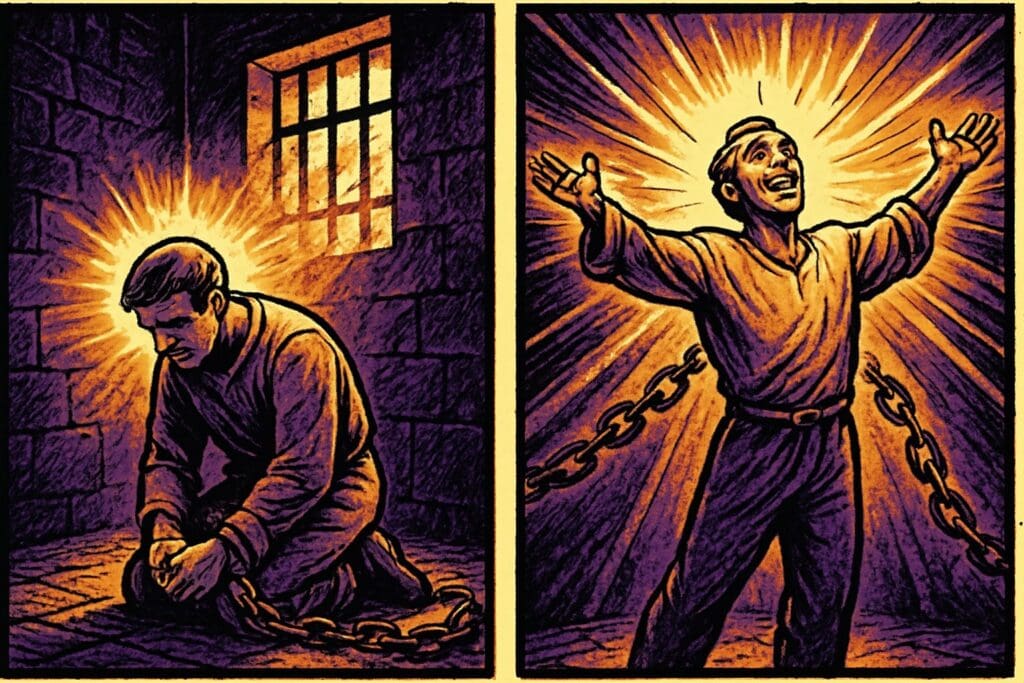
Despite being written from difficult circumstances, Philippians is remarkably joyful, with Paul repeatedly urging believers to rejoice in the Lord always. He explains that his imprisonment has actually advanced the gospel, and that whether he lives or dies, his goal remains the same: that Christ would be honored.
The letter's most famous passage describes Christ's humility, who though existing in the form of God, emptied Himself, took on human form, and humbled Himself to the point of death on a cross, for which God highly exalted Him. Paul holds this up as the model for how believers should treat one another, with humility and selfless concern for others.
Paul also shares his own testimony of counting his impressive religious credentials as worthless compared to knowing Christ, and encourages believers to press on toward spiritual maturity, think about what is true and praiseworthy, and find contentment in Christ regardless of their circumstances.
For Teachers & Pastors: A Closer Look
Philippians was written by Paul during an imprisonment (1:7, 13-14), traditionally understood as his Roman imprisonment (c. AD 60-62), though some scholars have proposed an earlier Ephesian imprisonment (not directly attested in Acts but suggested by 2 Corinthians 1:8-9 and 11:23's mention of frequent imprisonments), which would place the letter earlier, in the mid-50s.
Philippi held special significance as a Roman colony populated substantially by military veterans, giving its citizens Roman citizenship and civic pride -- a detail scholars connect to Paul's repeated use of citizenship language in the letter (1:27, 'let your manner of life be worthy,' using politeuomai, a civic/political term; 3:20, 'our citizenship is in heaven'), likely resonating powerfully with an audience proud of its own Roman civic status.
Philippians 2:6-11 (the 'Christ Hymn') is widely regarded by scholars as an early, pre-existing hymn or confessional formula that Paul incorporates into the letter (rather than composing spontaneously), notable for its tightly structured movement from Christ's pre-existent equality with God, through His self-emptying (kenosis) incarnation and death, to His subsequent exaltation and universal acclamation -- it remains one of the most theologically significant and widely studied Christological texts in the New Testament, foundational to later doctrinal formulations of Christ's divine and human natures.
