Obadiah
Themes
The danger of pride and self-reliance on natural defenses, betrayal of family in a time of crisis, and the certainty that God will hold every nation accountable for how it treats His people, on the coming universal Day of the LORD.
Original Language
Hebrew
Introduction
Obadiah is the shortest book in the Old Testament, just one chapter, but it delivers a sharp and focused message of judgment against Edom, the nation descended from Esau, Jacob's brother. Edom's sin was betrayal: when Jerusalem fell under attack, instead of helping their close relatives Israel, the Edomites stood by, gloated, looted the city, and even handed over fleeing survivors to their enemies.
Obadiah declares that Edom's pride in their seemingly impenetrable mountain strongholds would not save them, and that 'as you have done, it will be done to you,' a principle of reciprocal justice running through the whole book. Despite its brevity and narrow focus on a single nation, Obadiah closes with a wider vision: the Day of the LORD is near for all nations, but deliverance and restoration await God's people, and ultimately, 'the kingdom shall be the LORD's.'
For Teachers & Pastors: A Closer Look
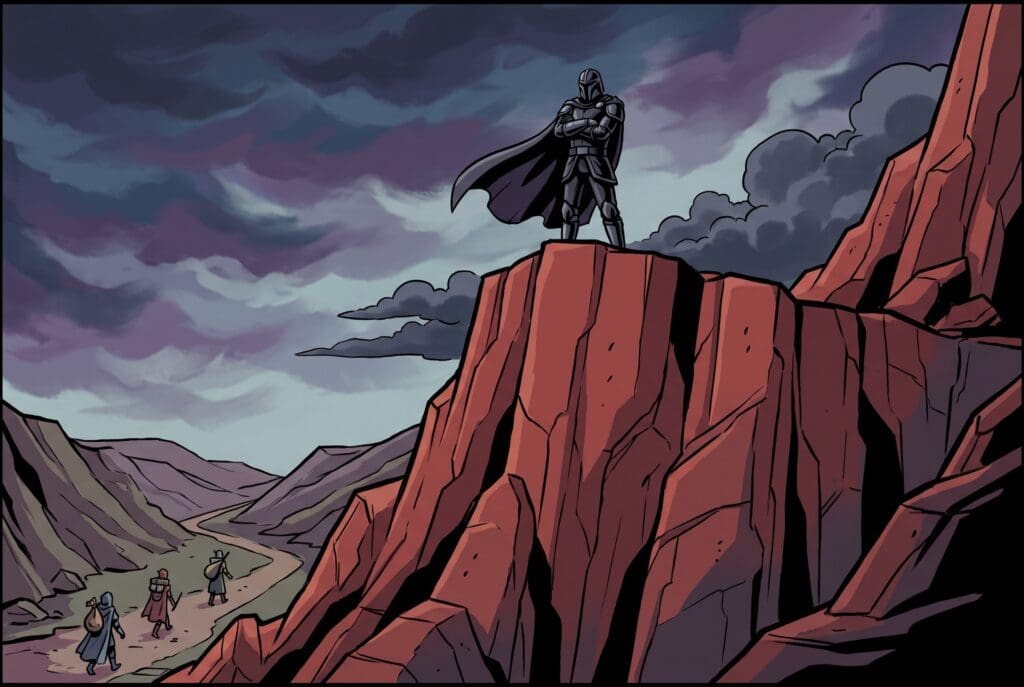
Obadiah's precise date is debated, with the book's placement most commonly connected to Edom's participation in or approval of Jerusalem's fall to Babylon in 586 BC (echoing similar condemnations of Edom in Psalm 137:7, Lamentations 4:21-22, and Ezekiel 25:12-14, 35:1-15), though some scholars date it earlier, to a 9th-century BC conflict between Judah and Edom during Jehoram's reign (2 Kings 8:20-22, 2 Chronicles 21:8-10). Edom, descended from Esau, occupied a mountainous, naturally fortified region south of the Dead Sea, and the book's condemnation of their pride in vv. 3-4 ('though you soar aloft like the eagle... I will bring you down') plays directly on this geographic self-confidence.
The book's central charge (vv. 10-14) is Edom's violence against their 'brother Jacob' at the moment of Judah's greatest vulnerability, standing aloof, gloating, looting, cutting off fugitives, and handing over survivors, treating kinship obligations as void precisely when they mattered most. The lex talionis principle in verse 15, 'as you have done, it shall be done to you,' connects Edom's specific judgment to the broader, universal 'Day of the LORD' theme shared across the Minor Prophets. The book closes (vv. 17-21) with deliverance on Mount Zion and a vision of restored Israelite territory, ending with the declaration that 'the kingdom shall be the LORD's,' a fitting capstone to a book about whose kingdom ultimately prevails.
