Nahum
Themes
God's justice against a brutal oppressor, His patient but not endless forbearance, comfort for the afflicted that persistent evil will not go unanswered, and the certainty of divine judgment on cruelty and violence, however powerful the offender.
Original Language
Hebrew
Introduction
Nahum is a short, intense book of judgment against Nineveh, the capital of the Assyrian empire, roughly a century after Jonah preached there and the city famously repented. By Nahum's time, Assyria had returned to its old ways, becoming feared across the ancient world for extraordinary cruelty and violence, including the earlier destruction of the northern kingdom of Israel.
Where Jonah is a book about God's mercy toward a repentant Nineveh, Nahum is a book about God's justice toward an unrepentant one. Nahum declares that the LORD is slow to anger but great in power, and He will not leave the guilty unpunished, offering both a vivid, almost cinematic description of Nineveh's coming military defeat and genuine comfort to those who had suffered under Assyrian brutality. Nahum reminds readers that God's patience has limits, and that persistent, unrepented cruelty will ultimately face a reckoning.
For Teachers & Pastors: A Closer Look
Nahum's prophecy can be dated with unusual precision between two historical events it references: the fall of Thebes (No-amon) to Assyria in 663 BC, mentioned as already having occurred (3:8-10), and the fall of Nineveh itself to a coalition of Babylonians and Medes in 612 BC, which the book vividly anticipates but has not yet occurred, placing Nahum's ministry sometime in that roughly 50-year window, likely closer to 612 BC given the immediacy of the coming judgment described.
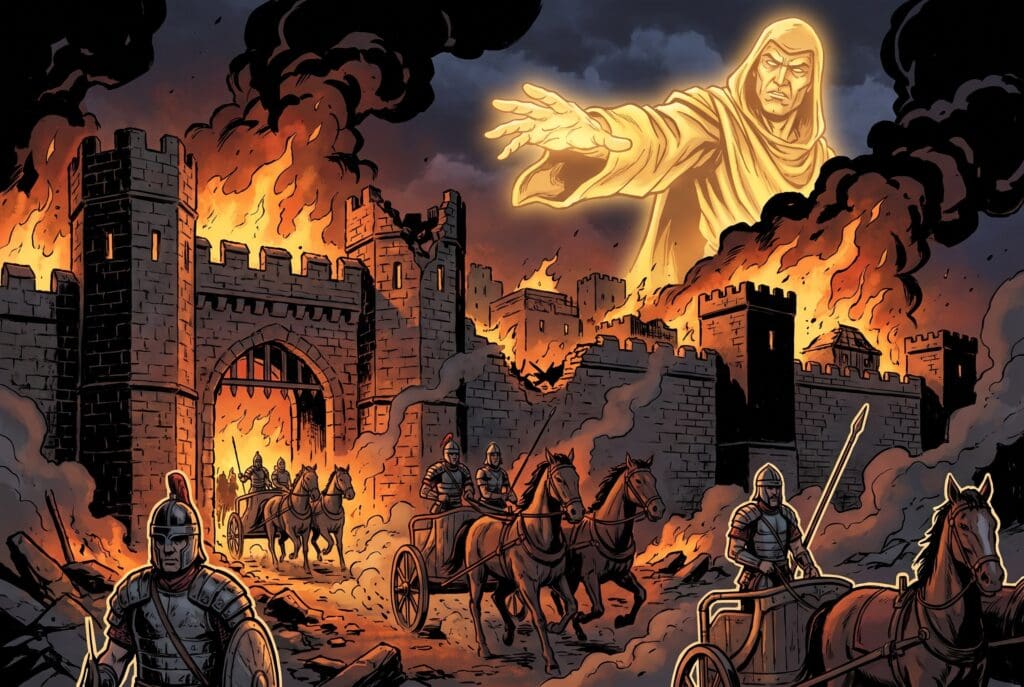
The book opens with an acrostic-influenced hymn describing God's character, both His patience ('slow to anger') and His power to execute justice (1:2-8), before turning to describe Nineveh's coming destruction in vivid, almost cinematic military detail: chariots racing through streets, officers stumbling, the city's defenses collapsing (chapter 2). Chapter 3 pronounces a formal 'woe' oracle against Nineveh, itemizing its crimes (deceit, plunder, violence, and idolatrous 'prostitution' in the sense of political manipulation and false alliances) and comparing its coming fate to that of Thebes, another great city that had fallen despite seeming impregnable. Nahum functions as something of a sequel to Jonah: Nineveh's repentance under Jonah's preaching (roughly a century earlier) proved temporary, and this book shows God's justice ultimately catching up with persistent, unrepented cruelty.
