Joshua
Themes
God's faithfulness in fulfilling His land promise, the necessity of courageous obedience, the seriousness of complete faithfulness versus partial compromise, and the importance of each generation renewing its own commitment to serve the LORD.
Original Language
Hebrew
Introduction
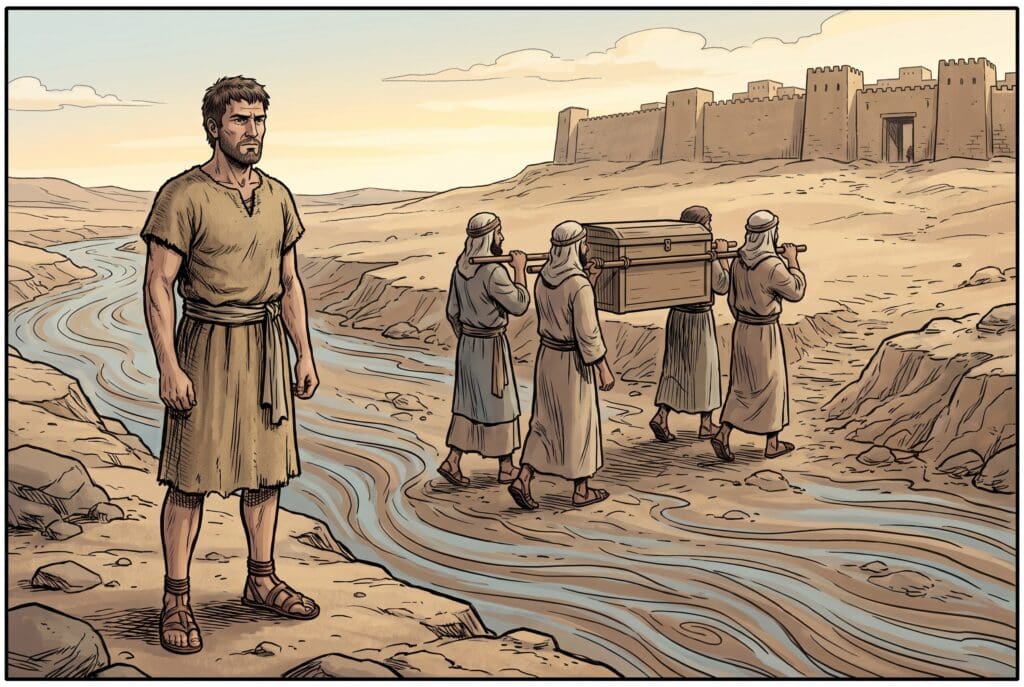
Joshua picks up immediately after Moses's death, following Israel's new leader as he finally leads the nation across the Jordan River into the land God had promised centuries earlier to Abraham. The book records the dramatic conquest that follows, the fall of Jericho's walls, the sun standing still at Gibeon, and a series of decisive military campaigns that break the Canaanite nations' hold on the land, all under God's direct guidance and power.
Once the fighting largely subsides, the book shifts to the practical work of dividing the land among Israel's twelve tribes, careful, detailed, and sometimes tedious record-keeping that nonetheless shows God's promise being fulfilled in concrete, specific terms. Joshua closes with an aging Joshua's own farewell address, challenging the new generation with words that still echo today: "choose for yourselves this day whom you will serve... as for me and my household, we will serve the LORD."
For Teachers & Pastors: A Closer Look
Joshua serves as the theological and narrative bridge between the Torah's covenant promises and the historical books that follow, structured in two clear halves: the conquest of the land (chapters 1-12, including the fall of Jericho in chapter 6 and the covenant renewal and Achan's sin at Ai in chapters 7-8) and the division of the land among the twelve tribes (chapters 13-21), followed by two concluding farewell addresses (chapters 22-24). Traditional Jewish authorship attributes portions of the book to Joshua himself, though the record of his own death in the final chapter and occasional editorial notes ("to this day") indicate at least some later compilation or editing.
The conquest narrative, while describing dramatic total victories in its summary statements, is read by many scholars alongside the book's own later notes (such as Judges 1's list of territories not yet fully conquered) as describing an initial, decisive breaking of Canaanite military power rather than instant, complete occupation of every city, a process that continued gradually over subsequent generations. The book's repeated emphasis on courage ("be strong and courageous," repeated to Joshua four times in chapter 1 alone) and complete covenant faithfulness, dramatized negatively through Achan's sin at Ai and positively through Caleb's persistent faith, sets up the recurring theological pattern the book of Judges will trace in reverse: blessing tied to obedience, and decline tied to compromise and partial faithfulness.
