Jonah
Themes
God's compassion extending even to Israel's enemies, the folly of running from God's calling, genuine versus resentful obedience, and God's patient dealing with a reluctant, imperfect prophet.
Original Language
Hebrew
Introduction
Jonah is unlike any other prophetic book: rather than a collection of oracles, it's a narrative about the prophet himself, and not a flattering one. When God calls Jonah to preach repentance to Nineveh, capital of the brutal Assyrian empire and Israel's feared enemy, Jonah instead boards a ship heading the opposite direction, unwilling to see God's mercy extended to people he considers undeserving of it.
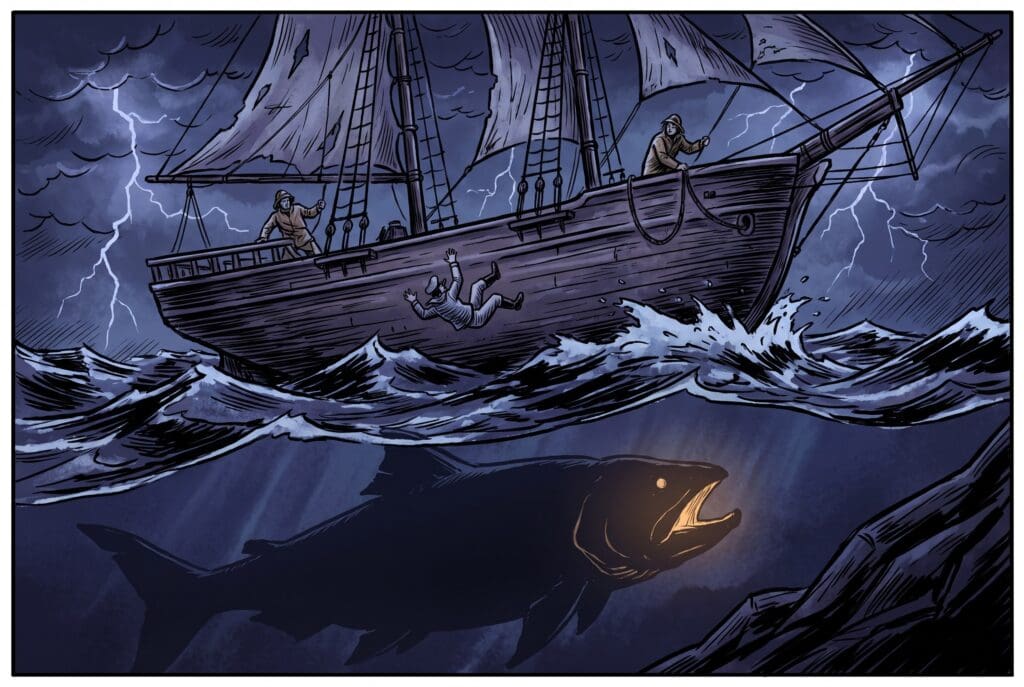
After being thrown overboard during a storm and swallowed by a great fish, Jonah is given a second chance, and this time he goes to Nineveh, where his brief message produces astonishing citywide repentance, from the king down to the animals. Rather than celebrating, Jonah becomes angry that God showed mercy exactly as he feared He would. The book ends not with resolution but with a pointed question from God, leaving readers to wrestle with whether they, like Jonah, resist God's compassion toward people they'd rather see judged.
For Teachers & Pastors: A Closer Look
Jonah son of Amittai is mentioned as a historical prophet in 2 Kings 14:25, active during the reign of Jeroboam II (roughly 793-753 BC), placing the book's setting in the 8th century BC, when Assyria (though not yet at its most powerful peak) was already known for military brutality, making Jonah's reluctance to see it spared understandable even if not justified. The book is structured in two parallel movements: chapters 1-2 (Jonah's flight, the storm, and his prayer from inside the fish) and chapters 3-4 (Jonah's mission to Nineveh, the city's repentance, and Jonah's angry response), each opening with a divine commission and Jonah's reaction to it.
The book's climax is not Nineveh's repentance but God's closing question to Jonah in 4:10-11, contrasting Jonah's concern for a short-lived plant with God's concern for Nineveh's many thousands of people (and even its animals), leaving the book's ending deliberately unresolved regarding whether Jonah's attitude changes. Jesus references 'the sign of Jonah' in Matthew 12:39-41 and Luke 11:29-32, comparing Jonah's three days in the fish to His own coming death and resurrection, and noting that Nineveh's repentance at Jonah's preaching would stand in judgment against those who rejected a greater message. The book's genre (historical narrative versus parable or extended metaphor) has been debated by scholars, though its inclusion among the Minor Prophets and Jesus's own reference to Jonah as a historical figure are significant considerations in that discussion.
