Joel
Themes
The 'Day of the LORD' as both immediate judgment and a coming universal reckoning, genuine repentance described as tearing the heart rather than the garments, and God's promise to pour out His Spirit on all people, restoring what was lost.
Original Language
Hebrew
Introduction
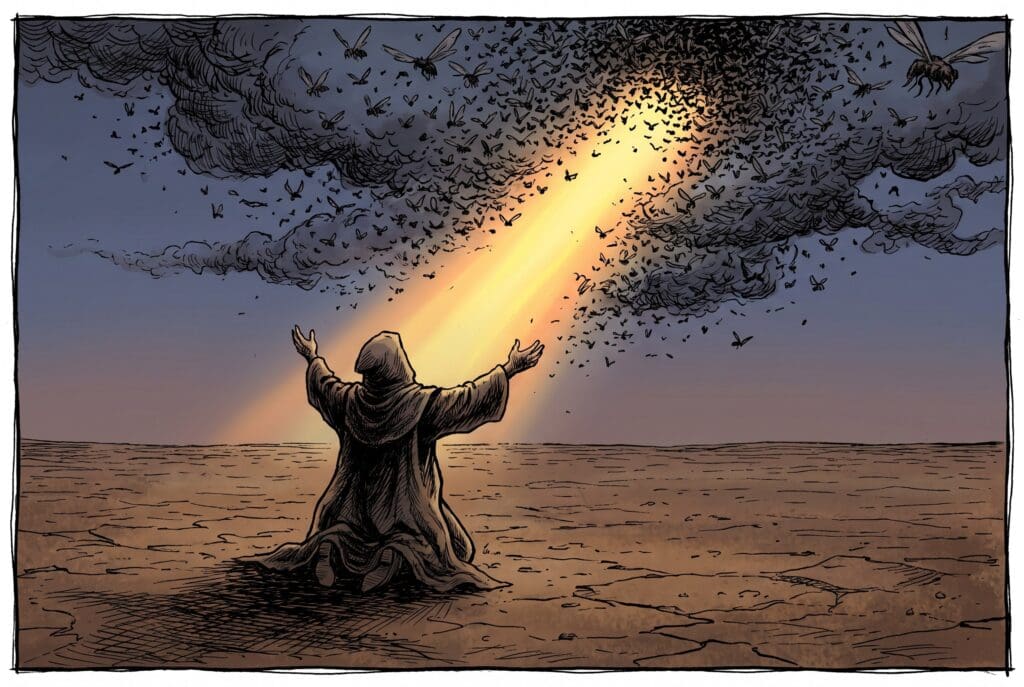
Joel is a short but vivid prophetic book built around a devastating locust plague that strips the land of Judah bare. Joel treats this natural disaster as a preview and warning of a much larger reality, 'the Day of the LORD,' a recurring theme throughout the book that points both to imminent judgment and to a final, ultimate day of reckoning.
Rather than simply pronouncing doom, Joel calls the people to genuine repentance, urging them to 'rend your heart and not your garments,' a call to real inward change rather than outward show of grief. The book's most famous passage promises that God will one day pour out His Spirit on all people, sons and daughters, young and old, a promise the apostle Peter directly quotes in Acts 2 as being fulfilled at Pentecost. Joel moves from crisis to repentance to restoration, showing that even devastating loss can become the doorway to deeper relationship with God.
For Teachers & Pastors: A Closer Look
Joel's date is debated among scholars, with proposals ranging from the 9th century BC to the post-exilic period (5th-4th century BC); the book itself gives no explicit king's reign for dating, unlike many other prophetic books, and internal evidence (references to a functioning temple and priesthood, but no explicit mention of a king) is read differently by different scholars. The book is structured around an unprecedented locust plague (chapter 1) that Joel interprets as both a literal agricultural disaster and a foretaste of a coming army representing 'the Day of the LORD' (chapter 2:1-11), followed by an urgent call to corporate repentance, fasting, and assembly (2:12-17).
In response to the people's repentance, God promises to restore the years the locusts consumed and to pour out His Spirit on all flesh (2:18-32), a passage Peter cites at length in Acts 2:17-21 to explain the events of Pentecost. Chapter 3 broadens to a final judgment scene set in the symbolically named Valley of Jehoshaphat ('the LORD judges'), where God judges the nations for their treatment of His people, followed by a closing promise of Judah's lasting restoration and God's abiding presence in Zion. Joel's compact structure, moving from disaster through repentance to Spirit-empowered restoration and final judgment, has made it a key text for both Jewish and Christian reflection on repentance and eschatology.
