Haggai
Themes
Rightly ordering priorities so that God's house comes before personal comfort, the encouragement that obedience brings God's presence and blessing, and the promise that the future glory of what is rebuilt will exceed what was lost.
Original Language
Hebrew
Introduction
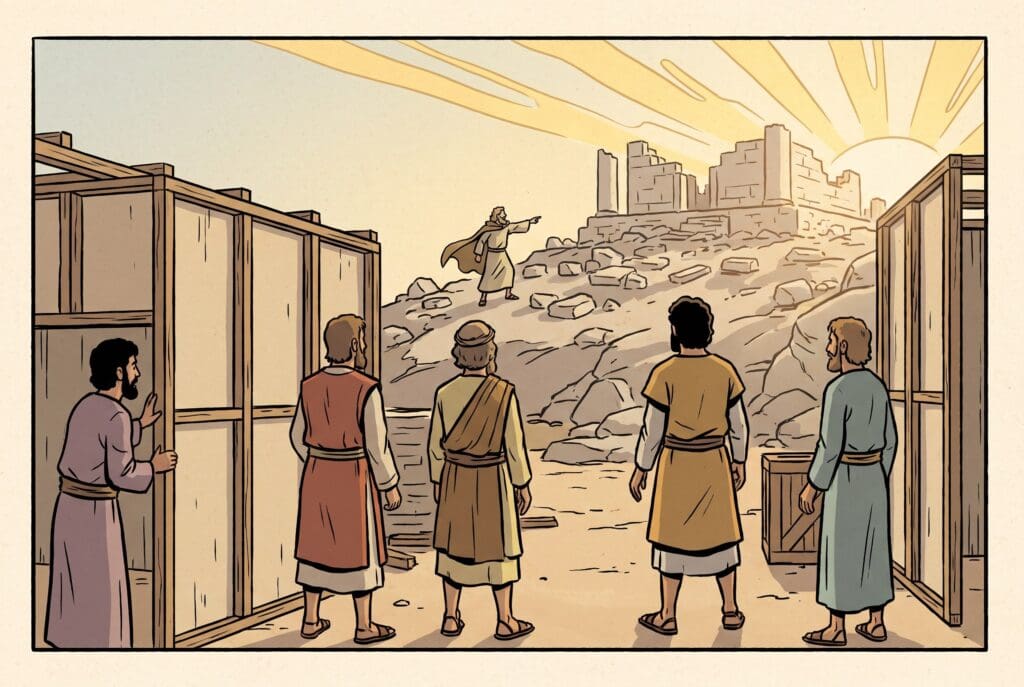
Haggai is a short but urgent book addressed to the Jewish remnant who had returned from Babylonian exile to Jerusalem, only to let the rebuilding of the temple stall for years while they focused on building and furnishing their own homes. Haggai's direct question, 'Is it a time for you yourselves to dwell in your paneled houses, while this house lies in ruins?', confronts a community that had quietly reordered its priorities without fully realizing it.
Remarkably, the people respond immediately to Haggai's message, and work on the temple resumes within weeks under the leadership of Zerubbabel the governor and Joshua the high priest. Haggai then offers real encouragement: though the rebuilt temple seems unimpressive compared to Solomon's original, God promises that its latter glory will exceed the former, and that His Spirit remains present among them as they obey. Haggai models how a single, well-timed prophetic word can move a stalled community back into action.
For Teachers & Pastors: A Closer Look
Haggai's prophecies are dated with unusual precision to specific days within the second year of the Persian king Darius I (520 BC), roughly 18 years after the first group of exiles had returned to Jerusalem under Zerubbabel following Cyrus's decree (538 BC, Ezra 1), yet temple reconstruction had stalled since shortly after the foundation was laid (Ezra 4:1-5, 24). Haggai's first message (1:1-11), delivered on the first day of the sixth month, directly confronts the people's misplaced priorities, and remarkably produces an immediate response: work resumes just 23 days later (1:12-15).
The book's remaining three messages, delivered over the following months, address specific concerns: encouragement that the new temple's glory will exceed the old despite its humbler appearance (2:1-9, connecting to messianic hope of God's presence filling His house), a priestly ruling on ritual purity applied metaphorically to the people's own defiled worship before their obedience (2:10-19), and a closing message to Zerubbabel personally, declaring him God's chosen 'signet ring' (2:20-23), a term of high honor and authority that carries messianic overtones given Zerubbabel's place in the Davidic line (compare Matthew 1:12-13). Haggai worked alongside his contemporary Zechariah (Ezra 5:1-2) in encouraging the temple's completion, which was finished in 516 BC.
