Ezra
Themes
God's sovereignty working even through a foreign pagan king to fulfill his promises; the return from exile and rebuilding of the temple as a picture of restoration after judgment; the ongoing struggle to maintain a distinct, faithful identity while living under foreign rule; and the seriousness of covenant faithfulness, especially concerning purity of worship and marriage, for a community rebuilding its future.
Original Language
Hebrew and Aramaic
Introduction
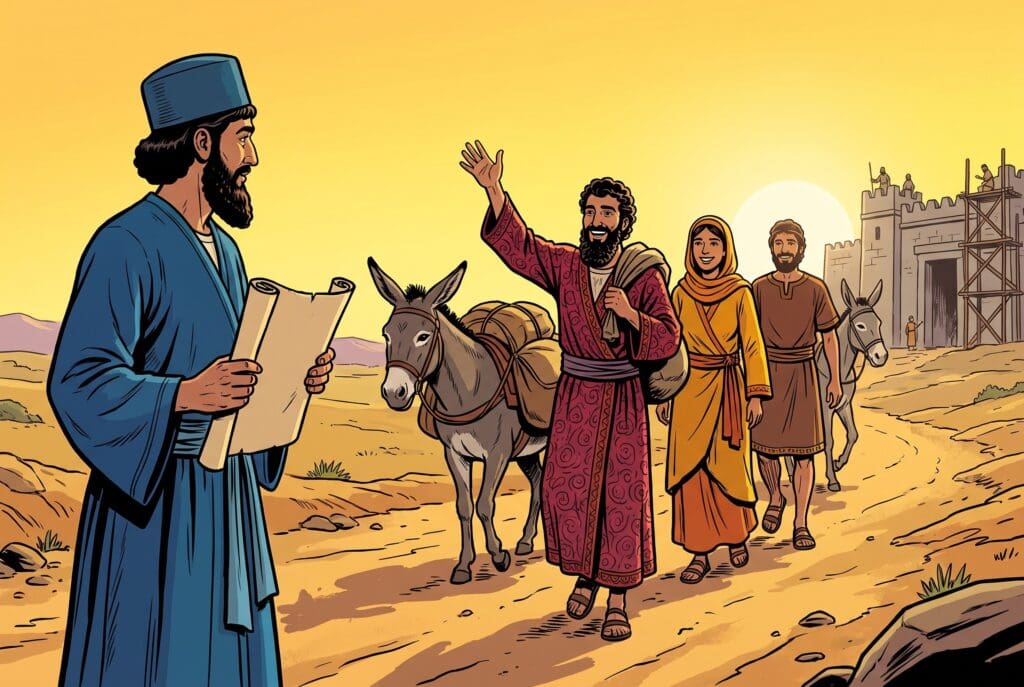
Ezra opens with a remarkable turn: God moves the pagan Persian king Cyrus to issue a decree allowing the Jewish exiles to return home and rebuild the temple in Jerusalem, fulfilling what the prophets had promised decades earlier. The book's first half (chapters 1-6) follows this first wave of returnees as they rebuild the altar and eventually the temple itself, facing opposition and delay along the way but ultimately completing the work and celebrating its dedication with joy.
The second half (chapters 7-10) jumps forward decades to Ezra himself, a priest and scribe who leads a second group of returnees back to Jerusalem, carrying a royal commission to teach God's law and restore proper worship. Upon arriving, Ezra discovers the community has intermarried with surrounding pagan peoples in violation of God's law, and the book closes with his grief-stricken prayer of confession and the community's difficult, costly commitment to putting things right.
For Teachers & Pastors: A Closer Look
Ezra (traditionally understood as composed or compiled by Ezra himself, likely in the mid-5th century BC, and originally forming one continuous work with Nehemiah in the Hebrew canon) narrates the post-exilic restoration in two distinct movements separated by a roughly 60-year gap: the initial return under Zerubbabel and the temple's rebuilding (ch. 1-6, covering events from 538-515 BC), and Ezra's own later mission under Artaxerxes I (ch. 7-10, beginning 458 BC). The book notably incorporates several official Persian administrative documents and decrees (in Aramaic, ch. 4:8-6:18 and 7:12-26), lending historical texture and reflecting the genuinely multilingual, multi-ethnic administrative reality of the Persian Empire's provincial governance.
The book's theological emphasis centers on the tension between covenant faithfulness and cultural assimilation: God's sovereign use of a pagan king to enable restoration stands alongside Ezra's urgent concern, expressed in his dramatic public prayer and the community's response in chapters 9-10, that renewed physical presence in the land without renewed covenant faithfulness would simply repeat the failures that led to exile in the first place.
