Exodus
Themes
God's power to deliver His people from bondage, the establishment of covenant relationship through law and worship, God's desire to dwell among His people, and the tension between human weakness and unbelief and God's persistent, patient faithfulness.
Original Language
Hebrew
Introduction
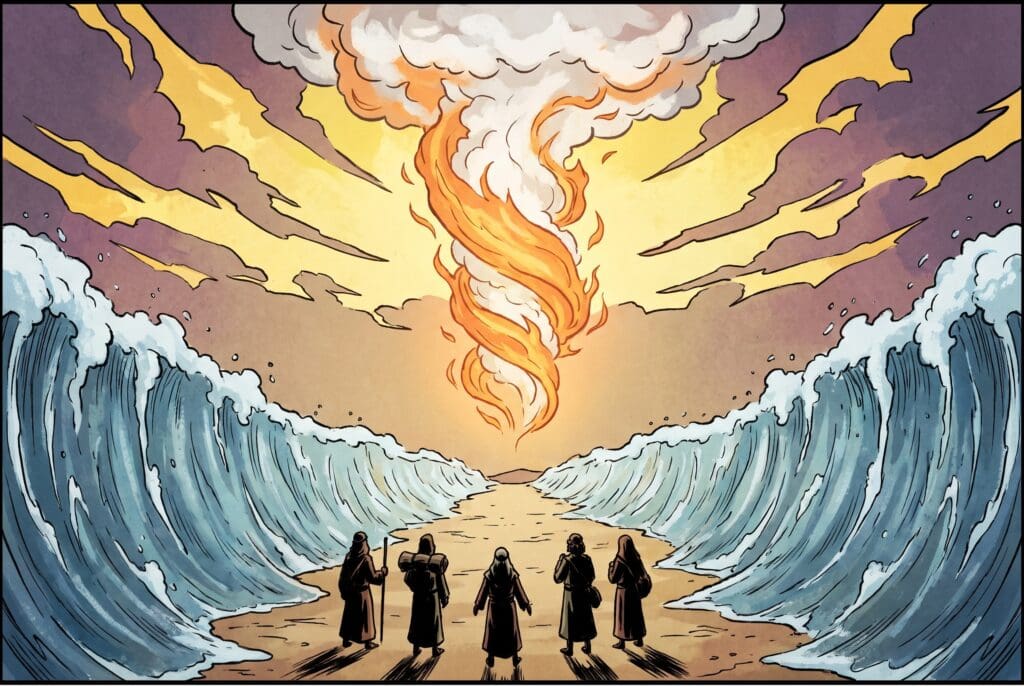
Exodus picks up roughly four centuries after Genesis ends, with Jacob's descendants grown into a vast enslaved population in Egypt. God raises up Moses, a reluctant, self-doubting deliverer, to confront Pharaoh and lead Israel out of slavery through a dramatic series of plagues, the first Passover, and a miraculous crossing of the Red Sea, one of the most formative deliverance stories in all of Scripture.
At Mount Sinai, God establishes a covenant with the newly freed nation, giving the Ten Commandments and detailed instructions for life and worship, even as the people struggle with doubt, fear, and outright rebellion, most dramatically in the golden calf incident. The book closes with the construction of the tabernacle, a portable sanctuary where God's own glory comes to dwell in the midst of His people, showing that the ultimate goal of the exodus was not merely freedom from Egypt, but restored relationship and God's presence among His people.
For Teachers & Pastors: A Closer Look
Exodus's dating is debated among scholars, with an 'early date' (roughly 1446 BC, based on a literal reading of 1 Kings 6:1) and a 'late date' (roughly 1250 BC, associated with Ramesses II) both having significant scholarly support; the book itself doesn't name the reigning Pharaoh, which has kept the debate open. The book divides into three major sections: Israel's bondage and deliverance from Egypt through ten plagues and the Passover (chapters 1-15, including the crossing of the Red Sea), the journey to Sinai and the establishment of covenant law, including the Ten Commandments and the Book of the Covenant (chapters 16-24), and detailed instructions for the tabernacle, followed by the golden calf rebellion and its aftermath, and the tabernacle's actual construction (chapters 25-40).
The book's structure repeatedly emphasizes God's glory (kavod) coming to dwell among His people, beginning with the burning bush (ch. 3) and climaxing with the cloud of God's glory filling the completed tabernacle in the closing verses (40:34-38), a theological throughline connecting Exodus to later temple theology and, in Christian reading, to John 1:14's description of the Word becoming flesh and 'tabernacling' among humanity. The golden calf incident (ch. 32) and its aftermath, including Moses's intercession and God's revelation of His own character to Moses ('the LORD, the LORD, a God merciful and gracious, slow to anger, and abounding in steadfast love and faithfulness,' 34:6-7), forms a pivotal moment regarding grace and covenant renewal after failure, a passage quoted or echoed throughout the rest of the Old Testament.
