Deuteronomy
Themes
Covenant renewal and remembrance, wholehearted love for God expressed through obedience, the blessing and cursing that flow from faithfulness or unfaithfulness, and the call to choose life by choosing God as the new generation stands ready to enter the promised land.
Original Language
Hebrew
Introduction
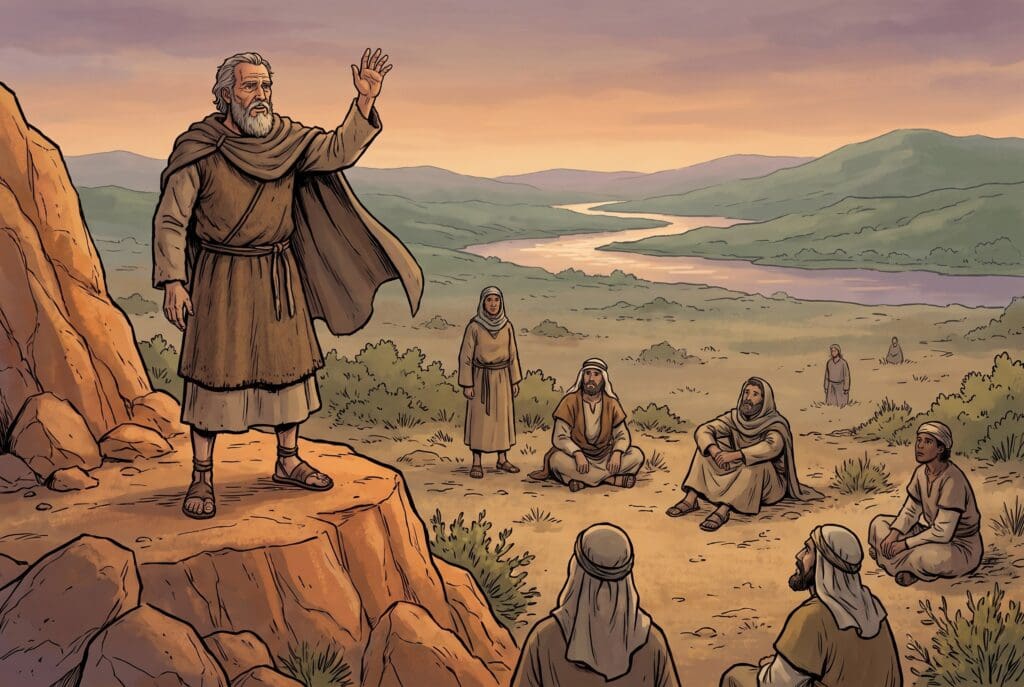
Deuteronomy, whose name means "second law," is Moses's final, passionate address to Israel on the plains of Moab, delivered to the new generation about to enter the promised land their parents had forfeited through unbelief. Rather than simply repeating earlier laws, Moses re-explains and applies them freshly for a people about to face new temptations and responsibilities as settled inhabitants of the land, not wilderness wanderers.
At its heart, Deuteronomy is a covenant renewal sermon, urging Israel with striking emotional intensity to love the LORD their God with all their heart, soul, and strength, and to choose life and blessing over death and curse. The book closes with Moses's death within sight of the land he would never enter, but not before appointing Joshua as his successor and leaving behind one of Scripture's most quoted commands: to love God wholeheartedly and pass that devotion faithfully to the next generation.
For Teachers & Pastors: A Closer Look
Deuteronomy's Greek title (from the Septuagint) means "second law," reflecting a mistranslation of the Hebrew phrase in 17:18 meaning "a copy of this law," though the book genuinely does restate and re-apply the earlier Sinai covenant for a new context and generation. Structurally, the book largely follows the pattern of ancient Near Eastern suzerain-vassal treaties: historical prologue (chapters 1-4), covenant stipulations both general and specific (chapters 5-26, including the restated Ten Commandments in chapter 5 and the Shema in 6:4-5, "Hear, O Israel: The LORD our God, the LORD is one"), and blessings and curses for covenant faithfulness or unfaithfulness (chapters 27-30), a form well-documented in surrounding Late Bronze and Iron Age cultures.
Jesus quotes Deuteronomy more than any other Old Testament book during His wilderness temptation (Matthew 4, citing Deuteronomy 8:3, 6:16, and 6:13), and identifies the Shema's call to love God with all one's heart, soul, and strength as the greatest commandment (Mark 12:29-30). The book's final chapters record Moses's death on Mount Nebo (chapter 34), viewing the promised land he would not enter, and include the notable statement that "no prophet has risen in Israel like Moses, whom the LORD knew face to face," a benchmark the New Testament later applies to Jesus as the ultimate prophet like Moses (Acts 3:22, Hebrews 3:1-6).
