2 Samuel
Themes
God's covenant faithfulness to David and the promise of an everlasting throne; the real cost of sin within a leader's own family, seen in David's affair with Bathsheba and its long shadow through the rest of the book; genuine repentance versus denial; and the tension between David's remarkable faith and his very real human failures as both a father and a king.
Original Language
Hebrew
Introduction
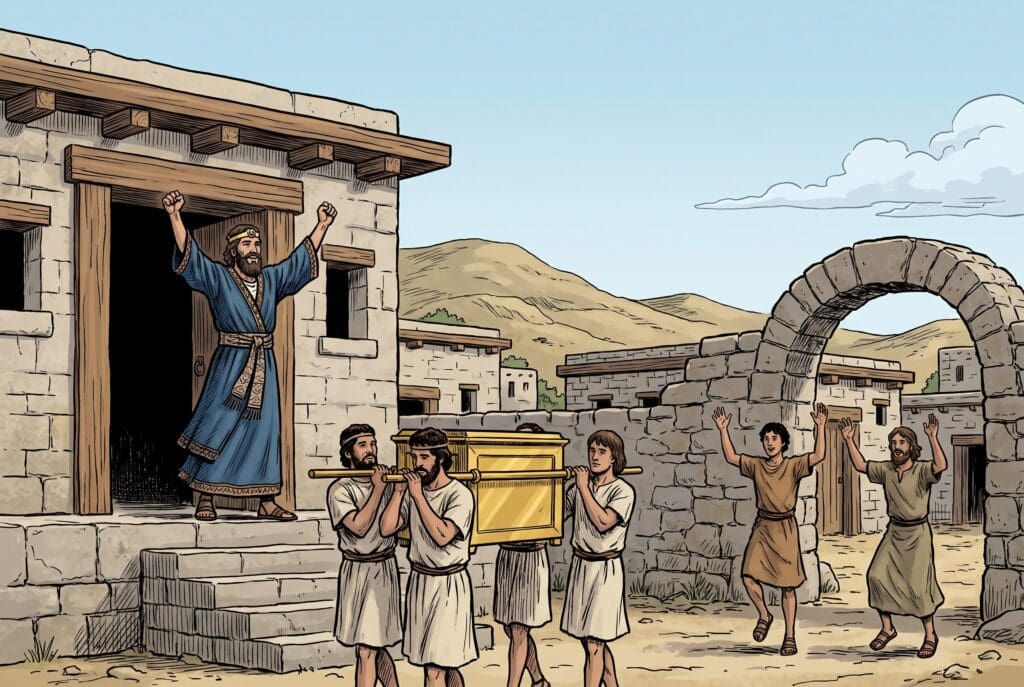
2 Samuel follows David's rise from a regional king over Judah to the unified ruler of all Israel, established at Jerusalem as his new capital. Early chapters capture real high points: bringing the ark of the covenant to Jerusalem with unrestrained joy, and God's remarkable covenant promise through the prophet Nathan that David's throne would be established forever, a promise that ultimately points toward Christ.
The book's tone shifts sharply after David's affair with Bathsheba and his arrangement of her husband Uriah's death, sins the prophet Nathan directly confronts him with. Though David repents genuinely, the consequences ripple through the rest of the book: family tragedy, his son Absalom's rape of his sister and murder of his brother, Absalom's later rebellion and David's heartbreaking flight from Jerusalem, and a difficult, unsettled final chapter of David's reign marked by ongoing conflict and a costly census.
For Teachers & Pastors: A Closer Look
2 Samuel (originally the second half of a single Samuel scroll, divided from 1 Samuel primarily for length by the Septuagint translators) traces David's reign in two broadly recognized halves: his consolidation and covenant blessing (chapters 1-10, including his anointing over all Israel in chapter 5, bringing the ark to Jerusalem in chapter 6, and the pivotal Davidic covenant of chapter 7) and the long unraveling that follows his sin with Bathsheba (chapters 11-24, sometimes called the "Succession Narrative" for its focus on the ensuing struggle over who would inherit David's throne).
The Davidic covenant in chapter 7, God's promise that David's house, throne, and kingdom would be established forever, functions as one of the Old Testament's most theologically significant passages, providing the direct scriptural basis for later messianic expectation and the New Testament's repeated identification of Jesus as the "son of David." The narrative's unusually candid, unflattering portrayal of David's sin and its consequences, rather than glossing over the failures of Israel's most celebrated king, is widely regarded by scholars as a marker of the book's historical honesty, and sets up a recurring pattern (continued through 1-2 Kings) in which even Israel's most faithful kings are shown with real, consequential flaws, reinforcing that Israel's ultimate hope rests in God's covenant faithfulness rather than any human king's own perfection.
