2 Kings
Themes
The continuing prophetic ministry of Elisha and God's ongoing faithfulness even during national decline; the devastating consequences of persistent idolatry culminating in the fall of both the northern and southern kingdoms; the occasional bright spots of reforming kings like Hezekiah and Josiah; and the sobering reality that God's patience, though vast, is not infinite when His people persistently reject Him.
Original Language
Hebrew
Introduction
2 Kings continues directly from 1 Kings, following Elisha's prophetic ministry after Elijah is taken up to heaven in a whirlwind, including remarkable miracles of healing, provision, and even resurrection. The book then tracks the parallel, often discouraging histories of the northern kingdom of Israel and the southern kingdom of Judah, most kings continuing the pattern of idolatry, with only occasional bright exceptions like Hezekiah and Josiah, both of whom pursue genuine reform.
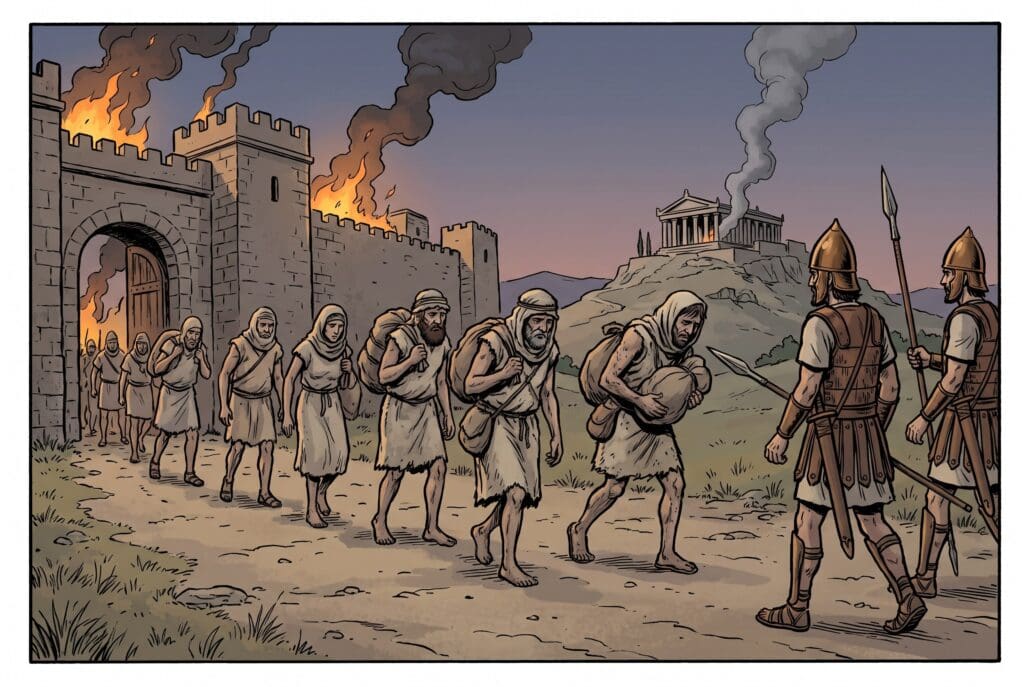
The book's central tragedy unfolds in two stages: the northern kingdom of Israel falls to the Assyrian Empire in chapter 17, its people scattered and its identity lost, a direct consequence explicitly tied to persistent unfaithfulness. Judah survives longer but ultimately falls to Babylon as well, the temple destroyed and the people carried into exile, bringing the story that began with Abraham's promised land to a devastating, though not final, conclusion.
For Teachers & Pastors: A Closer Look
2 Kings (the second half of the original combined Kings scroll) covers roughly three centuries, from Elijah's ascension through the Babylonian exile in 586 BC, tracking the northern and southern kingdoms in parallel narrative threads until the north's fall to Assyria in chapter 17 removes that half of the story entirely, after which the book follows Judah alone through its final century and a half.
Elisha's ministry (chapters 2-13), inheriting a double portion of Elijah's spirit, is marked by an unusually high concentration of miracles among the biblical prophets, including provision miracles for a widow and the Shunammite woman, the healing of Naaman the Aramean commander's leprosy, and even a miracle performed after Elisha's own death. Chapter 17's explanation for Israel's fall, explicitly attributing it to persistent idolatry despite repeated prophetic warning, functions as the book's central theological statement, while the later reforms of Hezekiah (chapters 18-20, including his celebrated stand against Assyria's siege of Jerusalem) and especially Josiah (chapters 22-23, whose rediscovery of the Book of the Law prompts Judah's most thorough religious reform) demonstrate that individual faithful kings could still meaningfully delay, though ultimately not prevent, the judgment already set in motion by generations of accumulated unfaithfulness.
