2 Chronicles
Themes
The temple as the center of true worship, from Solomon's construction and dedication through its repeated loss and restoration; the recurring cycle of reform and decline among Judah's kings, each evaluated by faithfulness to the LORD; God's patient mercy even amid persistent unfaithfulness; and hope preserved even at national catastrophe, closing with Cyrus's decree to rebuild.
Original Language
Hebrew
Introduction
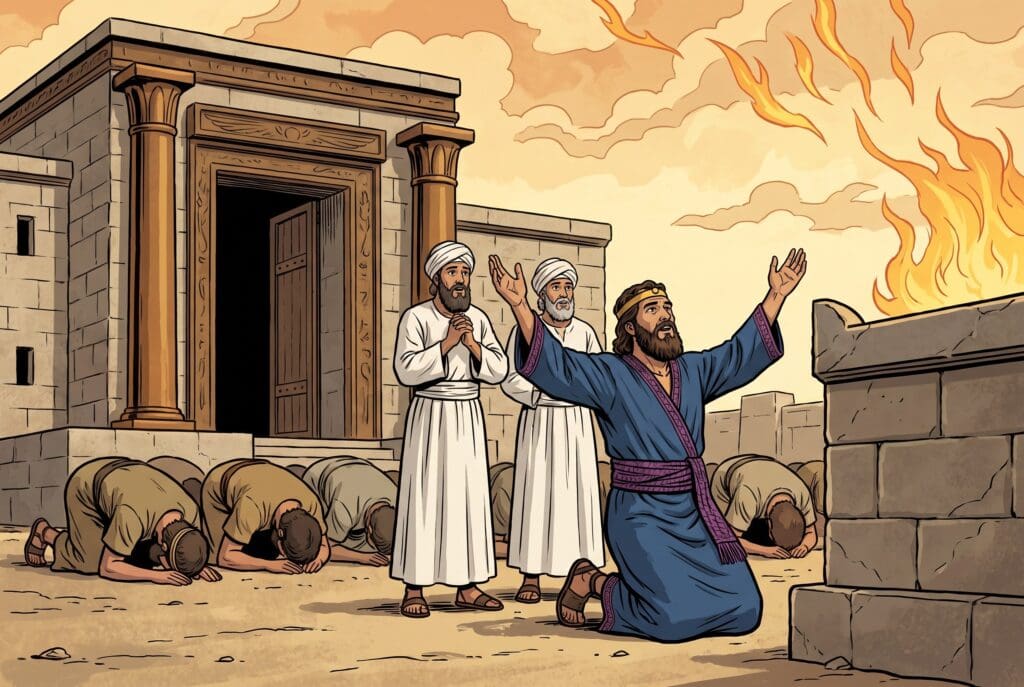
2 Chronicles picks up where 1 Chronicles ends, opening with Solomon's reign and the building and dedication of the temple in Jerusalem, the high point of the united kingdom's worship. After Solomon's death and the kingdom's division, the book narrows its focus almost entirely to the southern kingdom of Judah and its line of kings, evaluating each one by a consistent measure: did they tear down idols and restore proper worship, or did they lead the nation into compromise? Reforming kings like Asa, Jehoshaphat, Hezekiah, and especially Josiah receive extended, admiring attention, while unfaithful kings are treated more briefly.
The book ends where Israel's story seemed to reach its lowest point, the fall of Jerusalem and the temple's destruction by Babylon, but closes on an unexpected note of hope: the Persian king Cyrus's decree permitting the exiles to return and rebuild the temple, a detail 1-2 Kings does not include. Written for a community that had lived through that exile and return, 2 Chronicles offers both a sober warning about compromise and a genuine, well-founded hope that God's covenant faithfulness was not finished.
For Teachers & Pastors: A Closer Look
2 Chronicles (traditionally attributed to Ezra, composed for the post-exilic community likely in the 5th-4th century BC, continuing directly from 1 Chronicles) narrows its historical scope compared to 1-2 Kings: after Solomon's reign (ch. 1-9), it follows only the southern Davidic line in Judah, omitting the parallel narrative of the northern kingdom's kings almost entirely except where their history intersects Judah's. Each king is evaluated through a consistent theological lens centered on temple worship, cultic reform, and covenant faithfulness, with reforming kings such as Asa (ch. 14-16), Jehoshaphat (ch. 17-20), Hezekiah (ch. 29-32), and Josiah (ch. 34-35) receiving significantly expanded treatment compared to their coverage in Kings.
This selective, temple-centered emphasis reflects the Chronicler's likely purpose for a post-exilic audience: rather than a comprehensive political history, the book functions as a theological explanation of exile (unfaithfulness to proper worship brought judgment) paired with a model for genuine restoration (reform always begins with returning to right worship). The book's final two verses, quoting Cyrus's decree authorizing the temple's rebuilding, deliberately end the Hebrew canon's historical narrative on a forward-looking note of restoration rather than catastrophe, a detail 2 Kings' otherwise parallel ending omits entirely.
