1 Samuel
Themes
The transition from tribal judges to Israel's monarchy; the tension between human kingship and God's own kingship; the contrast between outward appearance and the LORD looking at the heart; the cost of partial, self-willed obedience versus wholehearted obedience; and God's sovereign hand in raising up and setting aside leaders according to His own purposes.
Original Language
Hebrew
Introduction
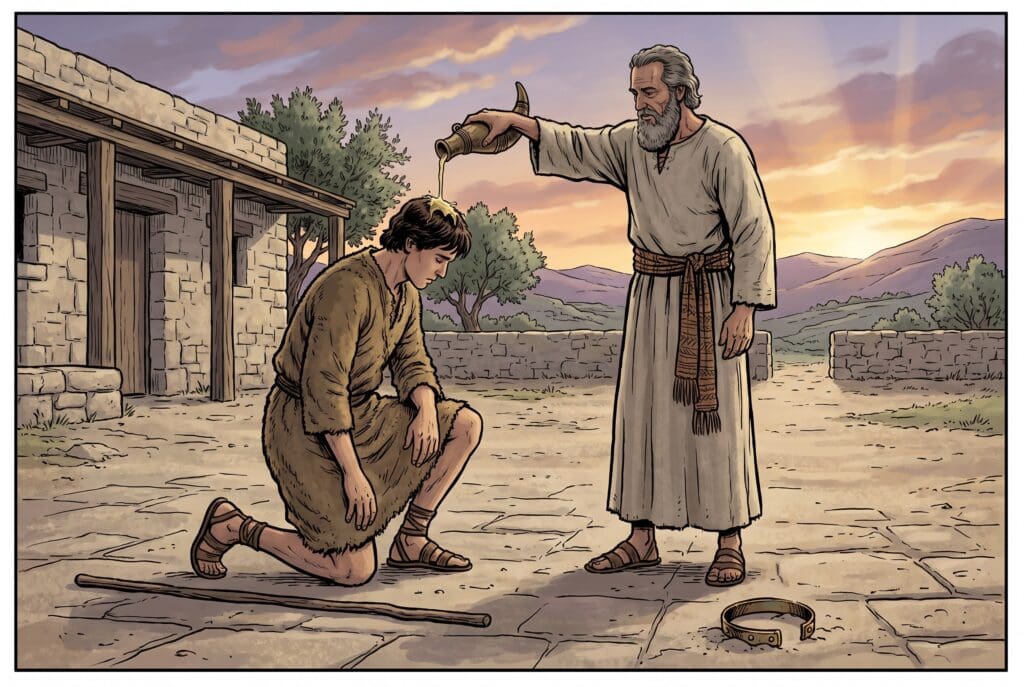
1 Samuel opens with the remarkable birth of Samuel, born to a once-barren woman named Hannah who dedicates him to the LORD's service, and traces his rise as Israel's last judge and a true prophet during a spiritually dark period marked by corrupt priestly leadership. As Samuel grows old, Israel demands a king "such as all the nations have," and despite this request reflecting a rejection of the LORD's own kingship, God grants their request and Samuel anoints Saul as Israel's first king.
The book then traces Saul's troubled reign, early promise giving way to repeated disobedience and insecurity, while a young shepherd named David is secretly anointed as Saul's eventual successor after defeating the giant Goliath and becoming a celebrated hero. Much of the book's second half follows the increasingly tense and dangerous relationship between the jealous, declining Saul and the loyal but hunted David, closing with Saul's tragic death in battle against the Philistines.
For Teachers & Pastors: A Closer Look
1 Samuel (originally part of a single Samuel scroll later divided into two books, likely for length, by the Septuagint translators) covers the pivotal transition from Israel's tribal confederacy under judges to a centralized monarchy, spanning roughly the 11th century BC. The book's structure moves through three major figures in turn: Samuel (chapters 1-7), the last judge and a transitional prophet whose ministry restores faithful worship after the corruption of Eli's sons and the loss of the ark to the Philistines; Saul (chapters 8-15), whose kingship begins with real promise but unravels through a pattern of impatience, incomplete obedience (most notably in chapter 15's judgment against Amalek), and growing insecurity; and David (chapters 16-31), whose anointing, rise, and pursuit by an increasingly paranoid Saul occupies the book's second half.
A key theological thread runs through Samuel's rebuke to Saul in chapter 15, "to obey is better than sacrifice," a recurring biblical principle that genuine obedience matters more than religious ritual performed without a submitted heart. Samuel's statement to Israel's elders in chapter 8, warning them of what a king would demand of them, and God's own words to Samuel that the people "have not rejected you, but they have rejected me, that I should not be king over them," frame the entire monarchy narrative (continuing through 2 Samuel and Kings) as a genuine tension between God's ideal direct kingship over Israel and His willingness to work through, and eventually redeem, the imperfect human institution the people insisted on.
