1 Corinthians
Themes
Church unity amid division, the wisdom of the cross versus worldly wisdom, sexual purity and holy living, spiritual gifts used in love, the resurrection as the foundation of Christian hope, and orderly, loving worship together.
Original Language
Koine Greek
Introduction
1 Corinthians is a direct, practical letter written by the apostle Paul to the church he had founded in Corinth, a bustling, morally loose port city, addressing a long list of real problems that had developed in that congregation.
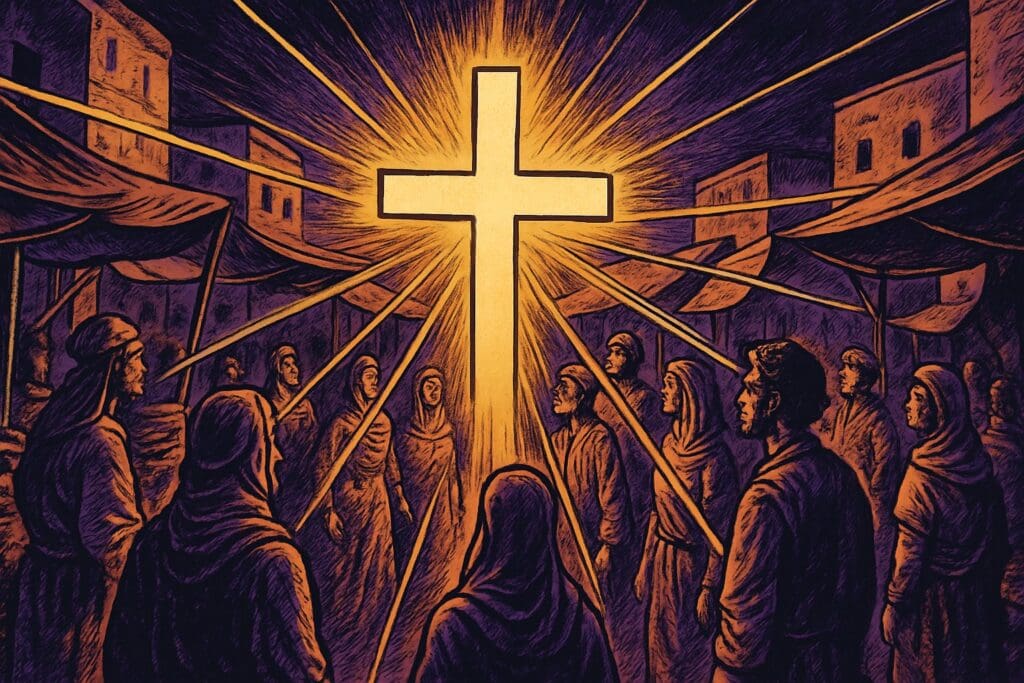
Paul opens by confronting division in the church, where believers had begun aligning themselves into rival factions around different leaders. He reminds them that the message of the cross, though it looks like foolishness to the world, is actually the wisdom and power of God, and that no human leader deserves the kind of loyalty that belongs to Christ alone.
From there, Paul addresses a wide range of practical issues: sexual immorality within the church, lawsuits between believers, questions about marriage and singleness, eating food offered to idols, proper conduct in worship, and the right use of spiritual gifts, famously concluding that whatever gifts believers have, love must be the guiding motive behind everything.
The letter's climax comes in chapter 15, where Paul gives one of the fullest New Testament defenses of the resurrection, both Christ's own resurrection and the future resurrection of believers, insisting that this hope is the very foundation on which the entire Christian faith stands.
For Teachers & Pastors: A Closer Look
1 Corinthians was written by Paul, almost certainly from Ephesus (16:8), during his roughly three-year ministry there (Acts 19), commonly dated to the mid-50s AD, likely in response both to oral reports (1:11, 'Chloe's people') and a letter from the Corinthian church itself asking Paul questions (7:1, 'now concerning the matters about which you wrote').
Corinth was a re-founded Roman colony (destroyed 146 BC, refounded 44 BC), a major commercial hub known in antiquity for wealth, social mobility, and a reputation for sexual license (the verb 'to Corinthianize' was ancient slang for loose living), factors that illuminate several of the letter's specific pastoral concerns, including status-seeking factionalism (ch. 1-4), lawsuits reflecting Roman legal/patronage culture (ch. 6), and questions about idol food tied to the city's many pagan temples and trade guild feasts (ch. 8-10).
1 Corinthians 15 is widely regarded as containing one of the earliest and most tightly formulated creedal traditions in the New Testament (15:3-7, introduced with formal language of 'received' and 'delivered,' technical terms for the transmission of authoritative tradition), commonly dated by scholars to within a few years of the crucifixion itself, making it a key text in historical arguments for the early and widespread belief in Christ's resurrection among the earliest Christian communities.
