1 Chronicles
Themes
God's faithfulness across every generation, traced through careful genealogical record; the centrality of proper, organized worship and the Levitical priesthood; David's reign retold with special focus on his preparation for the temple Solomon would build; and the importance of remembering and honoring the full sweep of a people's history as the foundation for present faithfulness.
Original Language
Hebrew
Introduction
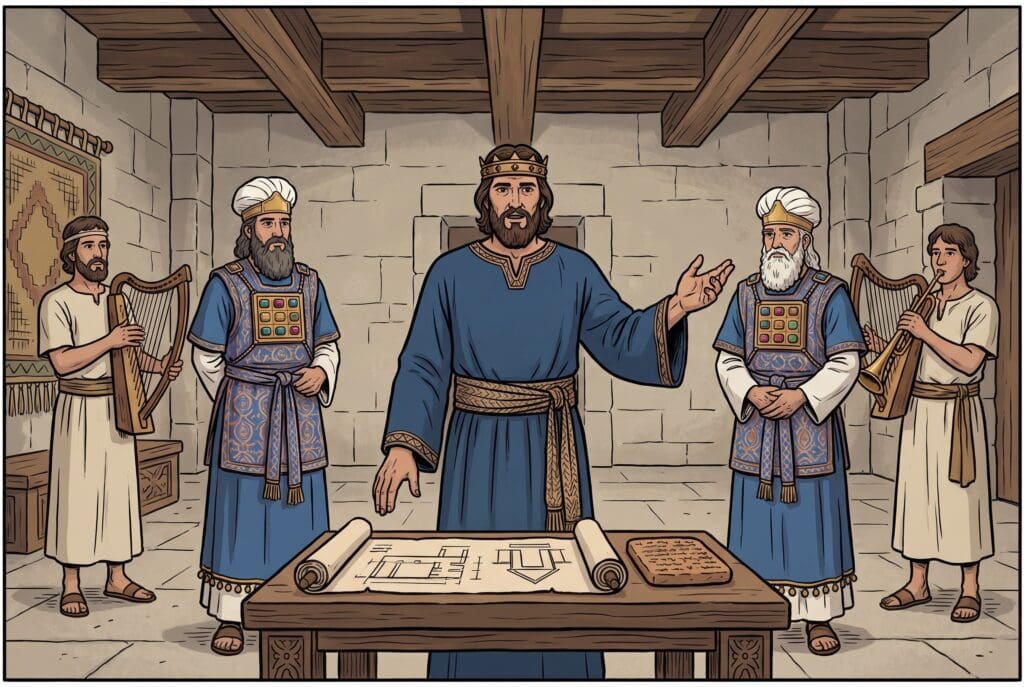
1 Chronicles opens with nine chapters of genealogy, tracing Israel's family line all the way from Adam through the twelve tribes down to the return from exile, a careful record establishing continuity and identity for a people rebuilding their national life after Babylon. From chapter 10 onward, the book retells the story of King David, though with a notably different focus than 1-2 Samuel: Chronicles largely sets aside David's personal failures and family struggles to concentrate instead on his role preparing for the temple, organizing the priests and Levites, and establishing the pattern of worship that Solomon's temple would carry forward.
Written for a Jewish community returning from Babylonian exile, the book serves as a reminder of exactly who they were and whose worship they were meant to restore, emphasizing God's unbroken covenant faithfulness across the many generations recorded in its opening genealogies, and the seriousness and beauty of organized, wholehearted worship modeled through David's careful preparations.
For Teachers & Pastors: A Closer Look
1 Chronicles (traditionally attributed to Ezra, along with 2 Chronicles, and likely composed for the post-exilic community returning from Babylon in the 5th-4th century BC) retells Israel's history from a distinctly priestly and temple-centered perspective, structured around extensive genealogies (chapters 1-9) establishing tribal identity and legitimate priestly lineage, followed by a retelling of Saul's death and David's entire reign (chapters 10-29) that omits most of the material 2 Samuel records about David's personal moral failures (the Bathsheba affair, Absalom's rebellion) in favor of extensive detail about his preparations for temple worship.
This selective emphasis reflects the book's likely purpose: written for a community rebuilding its identity and worship life after exile, Chronicles functions less as comprehensive history and more as a theological reminder of what faithful, organized worship should look like, detailing David's establishment of Levitical divisions (chapters 23-26), musicians, and gatekeepers with an intentionality that mirrors what the post-exilic community itself needed to reconstruct. The genealogies that open the book, far from being merely administrative record-keeping, serve a significant theological purpose: establishing that the post-exilic community, however diminished, stood in unbroken continuity with God's covenant people across every generation since Adam.
