Author: Answers In Bible

  • Your Heavenly Father Knows | Matthew 6:31-32

    Your Heavenly Father Knows | Matthew 6:31-32

    “Do not worry, saying, ‘What shall we eat?’… for your heavenly Father knows that you need all these things” (Matthew 6:31-32, NKJV). The command not to worry is grounded here in a specific reason, not willpower, but the Father’s actual knowledge of what you need.

    That’s worth sitting with. Worry often functions as though God were unaware or indifferent to real needs. This verse insists otherwise.

    Knows here isn’t distant, theoretical awareness. It’s the same kind of knowing a genuinely attentive parent has toward a child’s actual needs.

    What worry have you been carrying that assumes, even subtly, that God isn’t fully aware of what you actually need?

  • A Good Word Makes It Glad | Proverbs 12:25

    A Good Word Makes It Glad | Proverbs 12:25

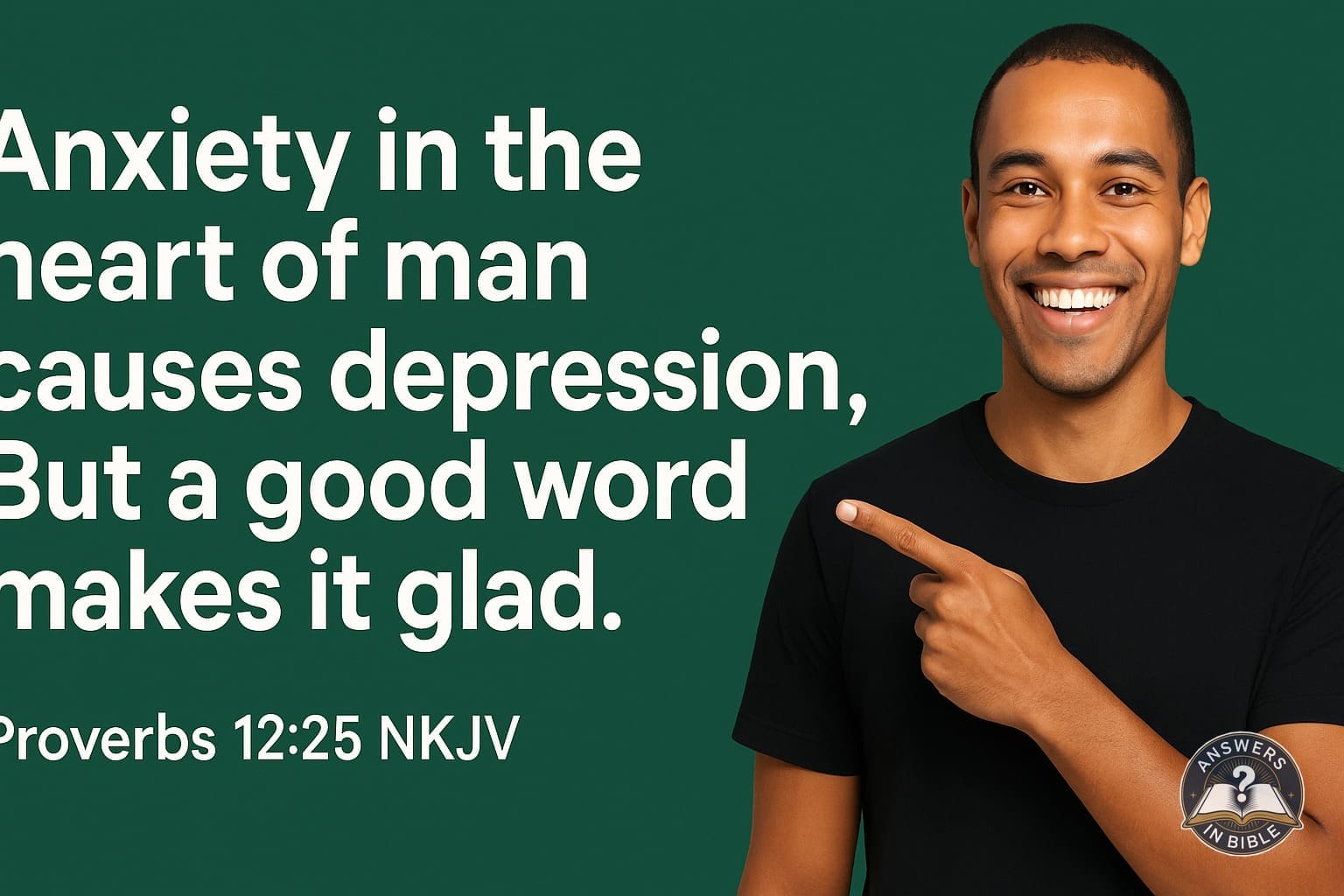
    “Anxiety in the heart of man causes depression, But a good word makes it glad” (Proverbs 12:25, NKJV). This verse takes anxiety seriously, naming its real weight rather than dismissing it as a minor inconvenience.

    The remedy offered is simple but significant: a good word. Not a complex intervention, just genuine, well-timed encouragement.

    This is worth remembering both as someone who carries anxiety and as someone positioned to offer a good word to someone else who does.

    Who in your life is currently carrying anxiety that a genuinely good word from you could help lighten today?

  • His Tender Mercies Are Over All | Psalm 145:9

    His Tender Mercies Are Over All | Psalm 145:9

    “The LORD is good to all, And His tender mercies are over all His works” (Psalm 145:9, NKJV). To all and over all His works are both worth noticing. This isn’t a selective goodness reserved for the deserving few.

    It’s tempting to picture God’s mercy as something earned or reserved for insiders. This verse describes something far more expansive, mercy over all His works.

    That’s worth remembering both for how you view yourself and how you view others who might seem far outside the reach of God’s goodness.

    Who have you been quietly assuming is outside the reach of God’s tender mercies, when this verse says His mercy is over all His works?

  • Eat, Drink, and Be Merry | Ecclesiastes 8:15

    Eat, Drink, and Be Merry | Ecclesiastes 8:15

    “So I commended enjoyment, because a man has nothing better under the sun than to eat, drink, and be merry” (Ecclesiastes 8:15, NKJV). After wrestling with life’s many uncertainties, the Preacher lands on something simple: ordinary enjoyment is genuinely good.

    This isn’t hedonism for its own sake. It’s a recognition that constant striving, without ever actually enjoying the ordinary gifts of a meal or good company, misses something important.

    Nothing better under the sun is a strong statement. Not a consolation prize, but genuinely one of the best things available in this life.

    What ordinary enjoyment have you been skipping past lately in the name of more important pursuits, that this verse says is actually worth commending?

  • A City on a Hill | Matthew 5:14

    A City on a Hill | Matthew 5:14

    “You are the light of the world. A city that is set on a hill cannot be hidden” (Matthew 5:14, NKJV). A city on a hill isn’t trying to be visible, it simply is, by virtue of its position.

    That’s the picture Jesus paints of a genuine follower’s life. Not a forced, performative visibility, but a natural one that follows from actually being where you’ve been placed.

    This is worth noticing if you’ve been trying hard to hide a faith that this verse says shouldn’t need hiding in the first place.

    Where have you been dimming a light that, according to this verse, was never meant to be hidden to begin with?

  • Open Your Mouth for the Speechless | Proverbs 31:8-9

    Open Your Mouth for the Speechless | Proverbs 31:8-9

    “Open your mouth for the speechless… plead the cause of the poor and needy” (Proverbs 31:8-9, NKJV). This isn’t passive sympathy. It’s active advocacy, actually opening your mouth on behalf of someone who can’t speak for themselves.

    The speechless here isn’t limited to a single category. It’s anyone genuinely without a voice in a given situation, whether by circumstance, position, or vulnerability.

    This requires more than private concern. It requires actually speaking, pleading a cause publicly rather than only feeling bad about it privately.

    Who in your circle of awareness right now is speechless in a situation, waiting for someone to actually open their mouth on their behalf?

  • 5 Simple Habits to Grow Closer to God This Summer

    5 Simple Habits to Grow Closer to God This Summer

    Summer often loosens the usual routine, later mornings, lighter schedules, more unstructured time. That shift can be a real opportunity, not just for rest, but for building habits that draw you closer to God. Here are five simple ones worth trying this season.

    1. Read Scripture outside

    Take your reading time outdoors this summer, a porch, a park bench, a backyard chair. A change of setting can bring fresh attention to a familiar practice.

    2. Pray during your commute or errands

    Summer often means more driving, more time in the car for trips and errands. Use that time intentionally for prayer instead of letting it pass by unused.

    3. Practice gratitude at the end of each day

    Before bed, name three specific things from the day you’re grateful for. Simple, consistent gratitude tends to shape the heart more than occasional big gestures.

    4. Share a meal with someone outside your usual circle

    Summer’s slower pace makes room for hospitality. Invite someone you don’t know well to a meal, and let the conversation go wherever it goes.

    5. Take a full day of rest, on purpose

    Choose one day this month to genuinely rest, not just fewer obligations, but an intentional day set apart to remember that your worth doesn’t depend on your productivity.

    None of these require a dramatic life change, just small, consistent choices that make room for God in the rhythm of an ordinary summer week.
  • In His Word I Do Hope | Psalm 130:5

    In His Word I Do Hope | Psalm 130:5

    “I wait for the LORD, my soul waits, And in His word I do hope” (Psalm 130:5, NKJV). This verse repeats wait twice, emphasizing just how central this posture is to the psalmist’s experience.

    The hope described here isn’t vague optimism. It’s anchored specifically in His word, something concrete to hope in, not just a hope that things will somehow work out.

    That specificity matters. Waiting without something concrete to hope in tends to drift into anxiety. Waiting anchored in God’s actual word has somewhere to rest.

    What specific word from God are you currently resting your hope in during your own season of waiting?

  • Every Secret Thing | Ecclesiastes 12:14

    Every Secret Thing | Ecclesiastes 12:14

    “For God will bring every work into judgment, Including every secret thing, whether good or evil” (Ecclesiastes 12:14, NKJV). This is the closing note of a book that spent many chapters wrestling honestly with life’s uncertainties.

    Secret thing is worth noticing. Not just public actions, but private ones too, the things done or thought where no one else was watching.

    This isn’t meant to produce paranoia, but sober awareness. Nothing is actually hidden from the God who will one day bring every work into judgment.

    Is there a secret thing you’ve been treating as unseen that this verse reminds you is already fully known?

  • The Spirit Is Willing | Matthew 26:41

    The Spirit Is Willing | Matthew 26:41

    “Watch and pray, lest you enter into temptation. The spirit indeed is willing, but the flesh is weak” (Matthew 26:41, NKJV). Jesus says this to disciples who genuinely meant well but fell asleep instead of praying with Him.

    That gap between willing spirit and weak flesh is a familiar one. Good intentions alone don’t guarantee follow-through, especially under pressure or exhaustion.

    Watch and pray is the remedy offered here, not willpower alone, but active vigilance paired with dependence on God.

    Where has a willing spirit of yours recently been undone by weak flesh, and what would watching and praying have looked like in that moment?